Dr. Terror’s House of Horrors: Creeping Vine (1965)
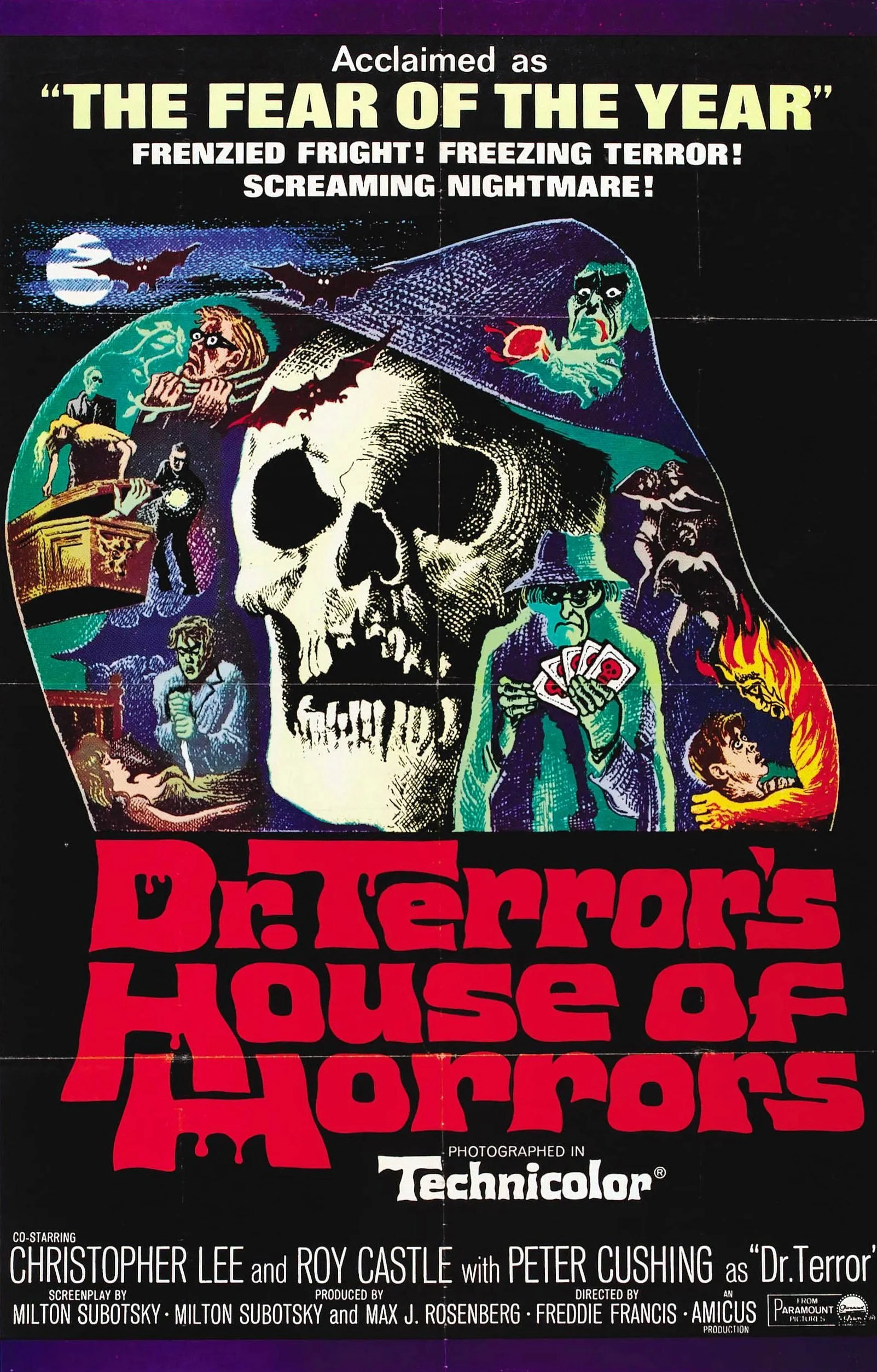
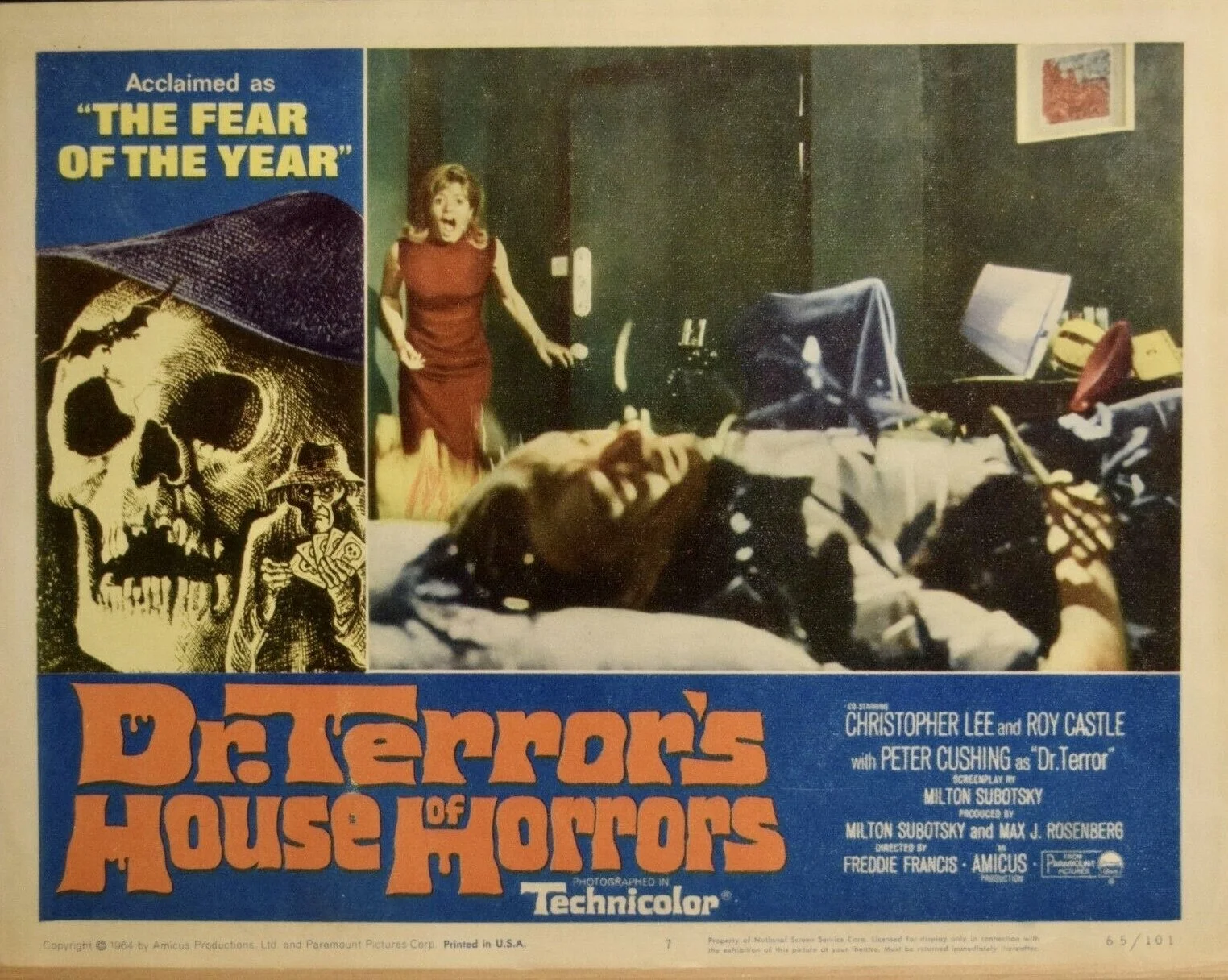
original poster art
We are back with the second vignette from the anthology classic Dr. Terror’s House of Horrors. In our previous installment we briefly discussed the wonderful world of anthologies and introduced Dr. Schreck, the enigmatic tarot card reader who presents possible futures for five train car passengers. We also explored the first segment “Werewolf,” a tale of buried secrets and a 200-year-old legend. If you missed this one, you can check it out here.
When we last met Dr. Schreck, he was about to give his next tarot card reading to Bill Rogers (Alan Freeman), an affable and soft-spoken gent equally eager to know his future. What does it hold? We’ll let “Creeping Vine” unfold that tale for us.
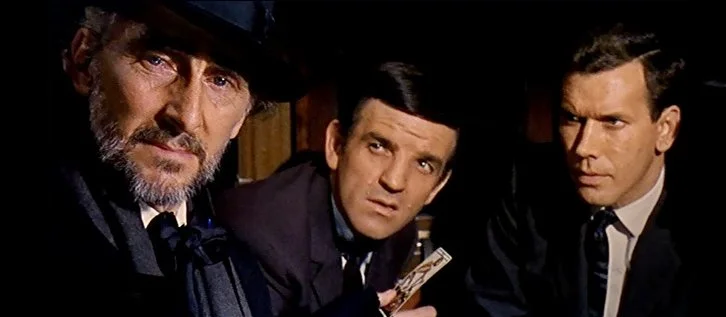
Bill Rogers (Alan Freeman) center
Creeping Vine
Cast:
Alan Freeman – Bill Rogers
Ann Bell – Anne Rogers
Phoebe Nicholls – Carol Rogers
Bernard Lee – Hopkins
Jeremy Kemp – Jerry Drake
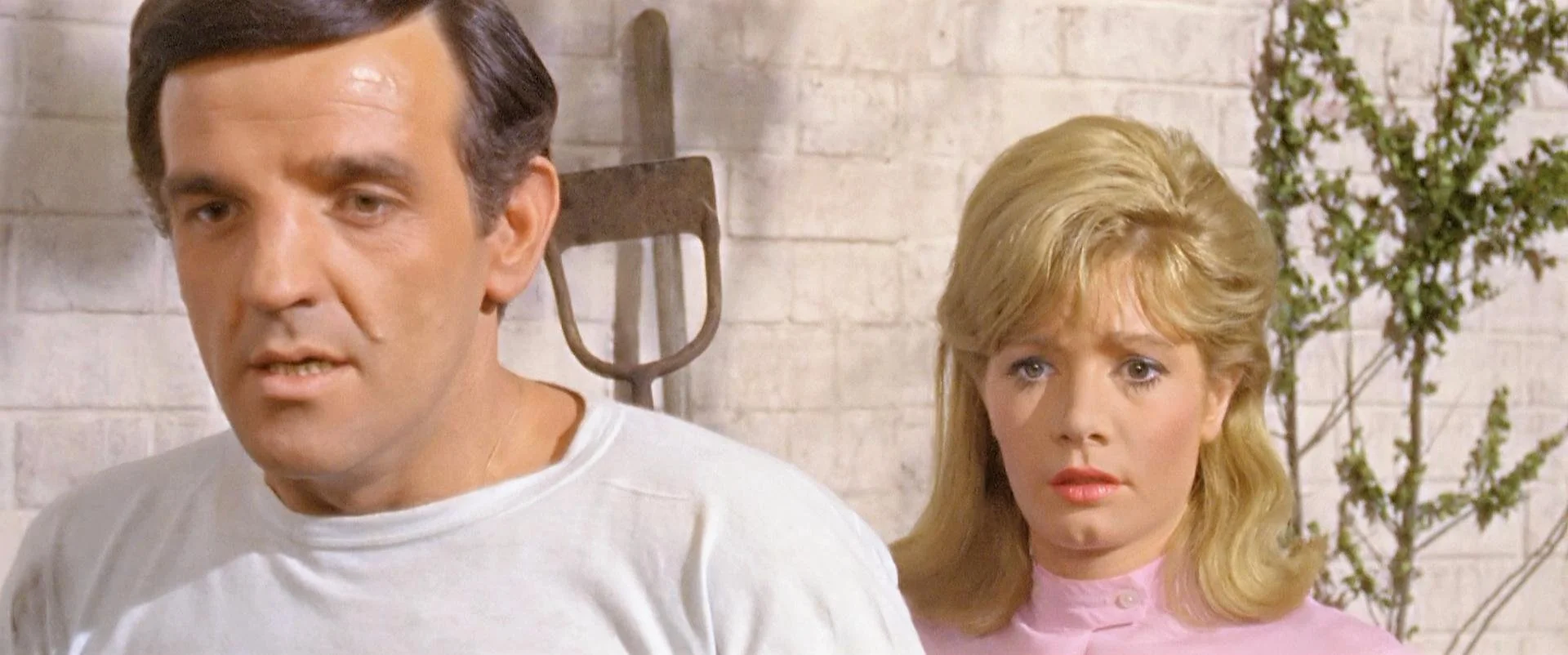
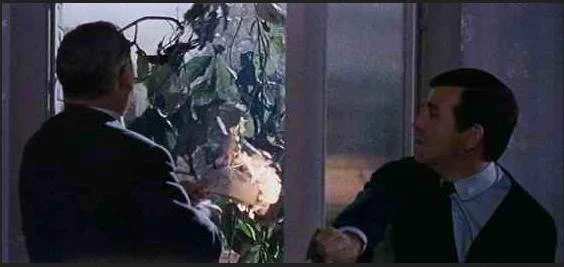
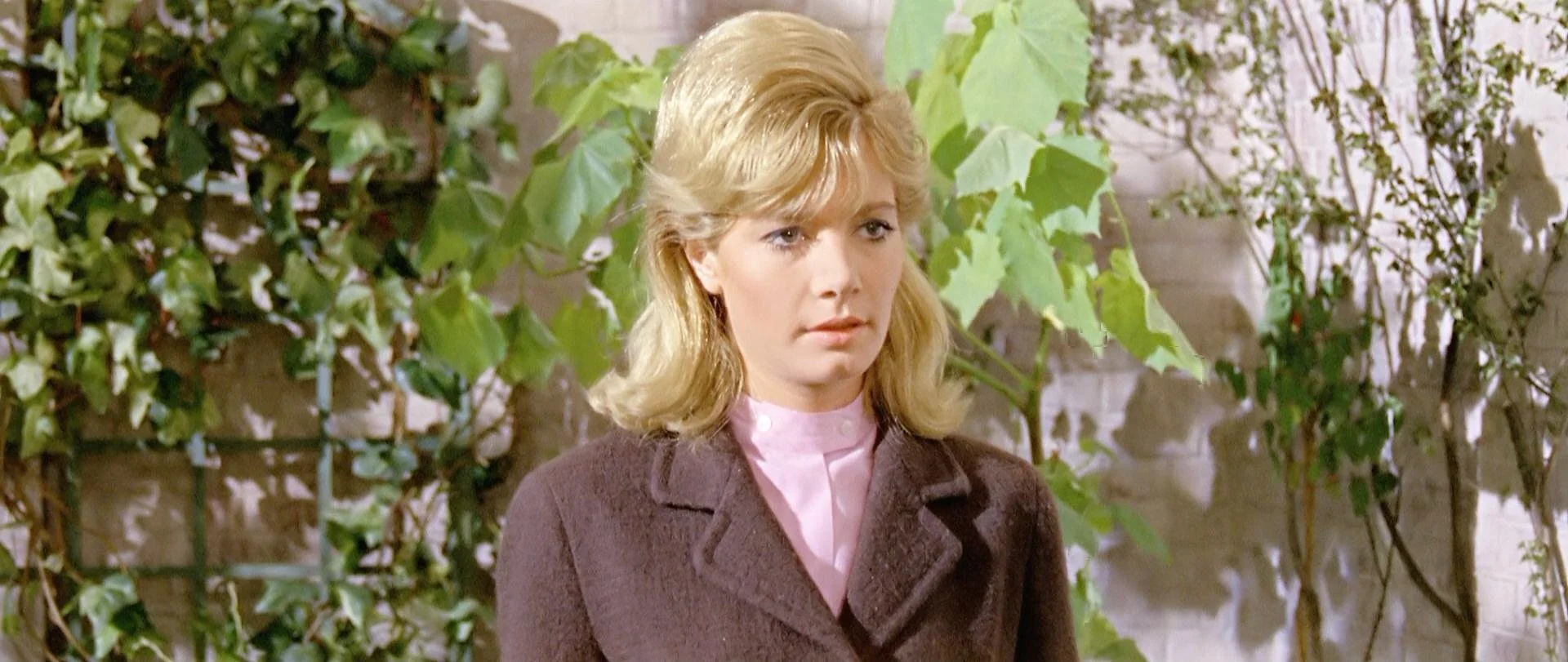
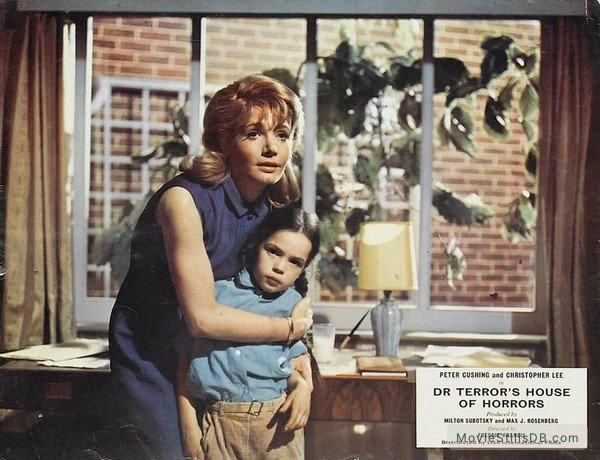
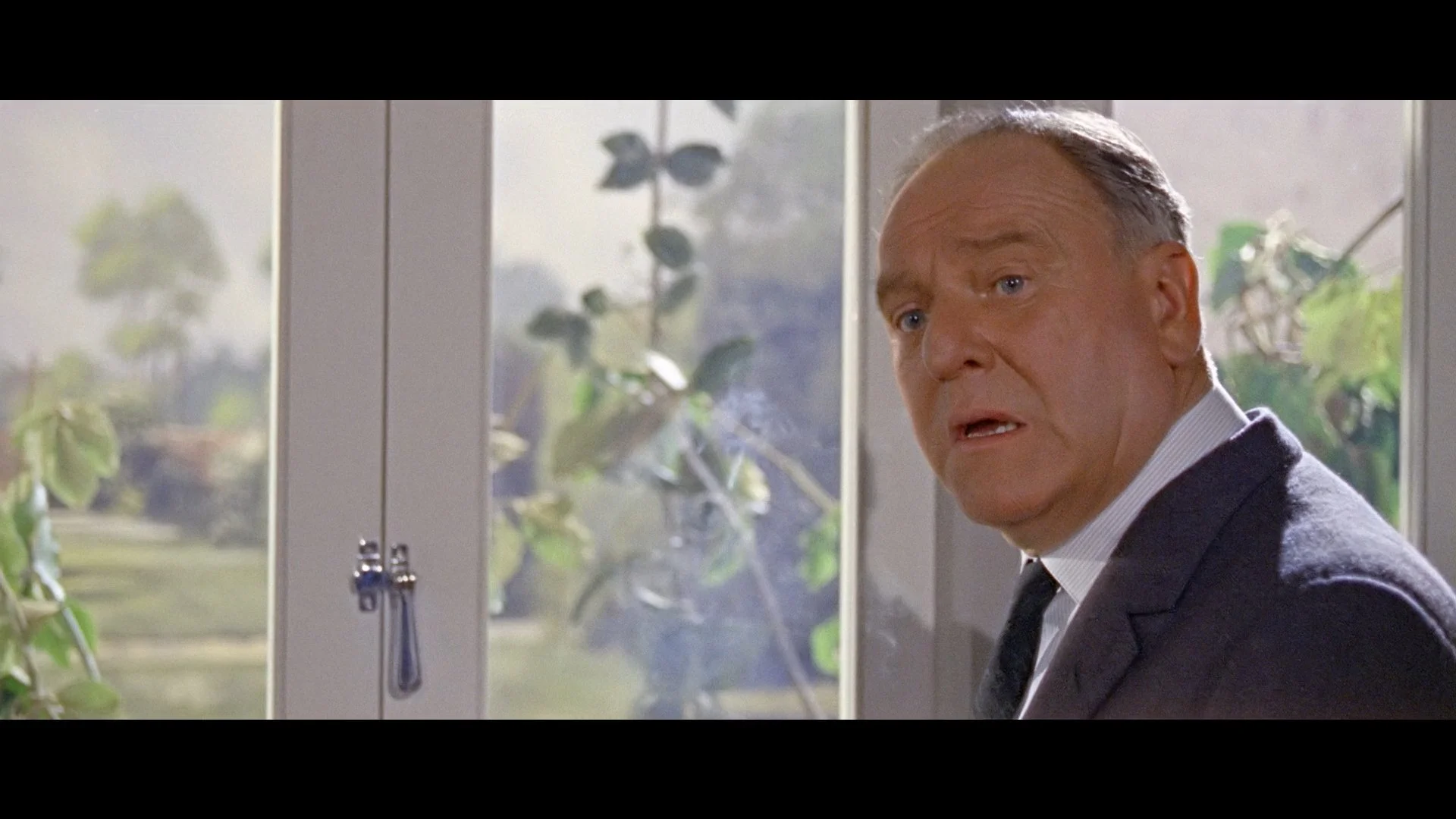
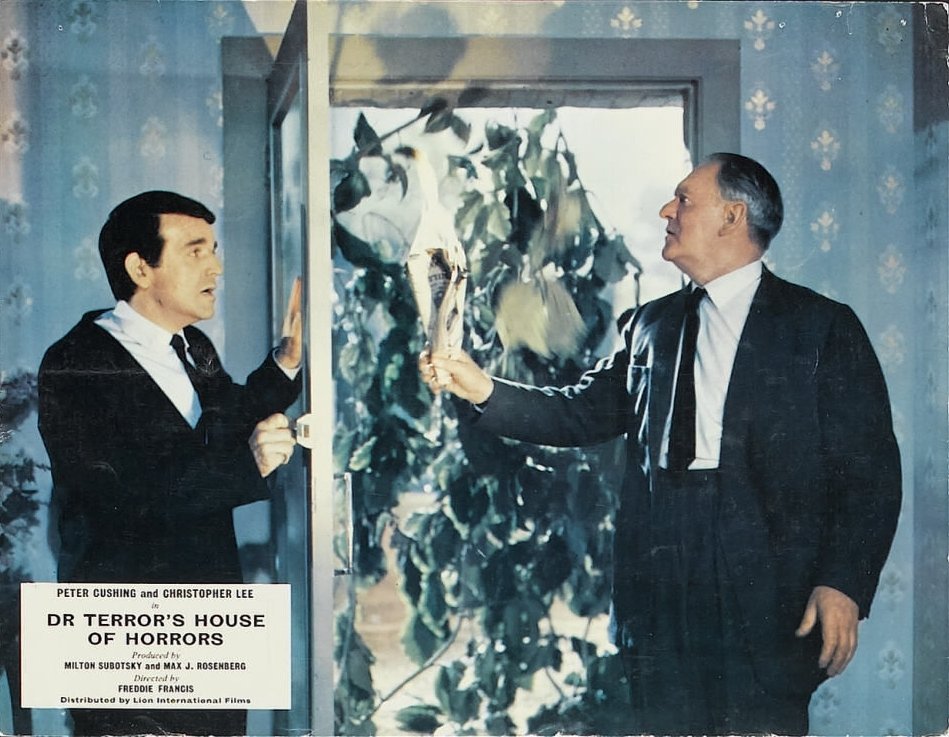
Bill Rogers and his family are just back from holiday when his wife Anne (Ann Bell) discovers a strange vine growing on the outside wall of their suburban English home. Fearing that the plant will destroy their hydrangeas (soon to be the least of their problems), Bill attempts to cut it down. He is stunned when the vine fights back and knocks the shears violently out of his hands.
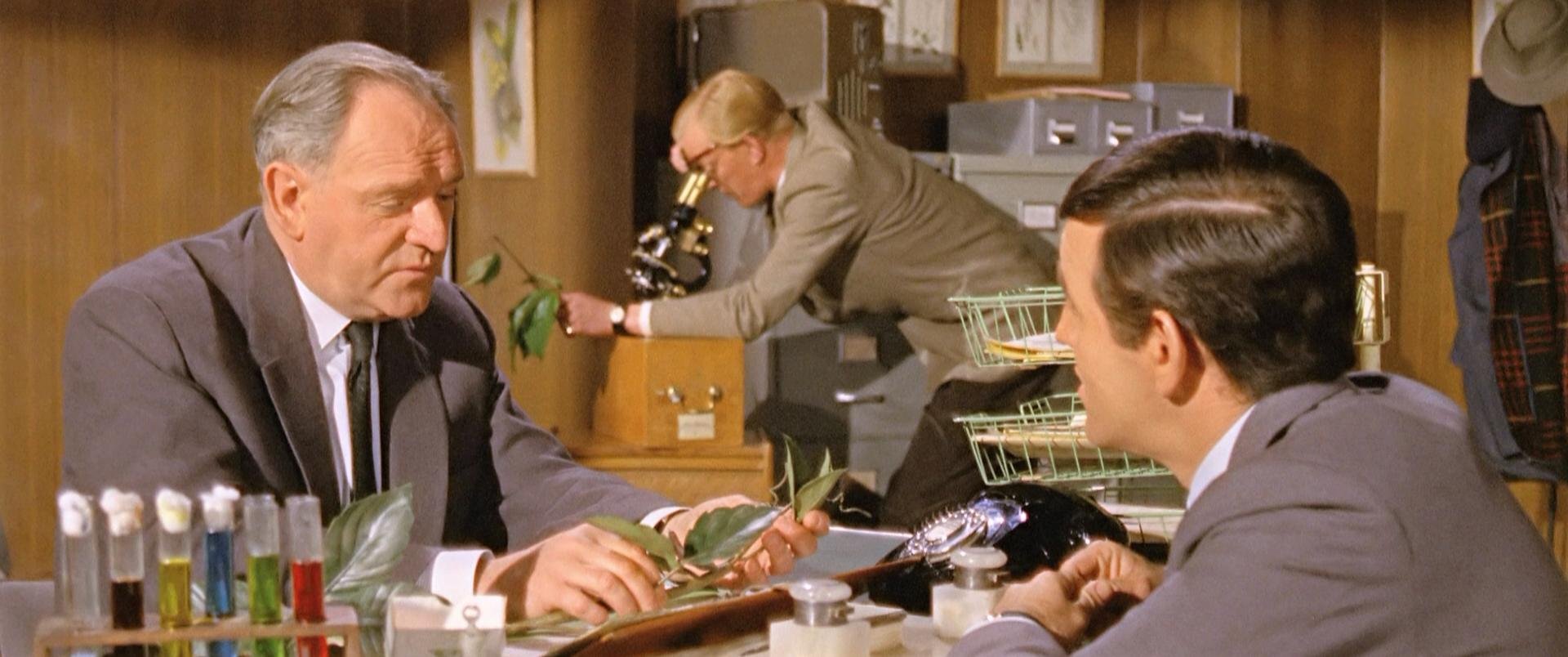
It becomes readily apparent that this vine is no run-of-the-mill garden crasher but rather a sentient plant willing to fight back to ensure its survival. Confounded and feeling protective of Anne and his young daughter Carol (Phoebe Nicholls), Bill enlists the help of some government scientist friends, including biologist Jerry Drake (Jeremy Kemp) and his colleague Hopkins (Bernard Lee).
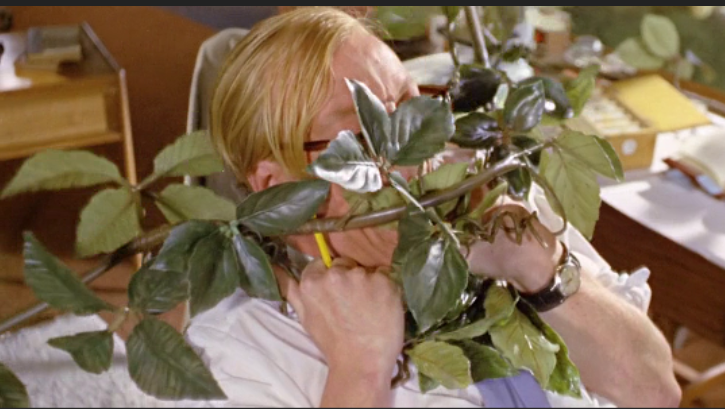
Jerry crashes at the Rogers’ home to investigate the strange vine up close, setting up a makeshift research lab replete with microscopes and scientific textbooks. He develops an astounding theory: what if this vine has somehow mutated in its battle for survival within the plant kingdom? What if this next stage of evolution arms the vine with a clear intelligence and intent to destroy whatever organisms it perceives as a threat, including humans?
Jerry’s eureka moment is abruptly interrupted as the vine multiplies and goes on the attack. Needless to say, the vicious vegetation lays siege to the Rogers home where no one is safe—not even the family dog. Can it outsmart and overpower its perceived predators?
My brief take
I must admit I was lukewarm on the “Creeping Vine” segment initially, though over time it came to grow on me (I swear I am not chasing after these puns). While the story is delivered in a similar pace as others in the anthology, this one always felt a bit more rushed somehow. These days and after repeat viewings, I’ve come to appreciate how it successfully rolls a mini-monster movie, eco horror tale, and a siege story into one brief vignette—no small feat.
The segment includes scenes that could be viewed as a bit hokey, like when this particularly stealthy plant sneaks up on a would-be victim as though it’s a seasoned serial killer. In another scene, the prowling plant uses its tendrils to yank out a phone line just as our group tries calling for help. I find these scenes to be both funny and a bit unsettling. Creatures with anthropomorphic characteristics or behavior have always given me a bit of the heebie-jeebies. Yes, the heebie-jeebies.
There is a particular scene that’s likely to scratch the nostalgia itch for classic era fans. Jerry, in an attempt to get Bill up to speed, explains basic plant biology over a short film. These mini “science lessons” were commonly used in mid-century science fiction cinema. We’ve seen them in films such as Creature from the Black Lagoon, Them!, and several others. We actually featured Them! in a very special post last year in which we honored my late father-in-law. Hi Burhan. We miss you.
As to the science being posited in the film, best to just roll with it.
In terms of production, I thought the practical effects team did a solid job in creating and animating the titular creeping vines with their twisting tendrils and leathery leaves. I watched the film on a very sharp ultra-high definition (UHD) disk from Vinegar Syndrome and was still unable to zero in on any wires or other instruments behind the plant’s motions. I’d say that’s pretty impressive for the time.
One film to which this segment invites obvious comparison is the post-apocalyptic science fiction feature The Day of Triffids (1963). In this movie, a beautiful meteor shower blinds the vast majority of humanity as carnivorous plant-like creatures, slow moving yet mobile, begin to prey on the population. The film was a staple on creature features of yesteryear and one of many formative monster movie memories for me. I would also recommend the 1951 book by John Wyndham on which the film was based.