Space Oddity: The Man Who Fell to Earth (1976)
Cinematic Semicentennial Series – 1976 edition
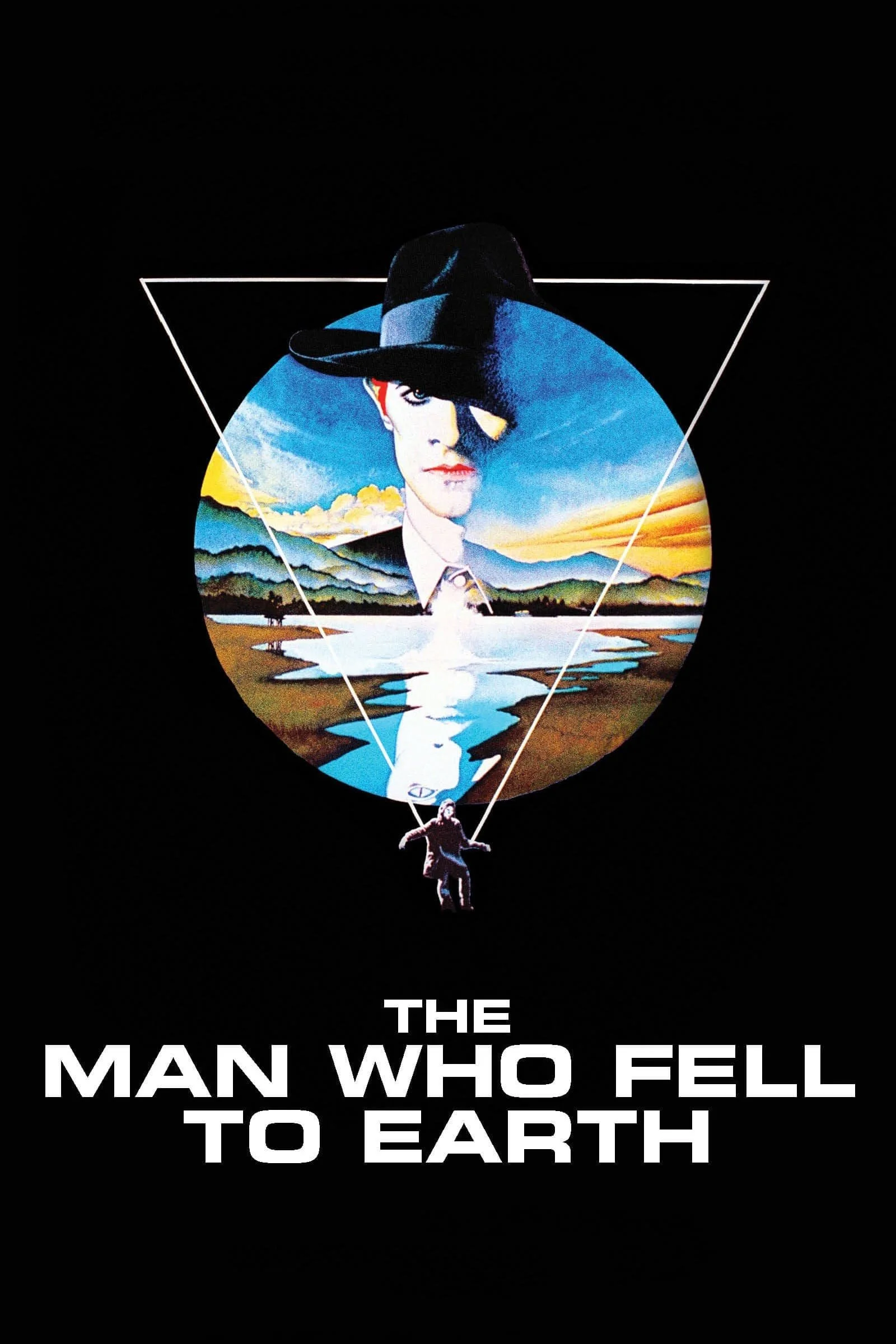
Original poster art for The Man Who Fell to Earth.
Our Cinematic Semicentennial Series returns with a cult science fiction classic offering a very unique take on the well-worn extraterrestrial visitors trope. This one is quirky and a bit all over the place, but it has nevertheless earned a spot in our series because like most movies, it has its own strengths to recommend it.
Alien on a mission
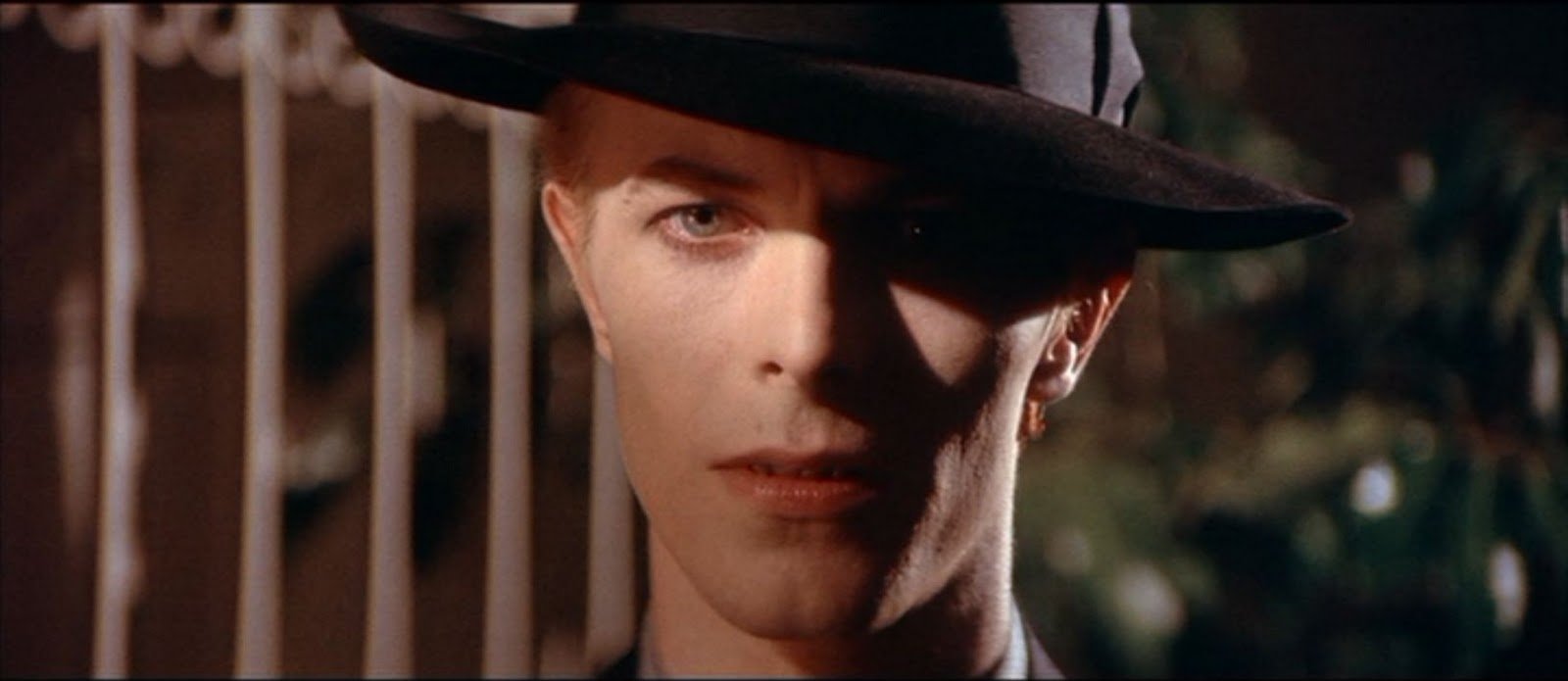
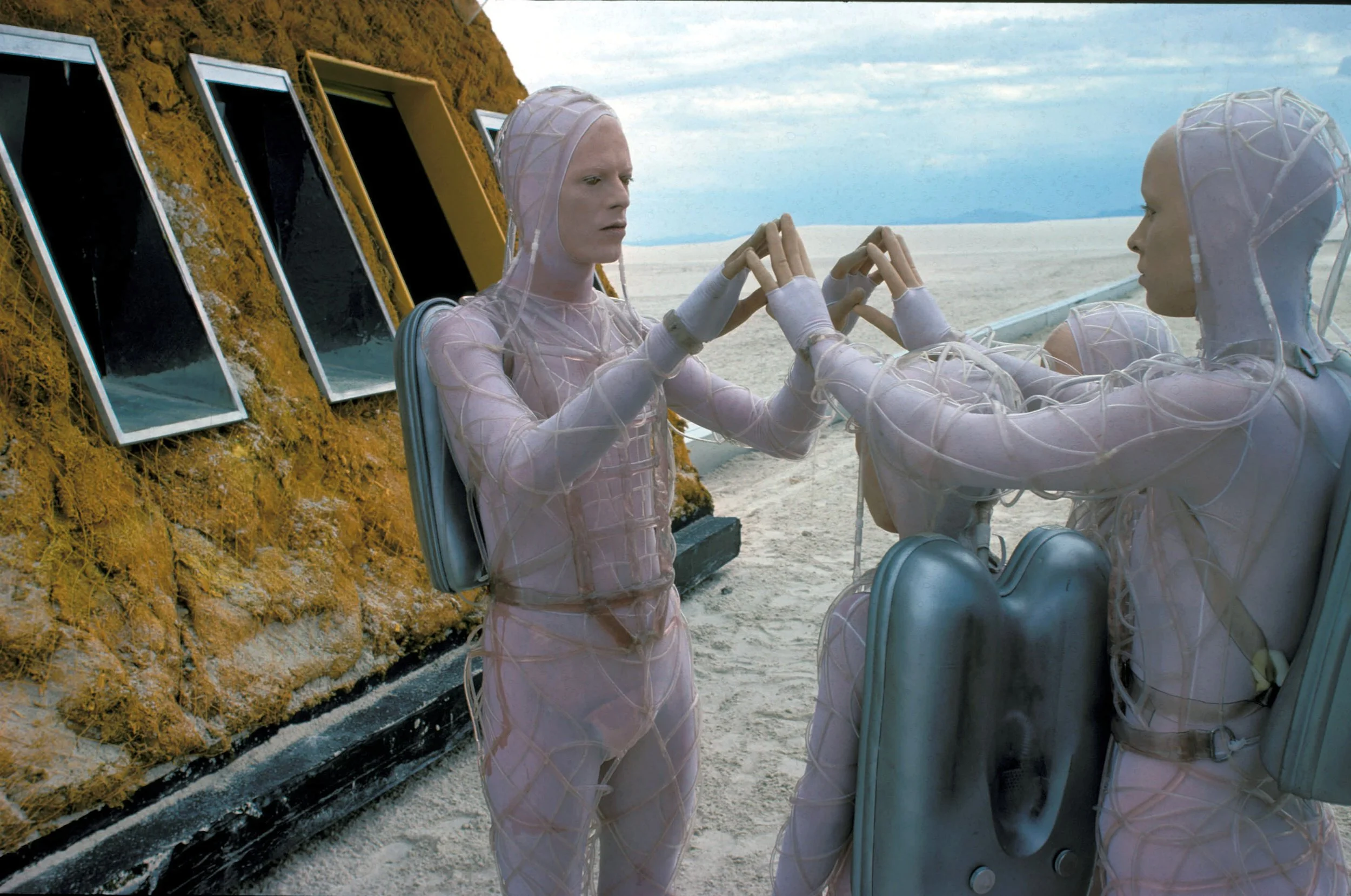
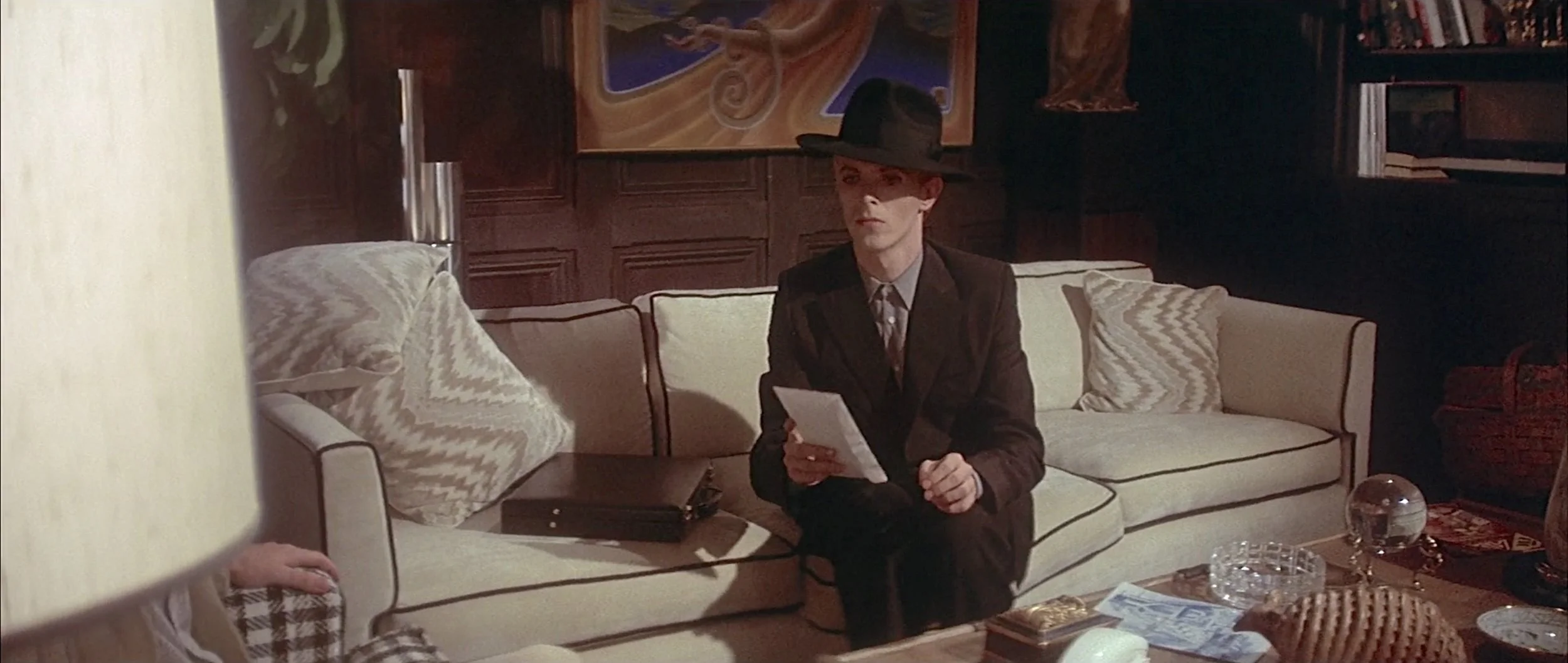
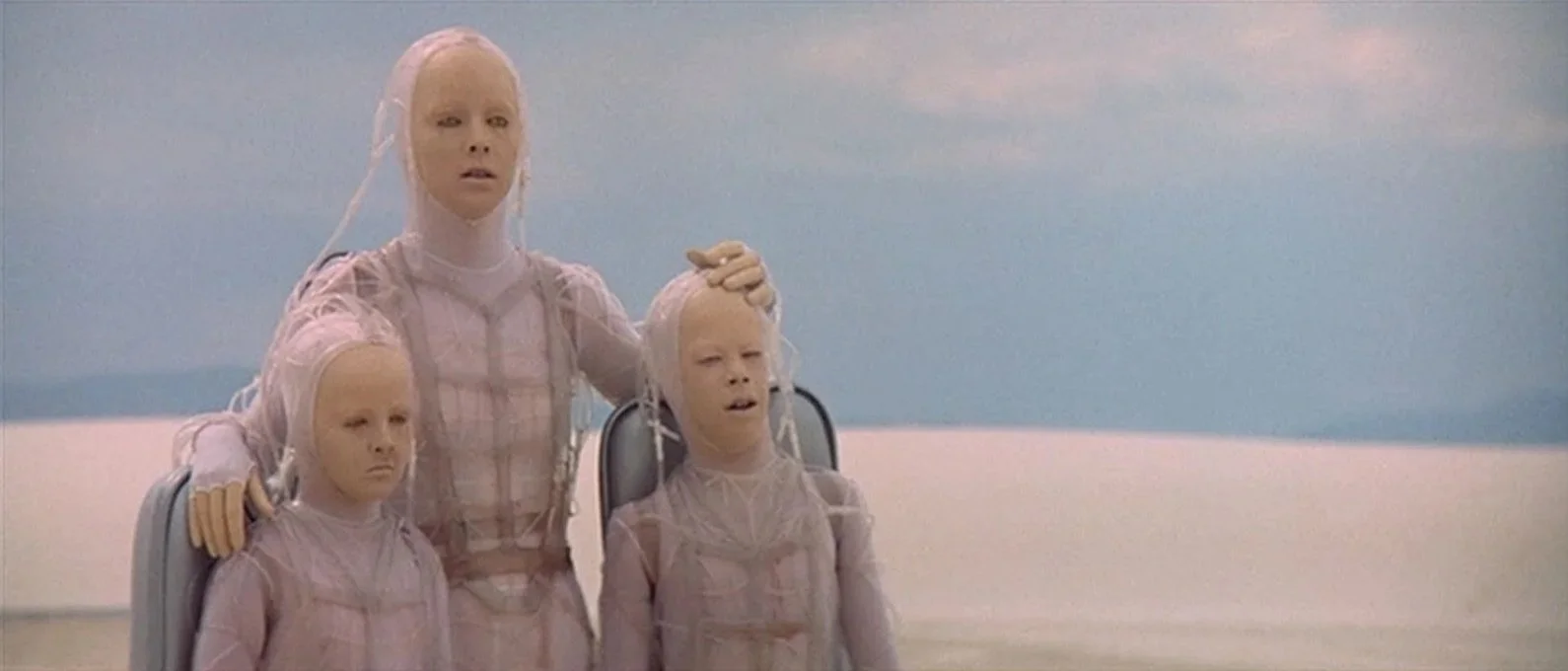
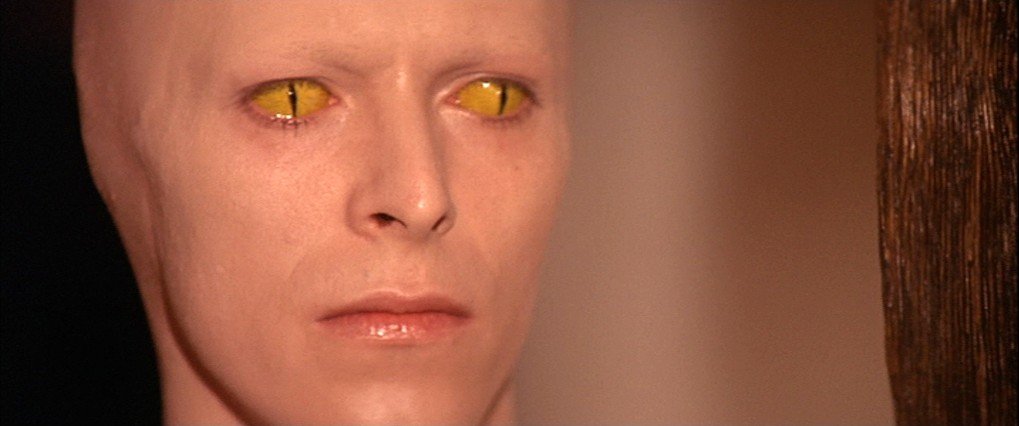
David Bowie (yes that David Bowie) plays the titular man who fell to Earth, a humanoid alien who has left his wife and kids behind and traveled 40 light-years to our big blue marble to secure water for his drought-ridden planet. He attempts to assimilate on Earth by adopting a human facade; this includes employing prosthetics, contact lenses, and—given it’s Bowie— a well-modulated British accent. His passport identifies him as one Thomas Jerome Newton.
Newton’s mission? To build a spacecraft capable of transporting water to his unnamed dying planet. To fund this herculean project he leverages technologies from home to introduce several lucrative patents, generating hundreds of millions of dollars of revenue. Stewarding this effort is leading New York-based patent lawyer Oliver Farnsworth (Buck Henry). Newton ultimately entrusts Farnsworth to run his newly incoporated World Enterprises, which specializes in popular electronic gadgets. Farnsworth is fascinated by his new boss, while his partner Trevor is very wary of the seemingly eccentric and somewhat cryptic Newton.
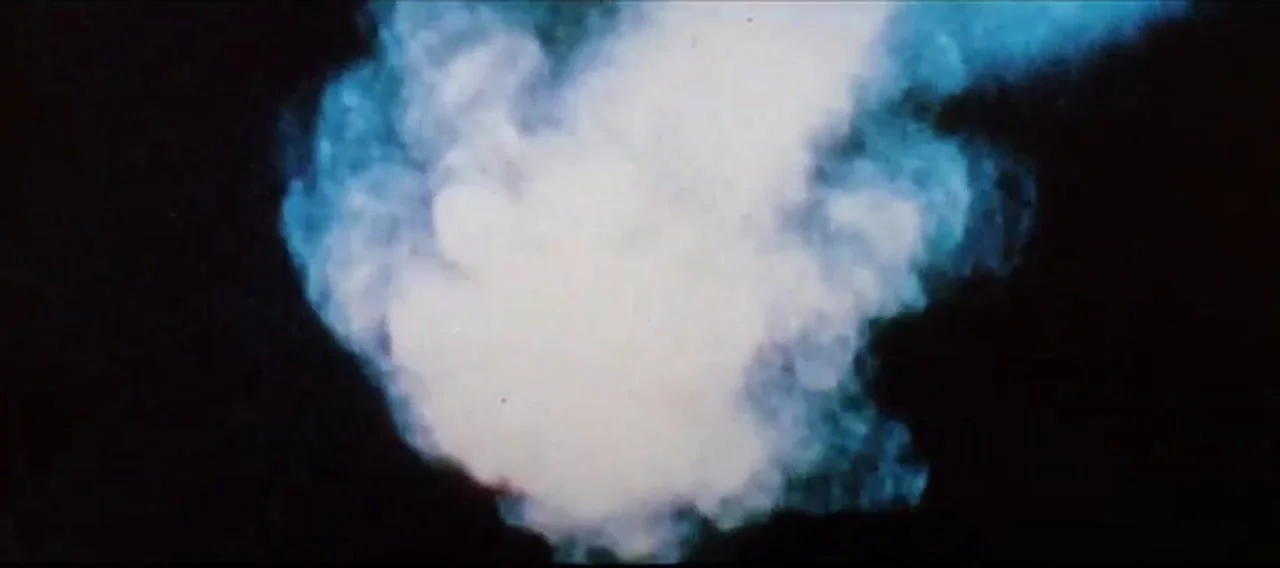
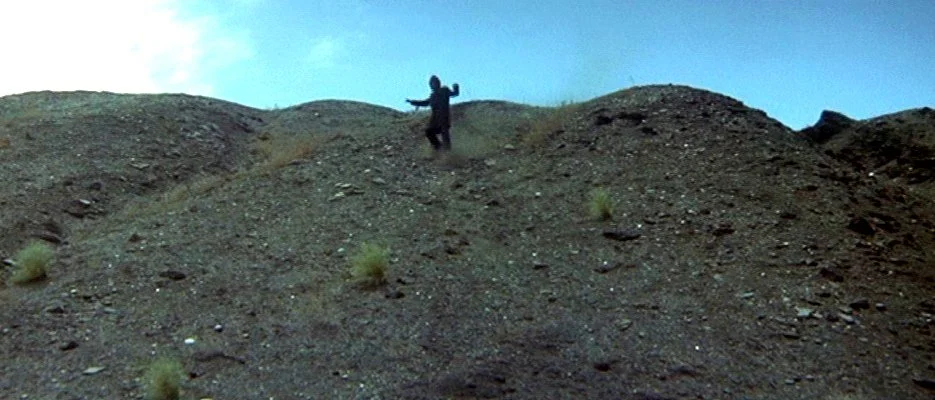
Setting up shop in the land of enchantment
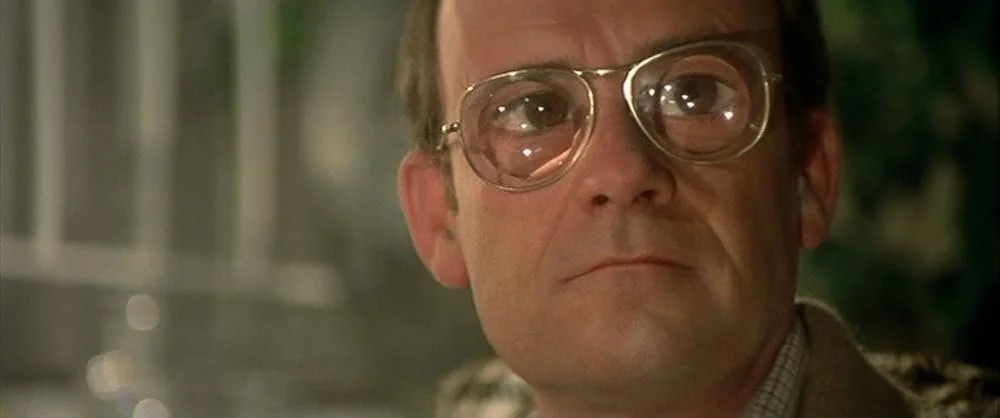
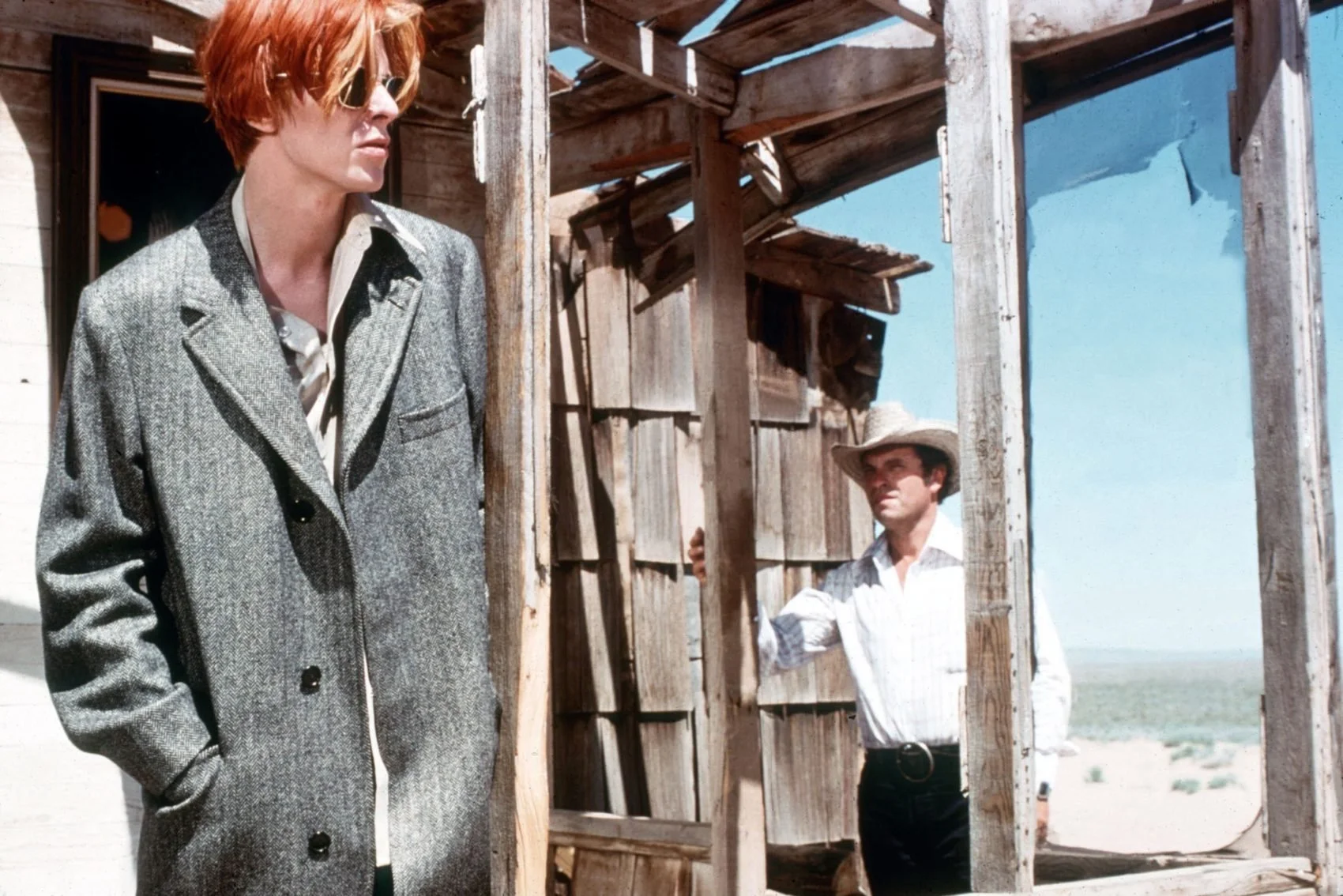
The mysterious, soft-spoken Newton sets up operations among the sage brush, mesas, and piñon pines of New Mexico, a location that’s well-suited to keeping his clandestine project under wraps (if you’re reminded of Oppenheimer and the Manhattan Project’s work in the high desert of New Mexico, you’re not alone.) Newton eventually recruits scientist Dr. Nathan Bryce (Rip Torn), a jaded college professor who spends his free time bedding his female students.
This is as good a time as any for a disclaimer: this film features a lot of nudity and graphic sex scenes. If that sort of filmmaking makes you want to reach for the fast forward button on your remote, you may want to skip this one. Don’t say we didn’t warn you.
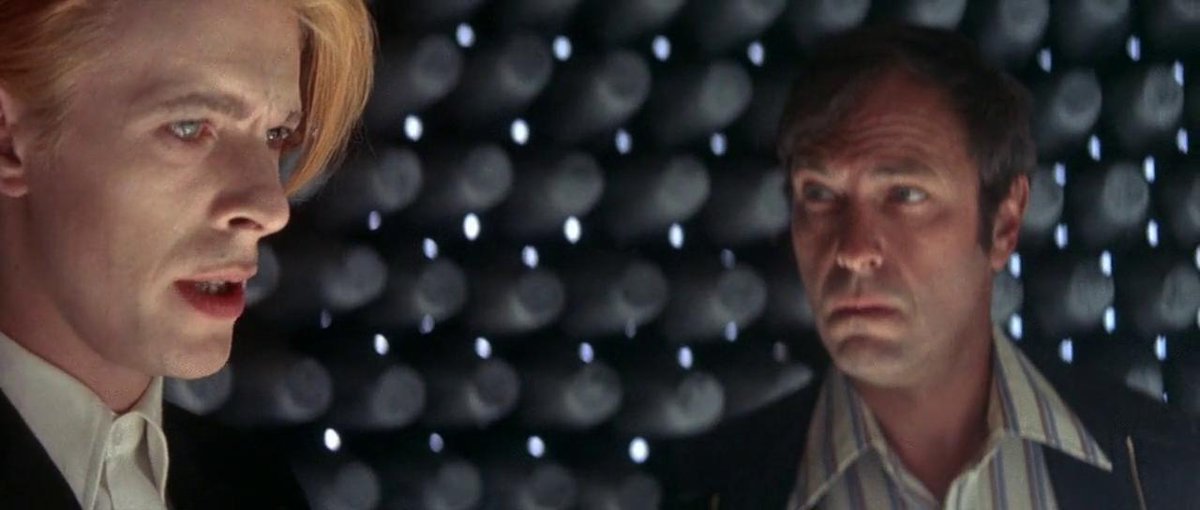
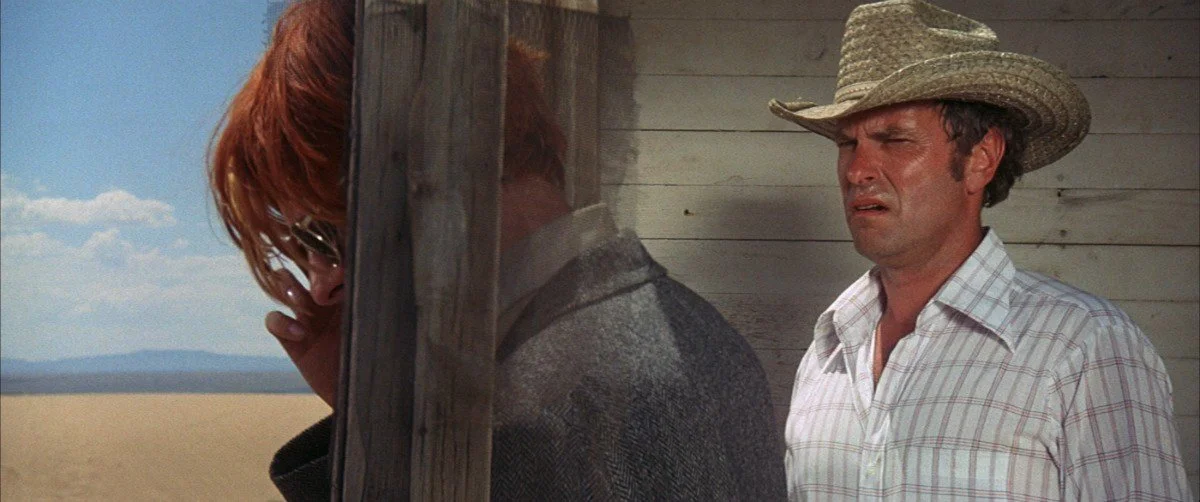
Bryce joins Newton’s team as his fuel technician, an opportunity he hopes will present him with a fresh start. He eventually learns Newton’s real identity and master plan and becomes the extraterrestrial’s friend and confidant.
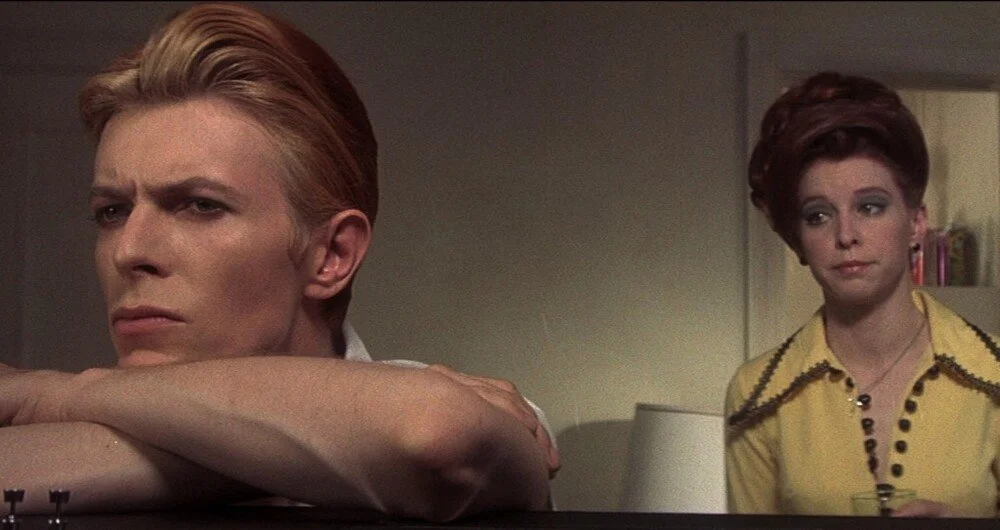
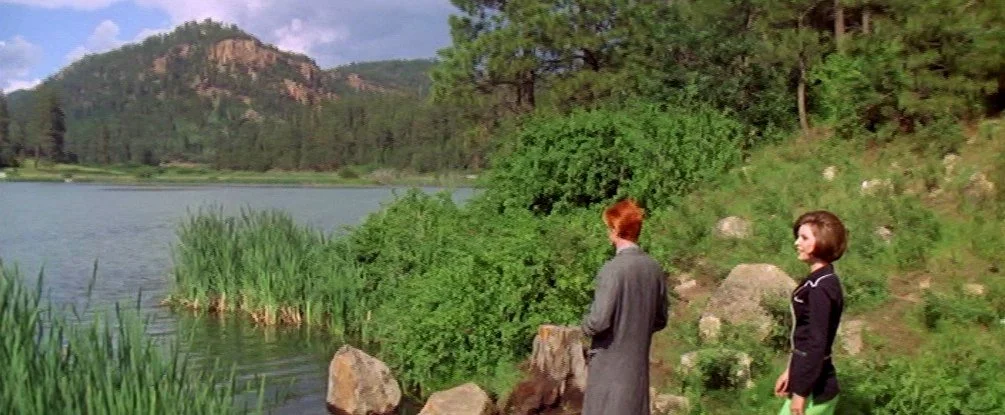
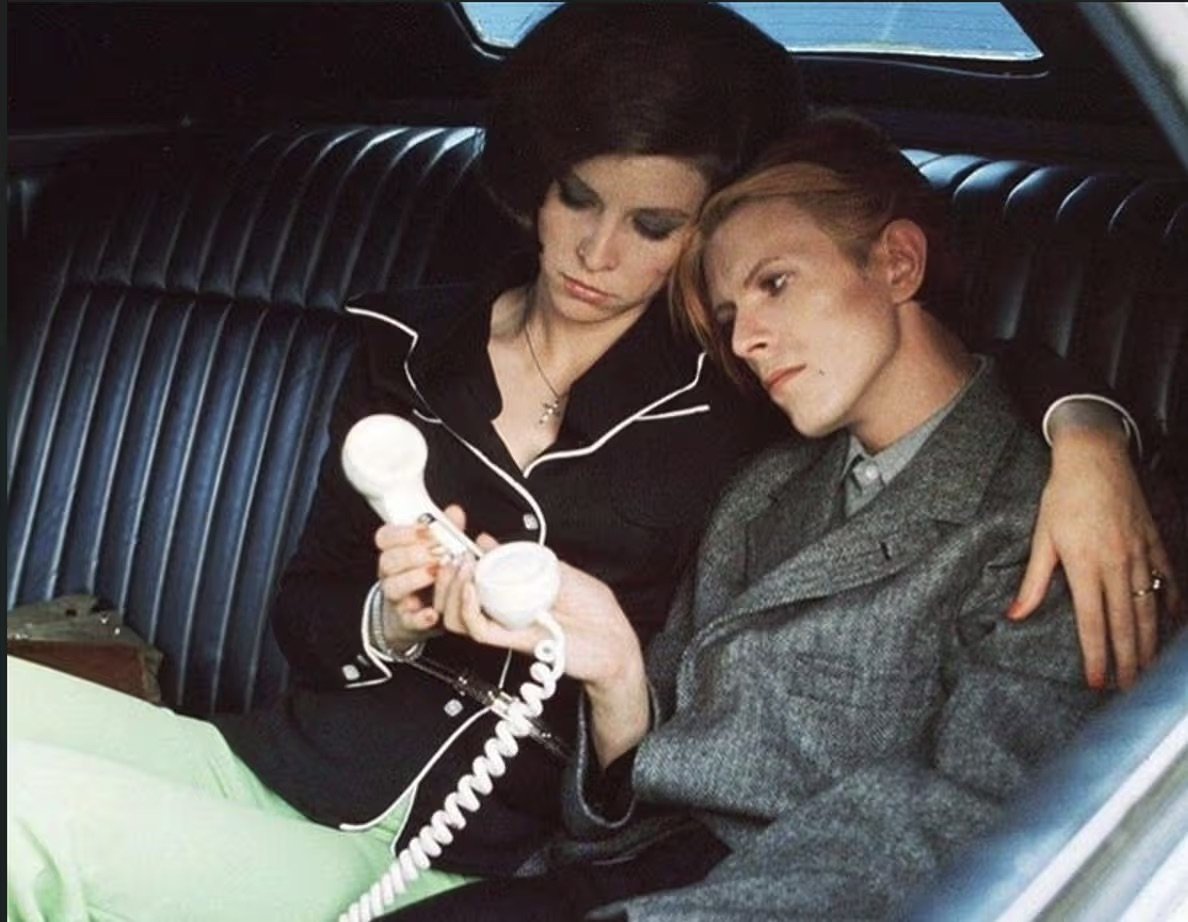
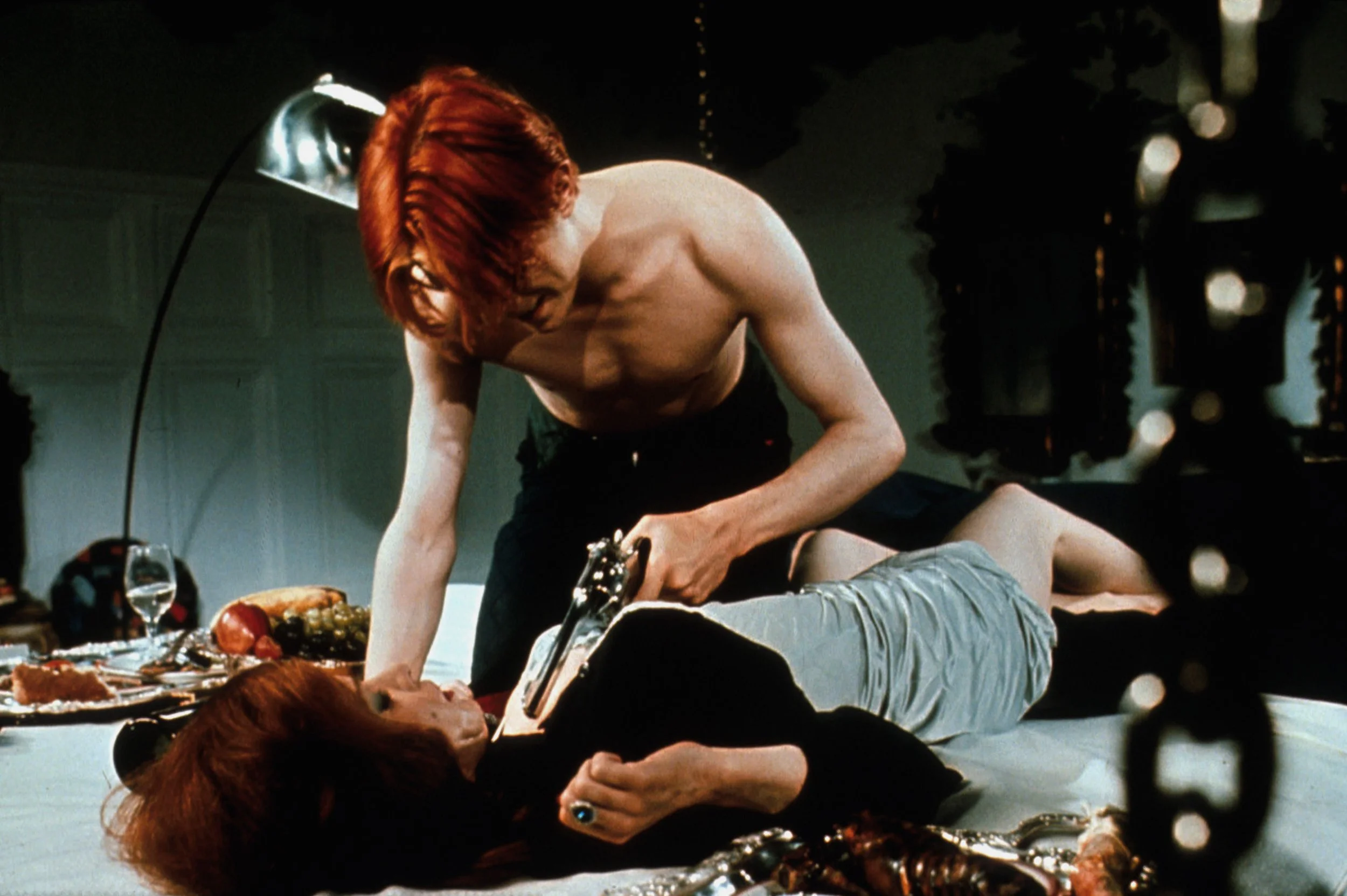
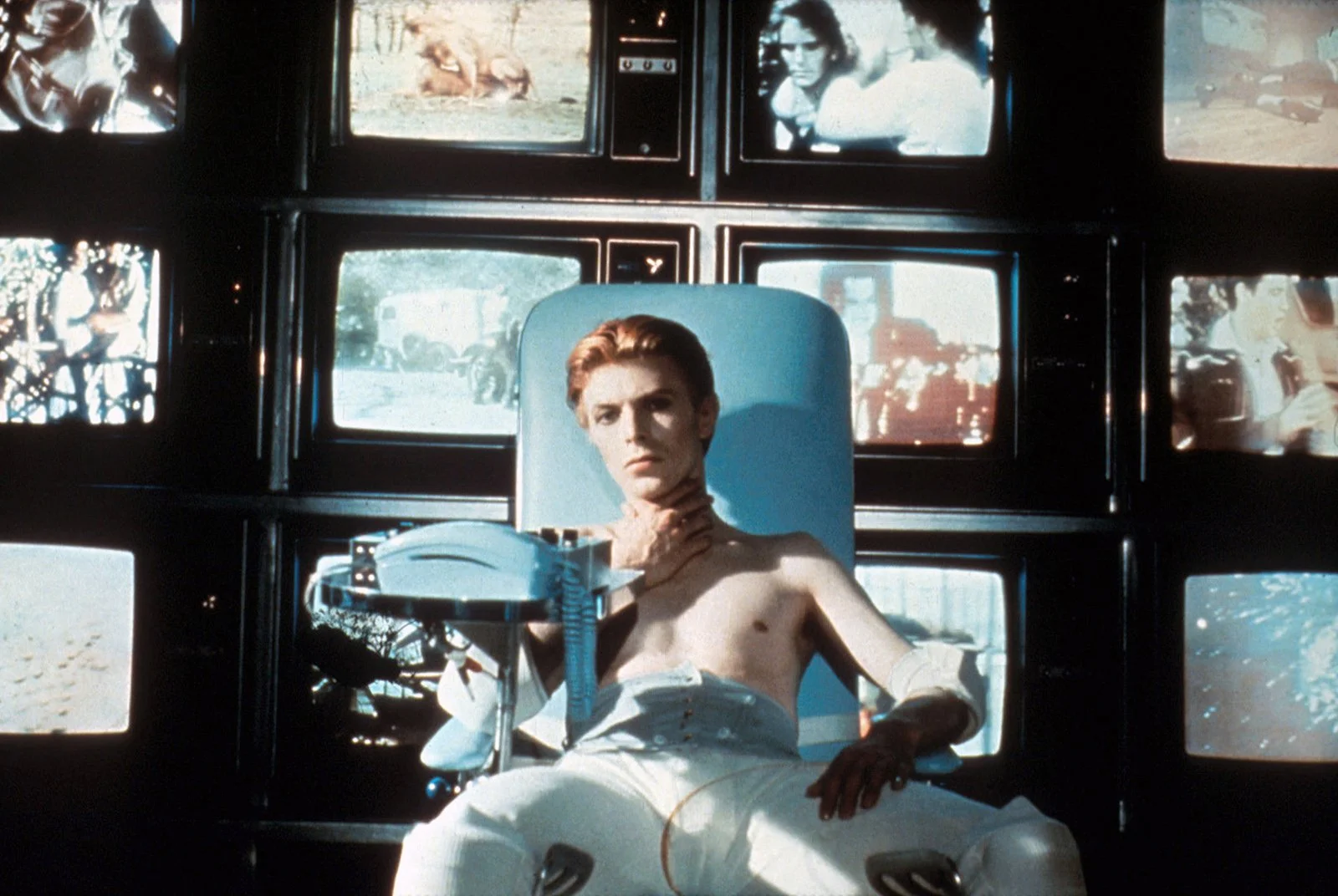
Rounding out Newton’s small inner circle is Mary Lou (Candy Clark), a kind and lonely young woman who works at a hotel where Newton had been staying. Mary Lou falls in love with Newton and the two eventually become involved, moving into a lakeside home together. Mary Lou, an alcoholic, introduces “Tommy” (as she affectionately refers to Newton) to booze, which becomes a slippery slope for the wholly unprepared alien. Newton soon becomes consumed by addictions, namely media consumption (especially television) and alcohol. Strained by dependence, depression, and the extraordinary dynamic of their terrestrial/extraterrestrial pairing, their relationship quickly veers into the dysfunctional.
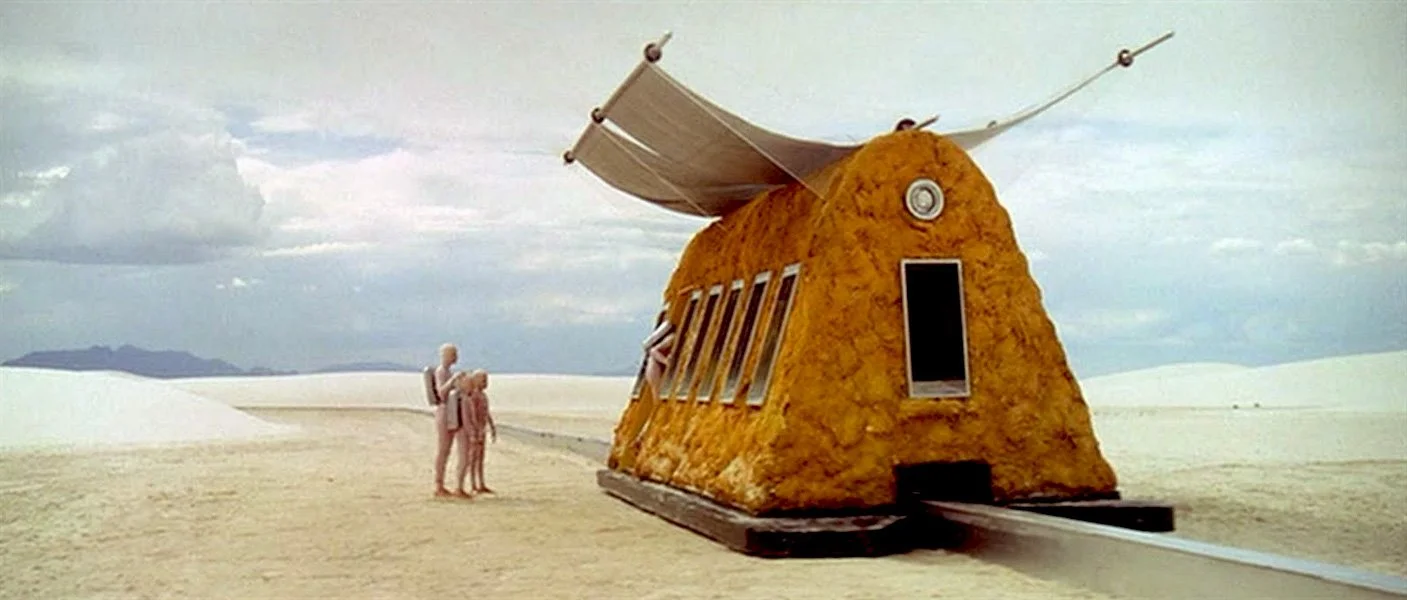
A world away
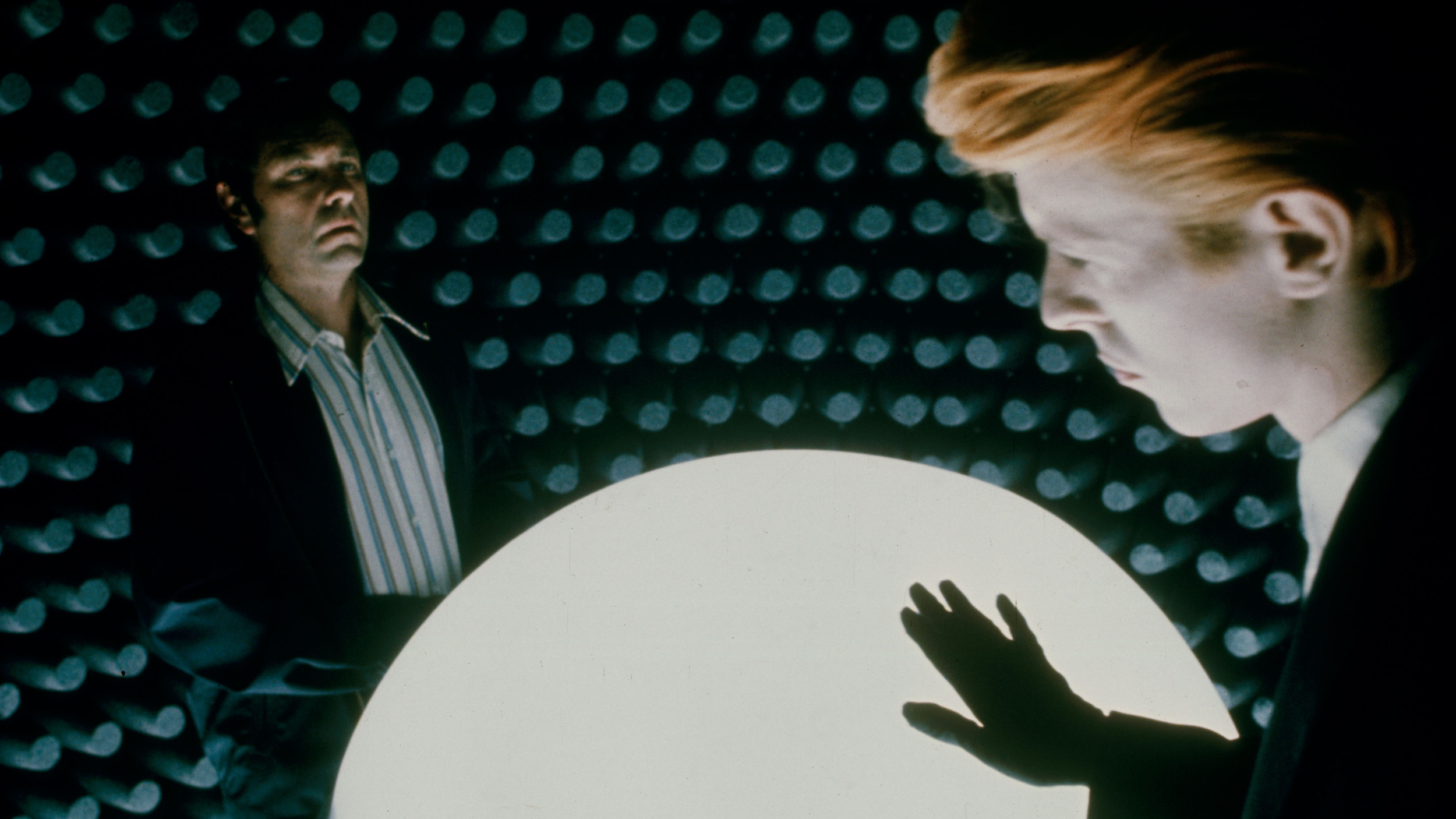
All the while, World Enterprises continues to prosper as Newton and Bryce move closer to realizing their mission’s objective. However, secretive government agencies and rival corporations move to thwart the project’s success. These entities are not above taking aggressive action towards our otherworldly protagonist, which will have implications for those in his orbit. Newton continues to grapple with addiction, becoming intimately familiar with quintessential human flaws and earthly struggles that are no longer “alien” to him.
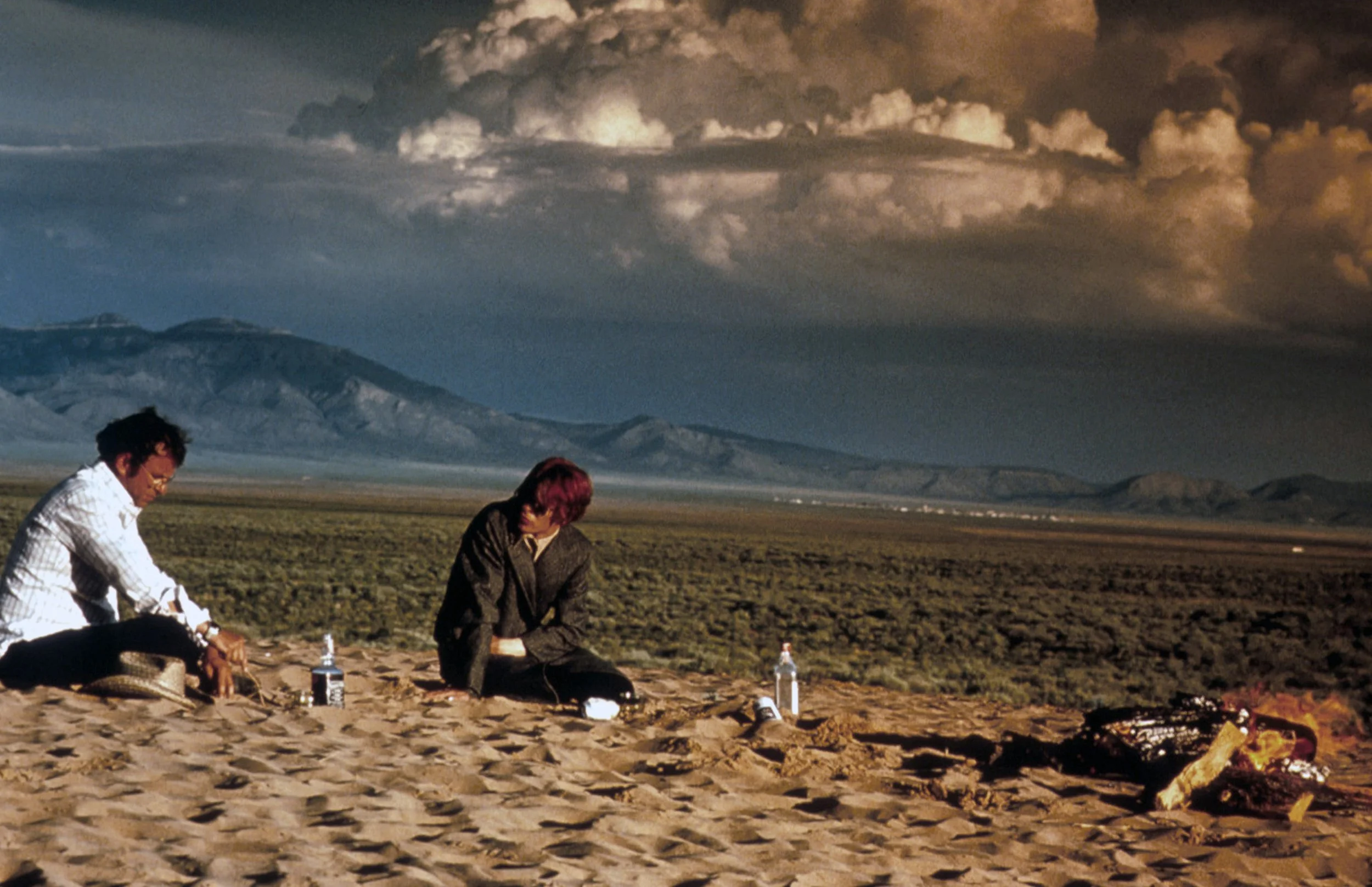
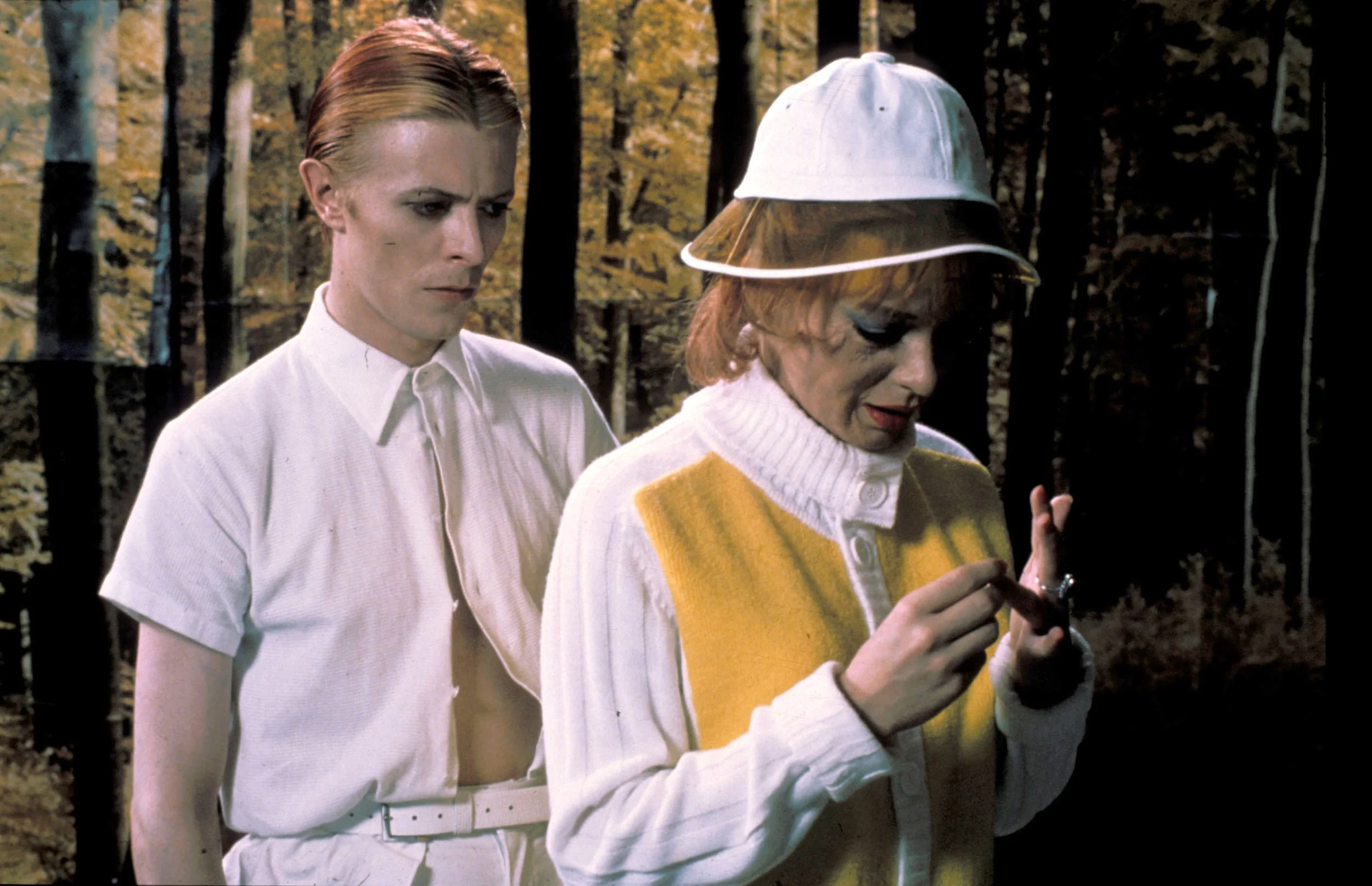
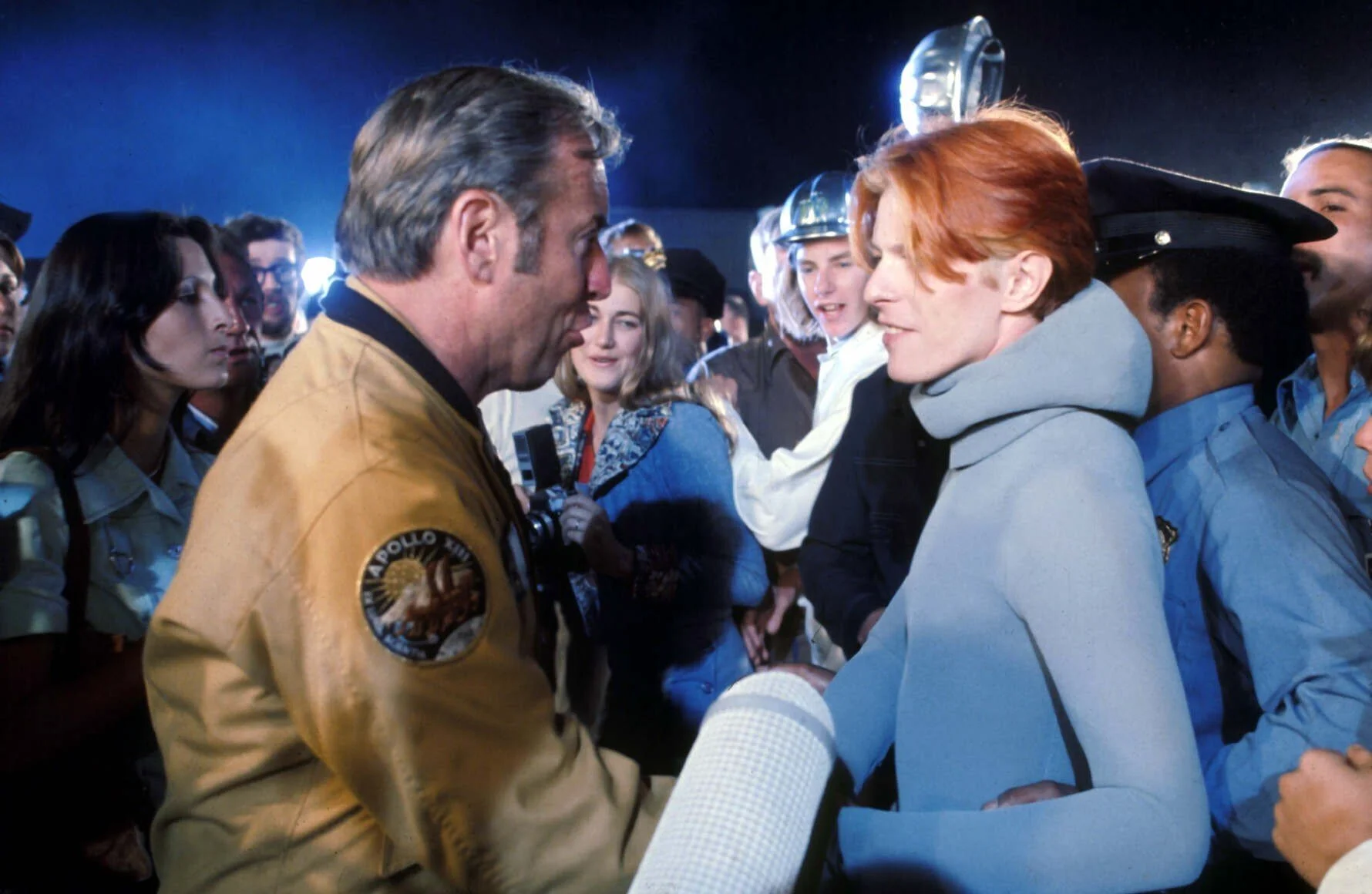
My two cents
The Man Who Fell to Earth encompasses classic science fiction tropes, space travel, corporate intrigue, and government conspiracies. Director Nicholas Roeg does not sweat the details; he seems unconcerned with visual spectacle, the representation of hard science, or high-stakes intrigue. Further, context in this film is scant and the treatment of event continuity is cursory and vague, which might frustrate some audiences. While some of these omissions could be budget related, we get the sense that Roeg is much more interested in the story’s flawed characters and overarching themes, such as the innate corruptibility of the human experience, technological and media consumerism, and social isolation—topics that have become even more prescient with time.
Those familiar with the director may recognize Roeg’s unique stylization, including his use of surreal and abstract imagery and the insertion of cinematic non sequiturs. One prime example of the latter is a sequence in which Newton catches a fleeting glimpse of an 18th or 19th century settlement and its inhabitants who, in turn, see Newton’s signature blue Lincoln Continental town car heading down a dusty New Mexican road. It is as if either side is watching the other through a two-way time-hopping view finder. This isolated event is never repeated, and no explanation is ever given. Similarly, the film includes offbeat and peculiar bits of dialogue that don’t quite fit the events on screen. Yet these oddball moments resonate if only for their alienness and nonconformity.
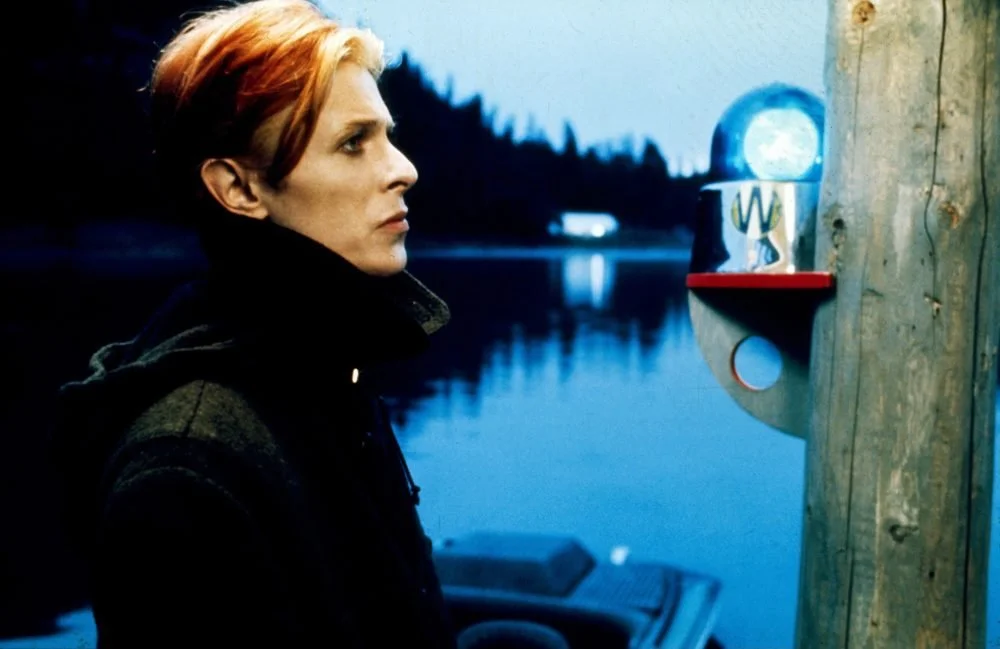
It is hard to deny that David Bowie is well cast as a classic alien– humanoid, rail thin, spindly limbed, and androgynous. And then there are his eyes. The music icon had a lifelong condition called anisocoria, which caused his left pupil to be perpetually dilated and gave Bowie the appearance of having two different eye colors. A few years prior (1972-1973) Bowie manifested a fictional stage persona known as “Ziggy Stardust,” an androgynous intergalactic rock star birthed from the release of his legendary concept album The Rise and Fall of Ziggy Stardust and the Spiders from Mars. Both Ziggy Stardust and Bowie himself were brought low through extensive drug use. Bowie was purportedly using copious amounts of cocaine when he worked on this film, which might partially explain his often jittery performance.
This brings up an interesting discussion of the effect of untrained or less experienced screen actors. In most instances, any given movie role is best served by dedicated, well trained, and/or naturally gifted actors. That said, there are times when unpolished artists unaccustomed to the big screen make sense in a film, particularly low-budget genre features. Some examples include Carnival of Souls (1962), Let’s Scare Jessica to Death (1971), and Messiah of Evil (1973). These movies include off-kilter performances that imbue the productions with an overall effect that is weird, dreamlike, and somehow mesmerizing. Bowie’s performance in The Man Who Fell to Earth is one such boon.
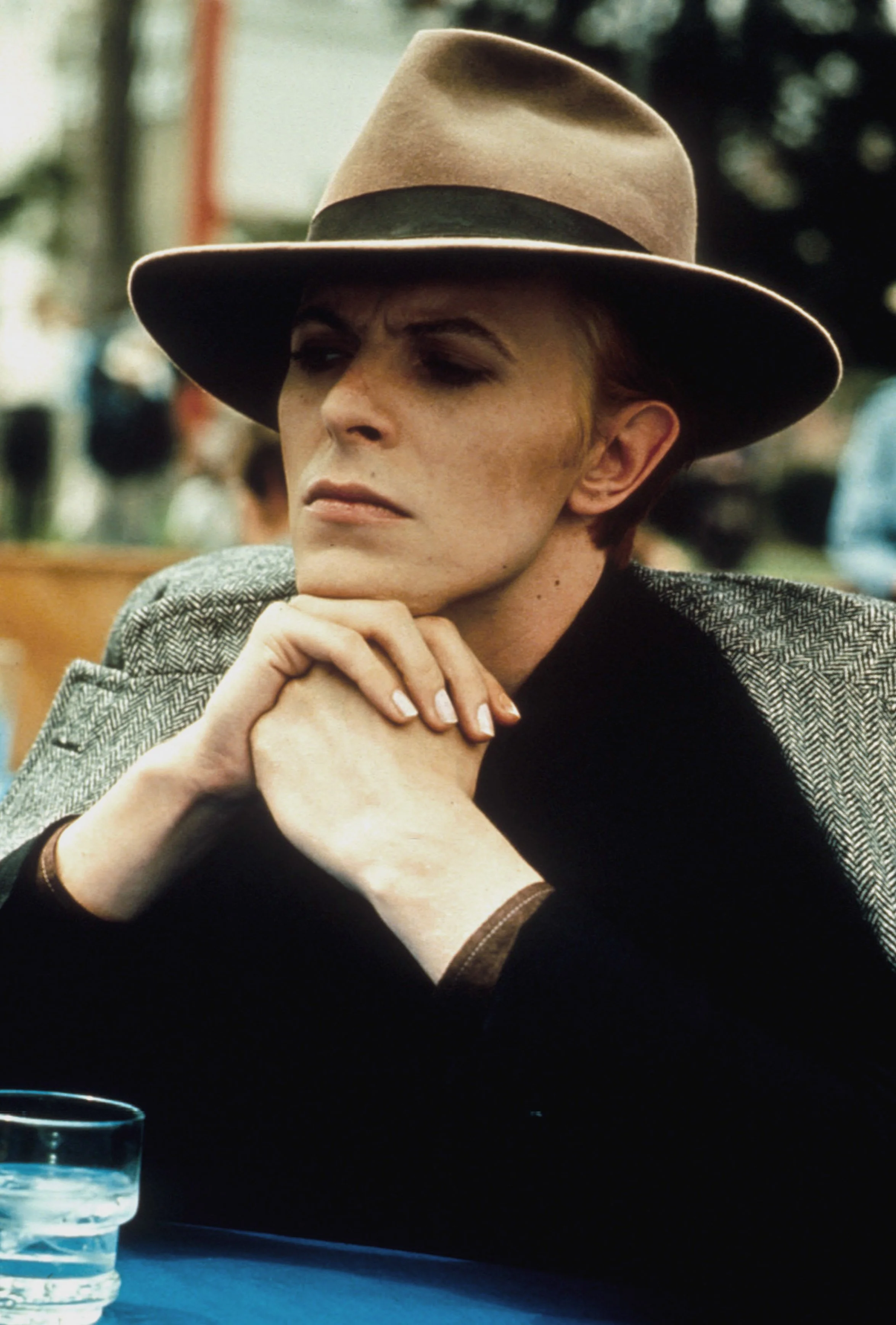
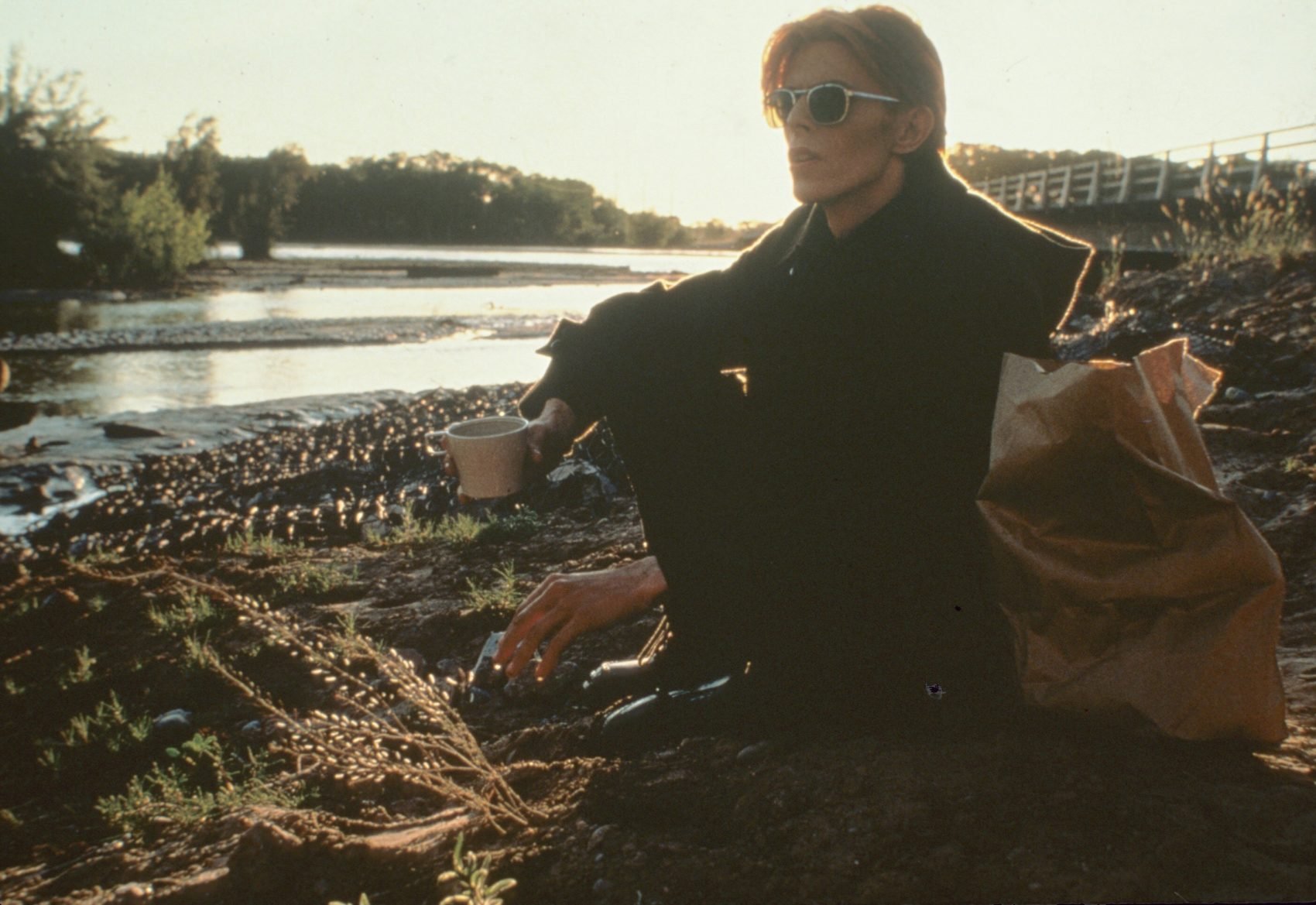
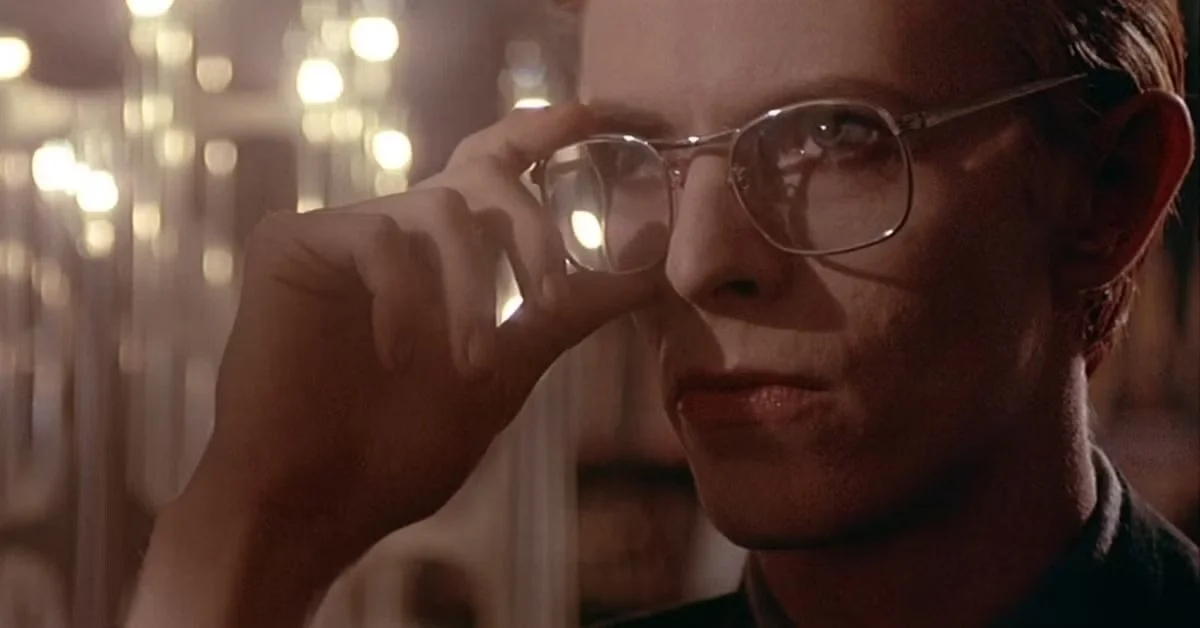
Iconic shot of David Bowie as a world-weary alien, thousands of light-years away from home…
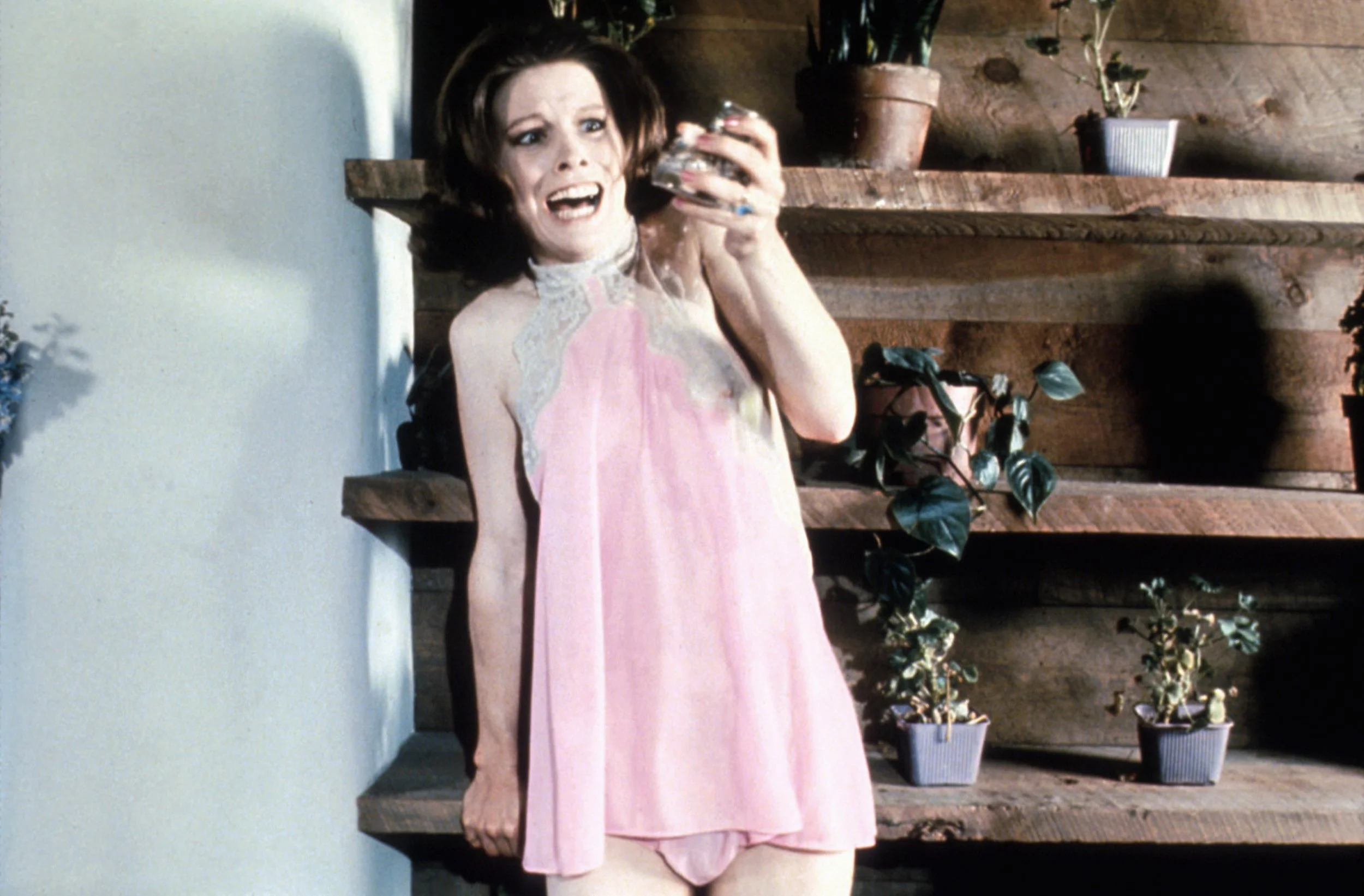
Actress/model Candy Clark is wonderful as the naive and effusive Mary Lou and a good contrast to the more reticent Newton. She is somewhat of a tragic character, unable to break her addiction to alcohol or to Newton’s affections. Then there is Rip Torn, an excellent choice for the cynical and lascivious Nathan Bryce, a man enlightened just enough to know he would benefit from a major change of course in his life. Torn might be best known for playing Zed, the sardonic and slightly cranky boss in Men in Black (1997).
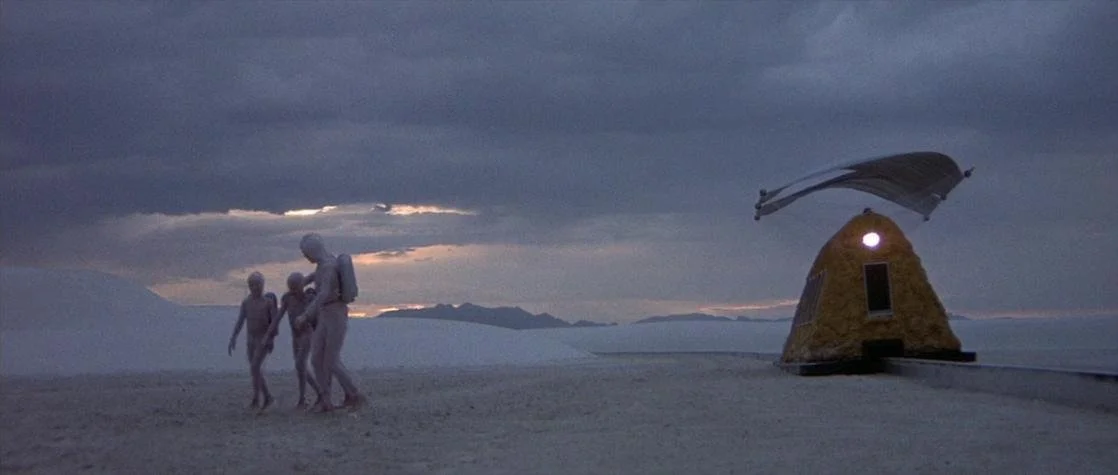
A big highlight of the film for me is the location shooting in central and southern New Mexico. Those familiar with the state will recognize locales around Albuquerque and Roswell; the sage, piñón pines, and red-hued mesas around The Turquoise Trail; and the soft white glow of the gypsum sands in White Sands National Monument (the latter which stood in for the deserts of Newton’s home planet).
I must imagine editor Graeme Clifford was kept very busy with The Man Who Fell to Earth. The film is punctuated by many cuts and more than a few crosscuts, which is in keeping with Roeg’s narratively jumpy and volatile directing style. The music selections, too, are about as unpredictable as the editing. John Phillips of the Mamas and Papas composed and recorded much of the score, which swings widely from jazz and blues, bluegrass and country, and rock. The more ethereal and new age elements of the score were composed and performed by Japanese percussionist, keyboardist, and composer Stomu Yamash'ta. The most familiar bits of music are two excerpts from Gustav Holst’s The Planets, including Op. 32: Venus, The Bringer of Peace and Op. 32 Mars: The Bringer of War, both performed by the Bournemouth Symphony Orchestra.
I was not crazy about The Man Who Fell to Earth when I first watched it years ago. I found it to be disjointed, inscrutable, and a largely unsatisfying viewing experience. And while I might not rank it as my favorite sci-fi film of the era, I have grown to appreciate its unconventional style, contemplative moments, and distinctive, often beautiful photography.
Two other Nicholas Roeg-directed films I would recommend are horror/thriller Don’t Look Now (1973) and The Witches (1990), the latter a Roald Dahl-inspired dark fantasy featuring a devilish performance by Angelica Huston.
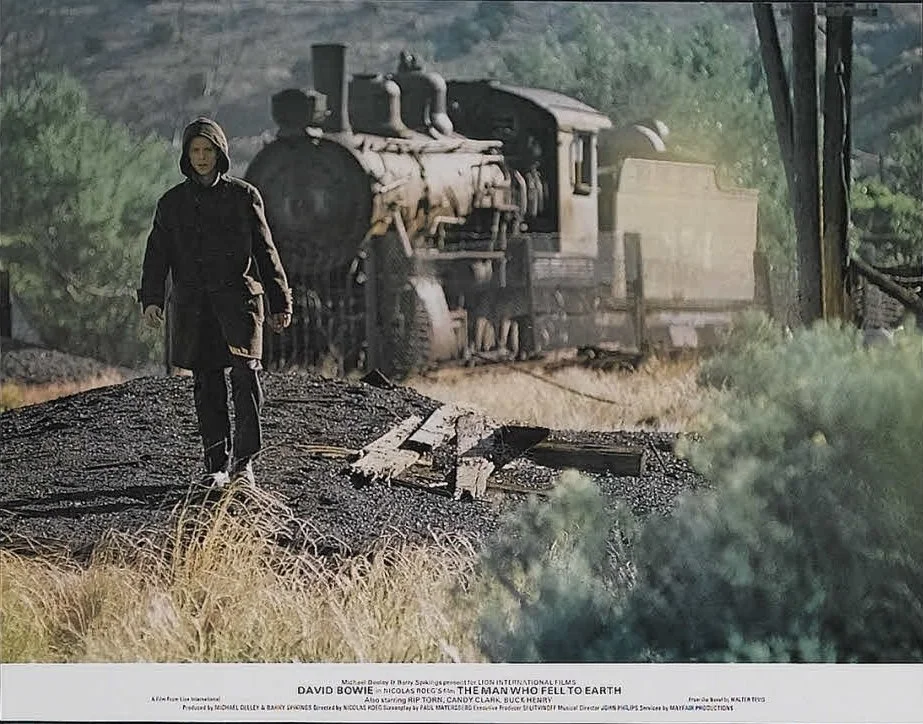
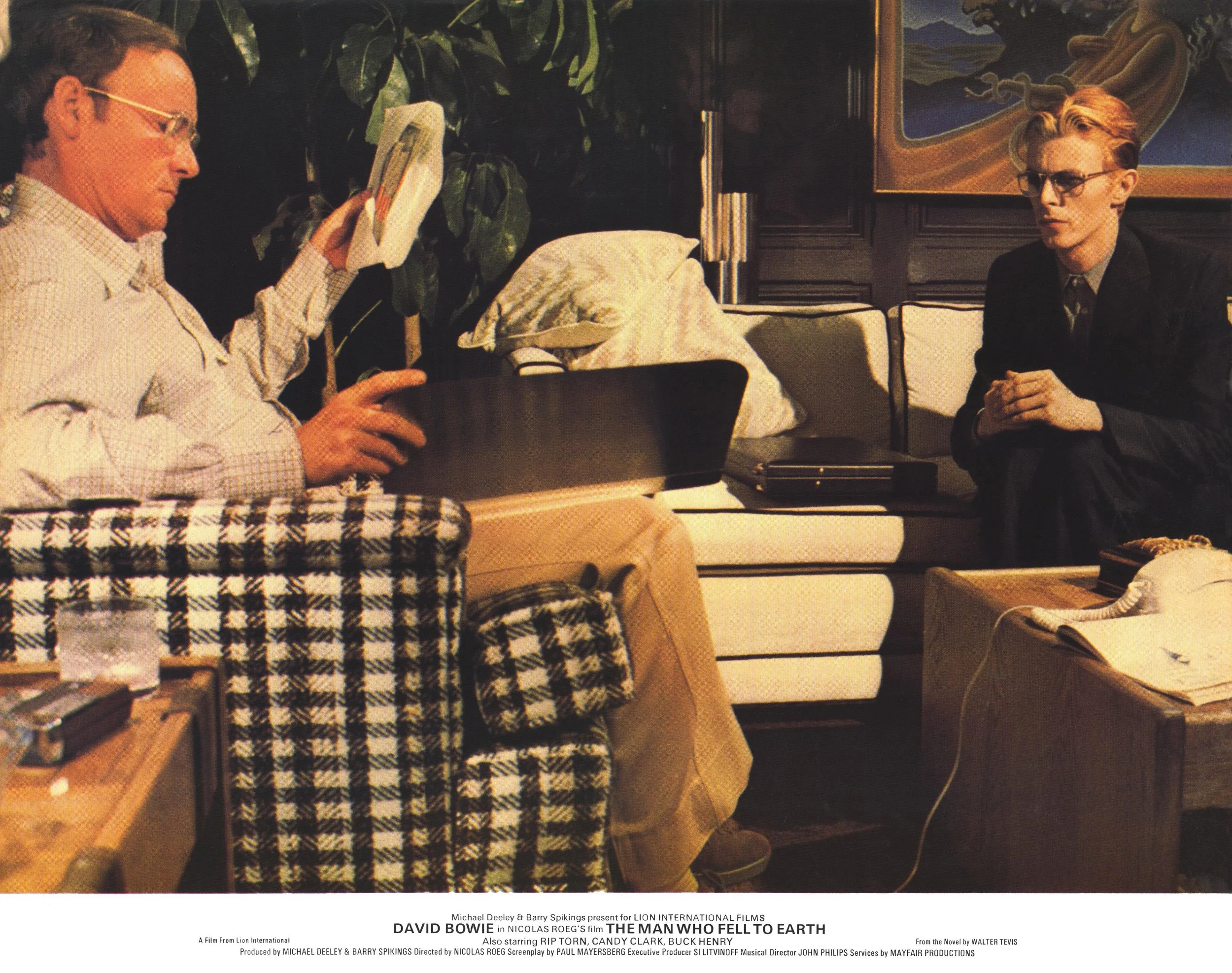
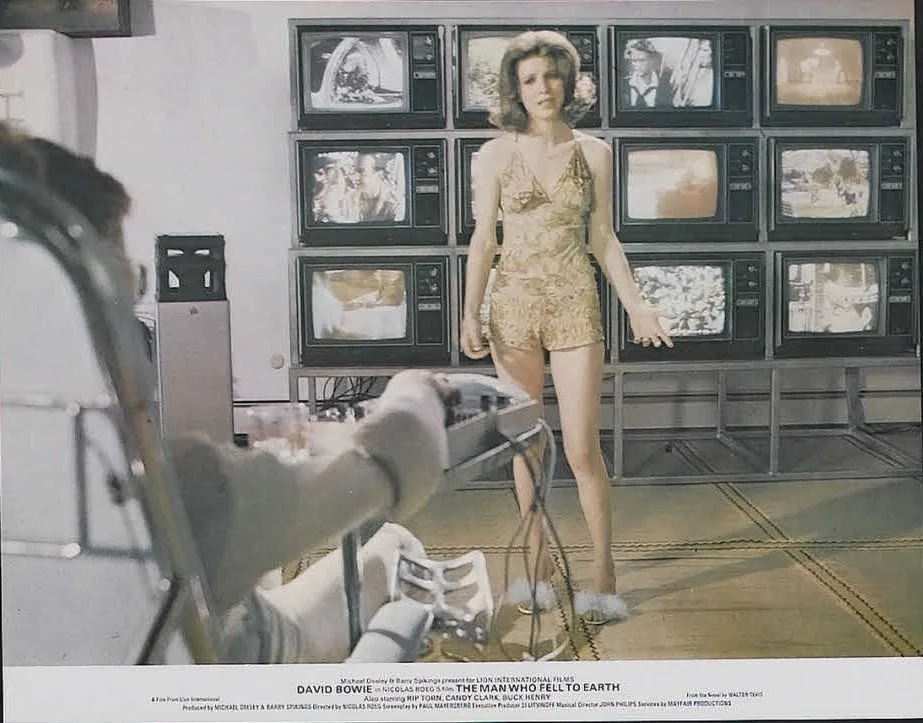
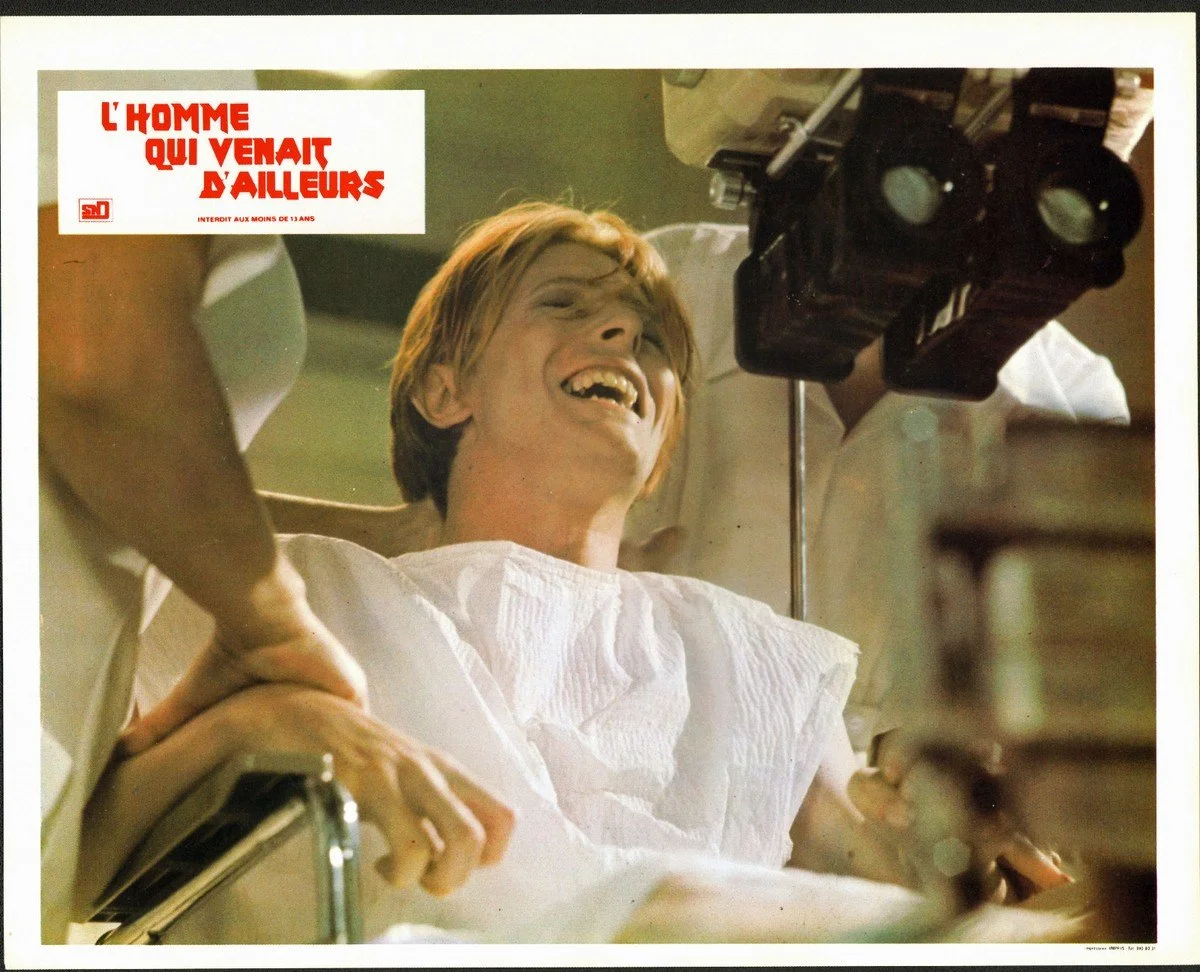
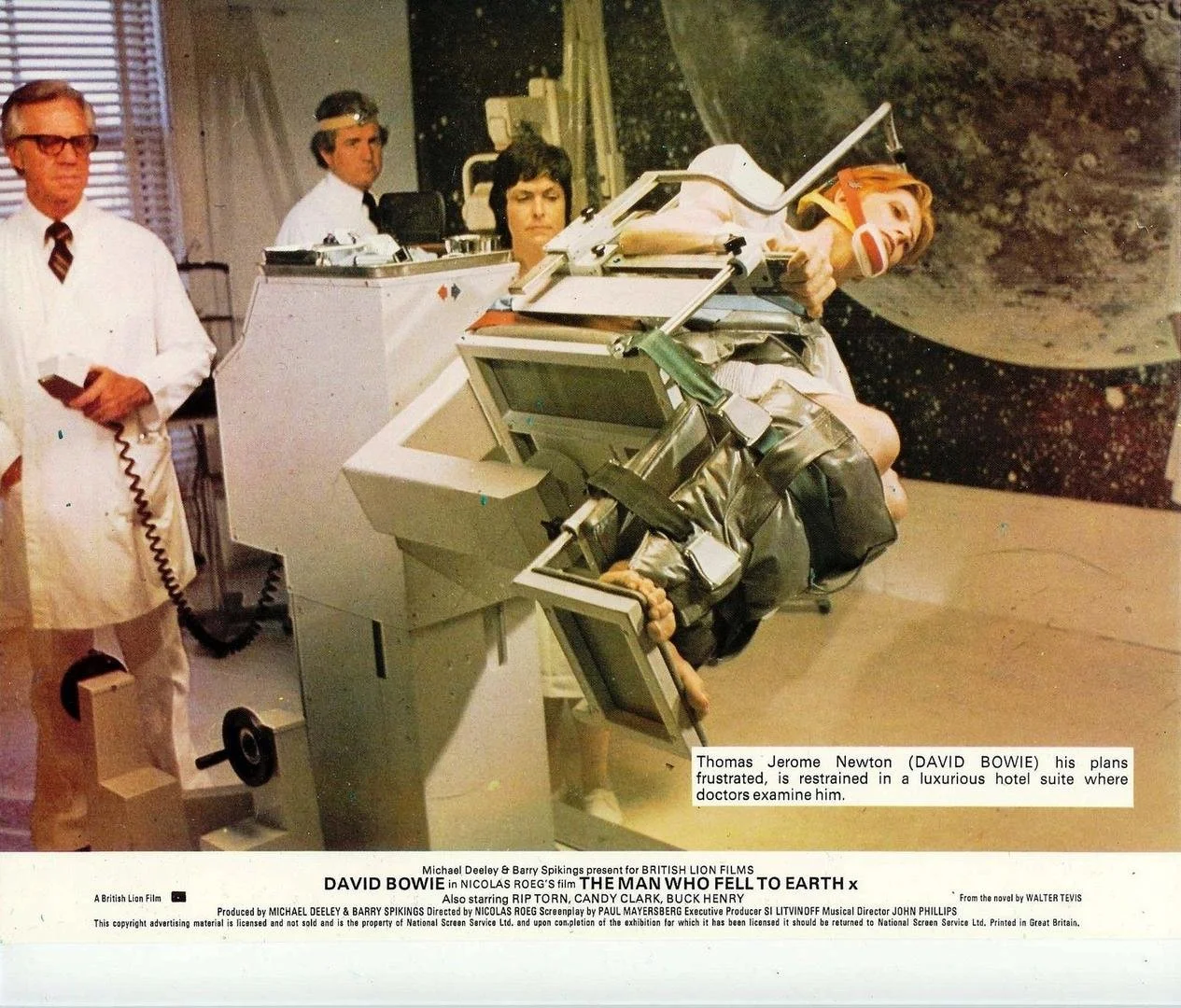
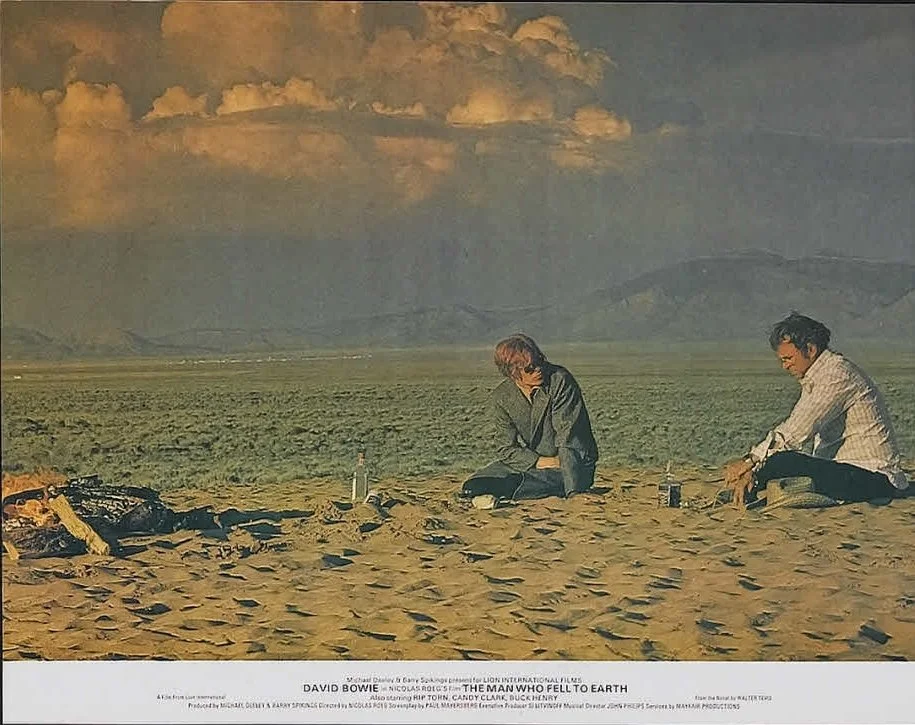
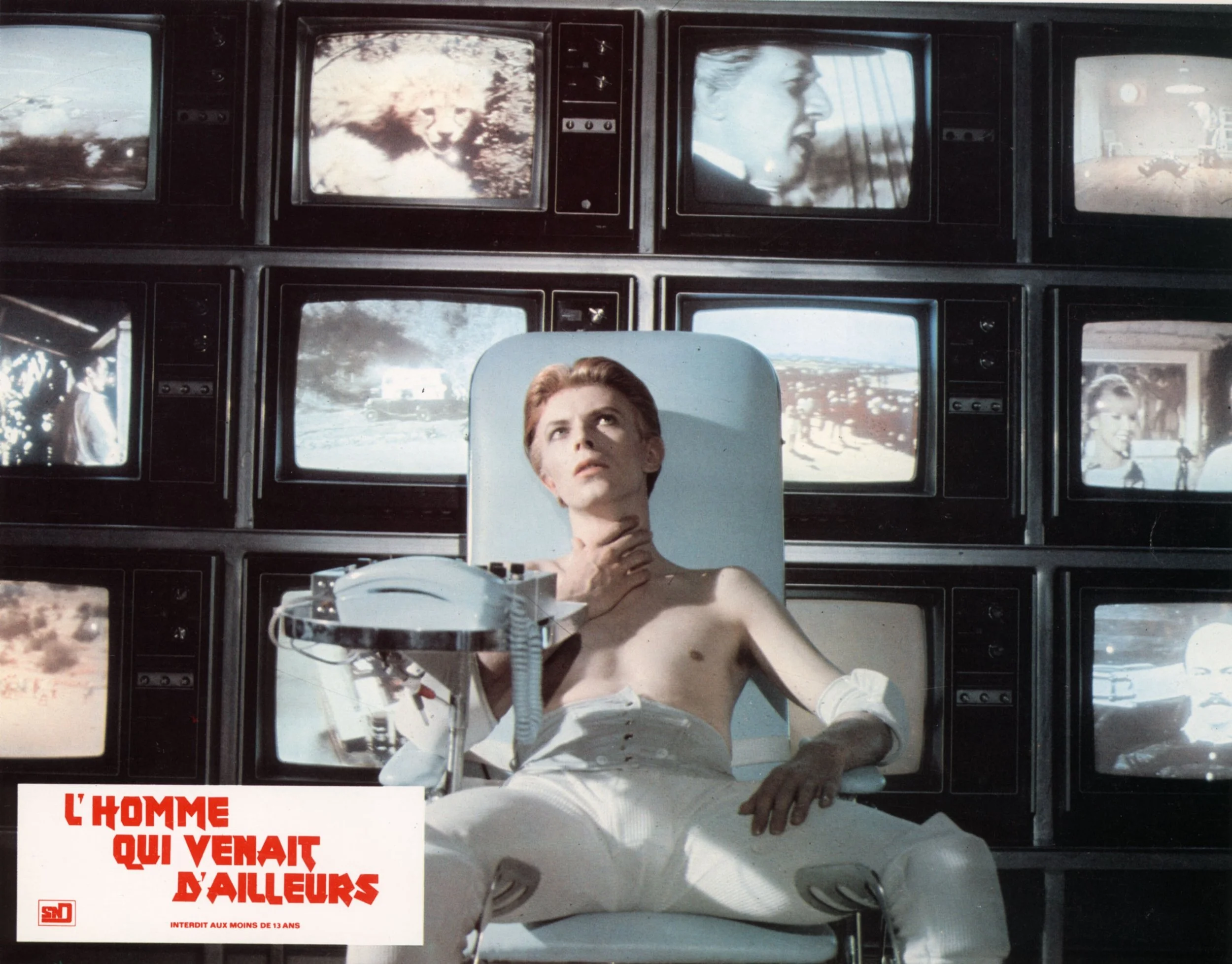
U.S. and international lobby cards for The Man Who Fell to Earth
The Man Who Fell to Earth at 50
The Man Who Fell to Earth brought in approximately $3 million worldwide upon it original release, this against a budget of around $1.5 million. Critical response was mixed with some critics confounded and frustrated by the film’s fragmented brand of storytelling, though many impressed by the arresting visuals and meditative approach to its subject matter. The film is also notable as one of the last of the earnest, probing, and experimental (pre-Star Wars) science fiction films that were prevalent from the late1960s through the mid 1970s.
While The Man Who Fell to Earth might be known to many aficionados of classic science fiction cinema, David Bowie devotees, and cult film fans, it otherwise hovers in relative obscurity among casual fandom. That said, Rolling Stone showed the movie some love in a 2020 article that ranked it at #2 on their “Best Sci-fi Movies of the 1970s” list.
The film is also part of a sci-fi sub-genre that bucked the trend of alien invasion movies popularized in the mid 20th century onward. In these films, extraterrestrials are not overtly hostile and in some instances even benevolent towards earthlings. We see this in The Day the Earth Stood Still (1951), It Came From Outer Space (1953), Close Encounters of the Third Kind (1977), Starman (1984), The Brother from Another Planet (1984), Arrival (2016), and most recently Disclosure Day (2026).
The novel and source material for The Man Who Fell to Earth was adapted into a 1987 TV movie, which was reportedly not well received by critics or fans. There was also a 2022 sequel starring Chiwetel Ejiofor that took the form of a 10-part Showtime original series.
The movie got a new lease on life in 2016 via a 4K restoration to celebrate the 40th anniversary of its theatrical release.
Trailer for the 4K restoration of The Man Who Fell to Earth
Cast (abridged)
David Bowie – Thomas Jerome Newton
Buck Henry – Oliver Farnsworth
Rip Torn – Nathan Bryce
Candy Clark – Mary-Lou
Bernie Casey – Peters
Tony Mascia - Arthur
Crew (abridged)
Director – Nicholas Roeg
Cinematographer – Anthony Richmond
Screenwriter – Paul Mayersberg
Novelist – Walter Tevis
Costume Designer – May Routh
Editor - Graeme Clifford
Music – John Phillips, Stomu Yamash'ta
How did I watch?
Streaming on Tubi
Running Time: 2h 19m
MPAA Rating: R
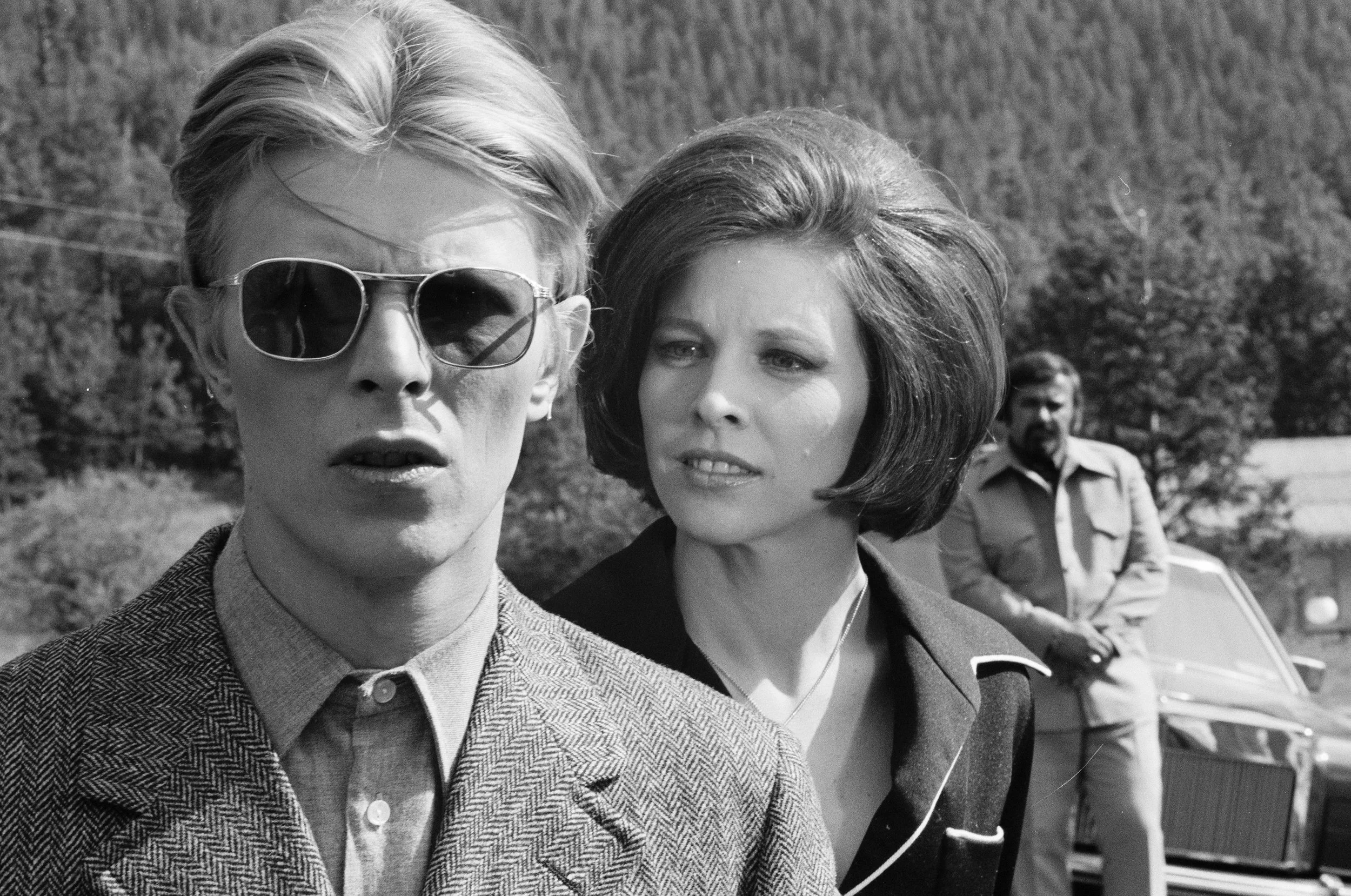
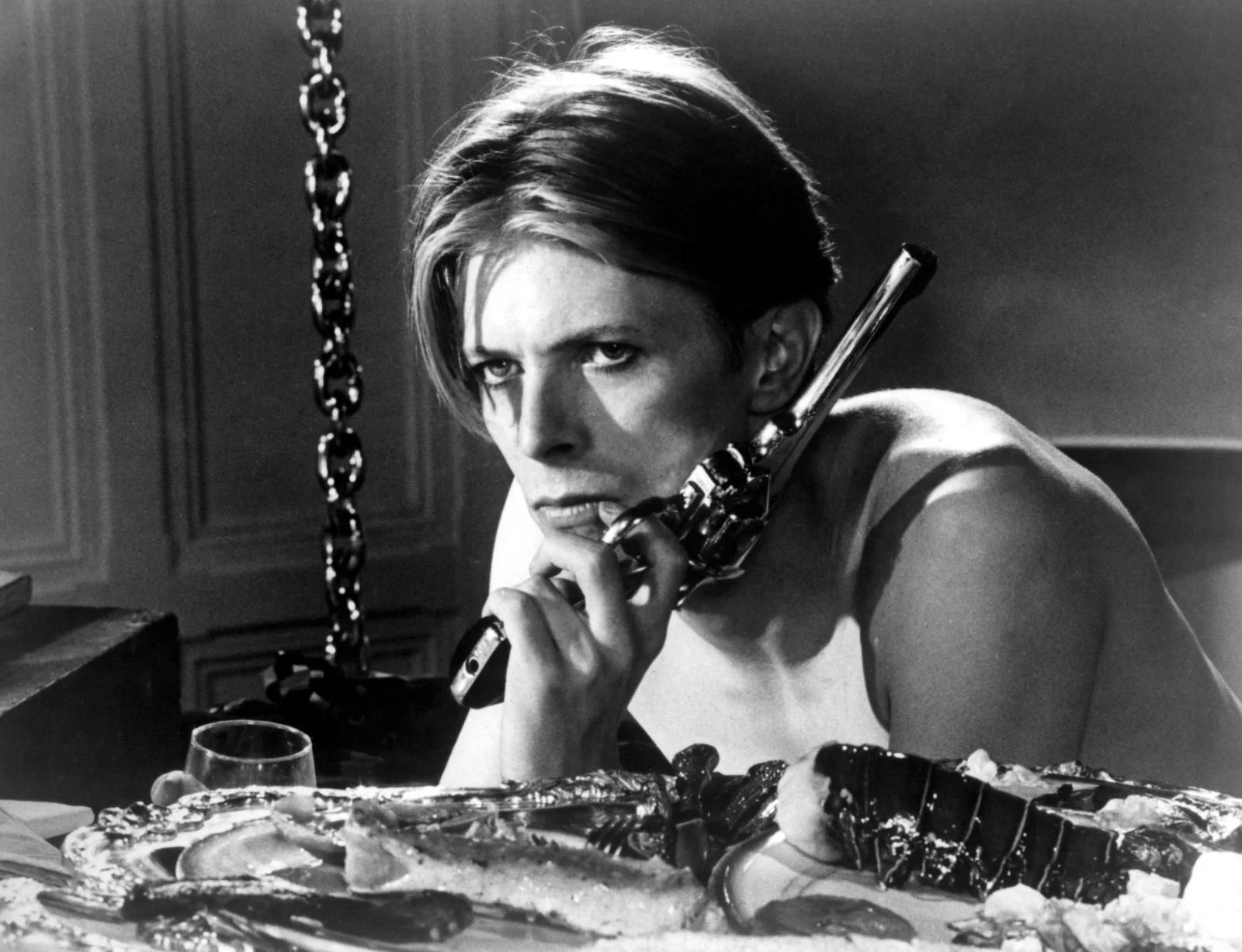
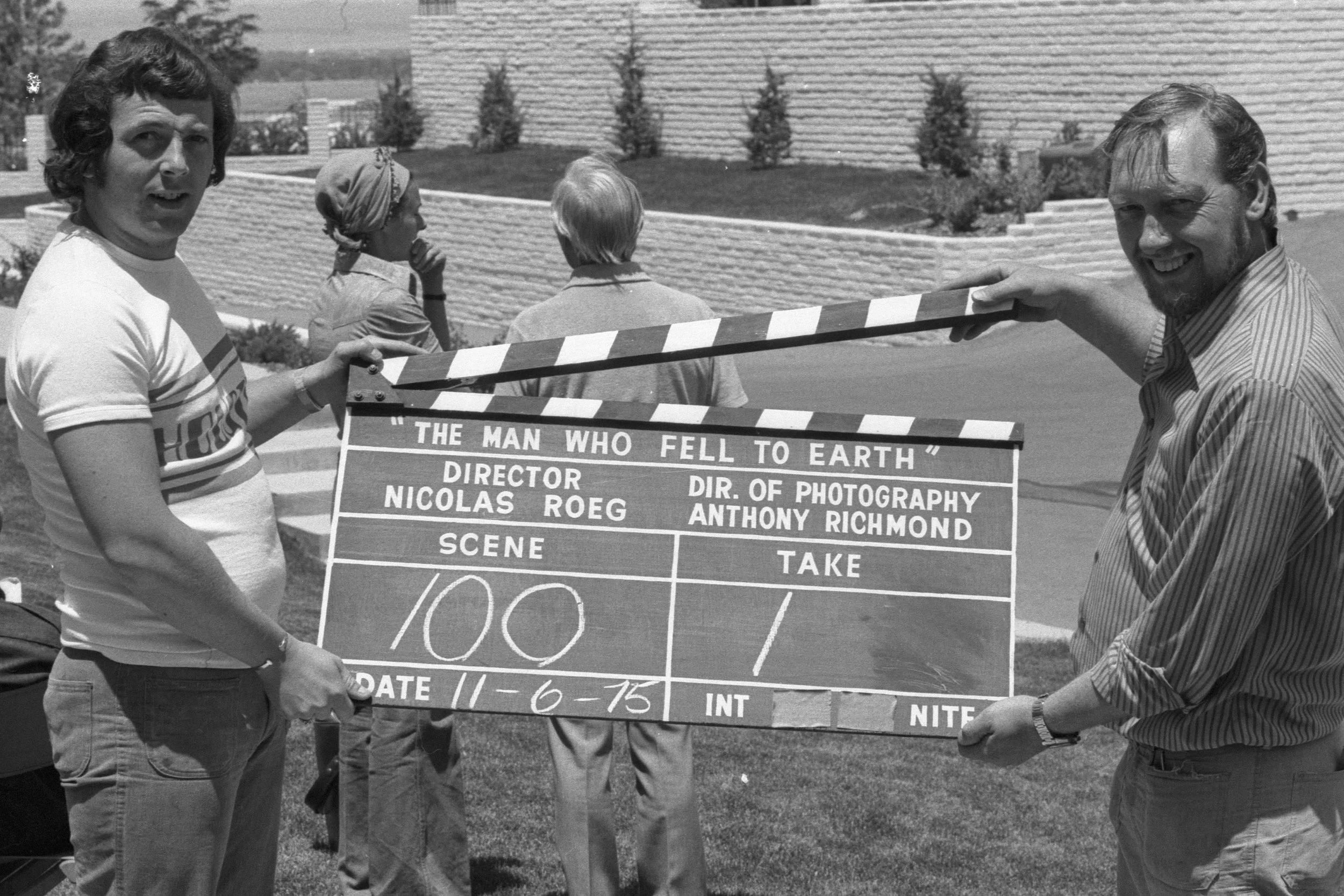
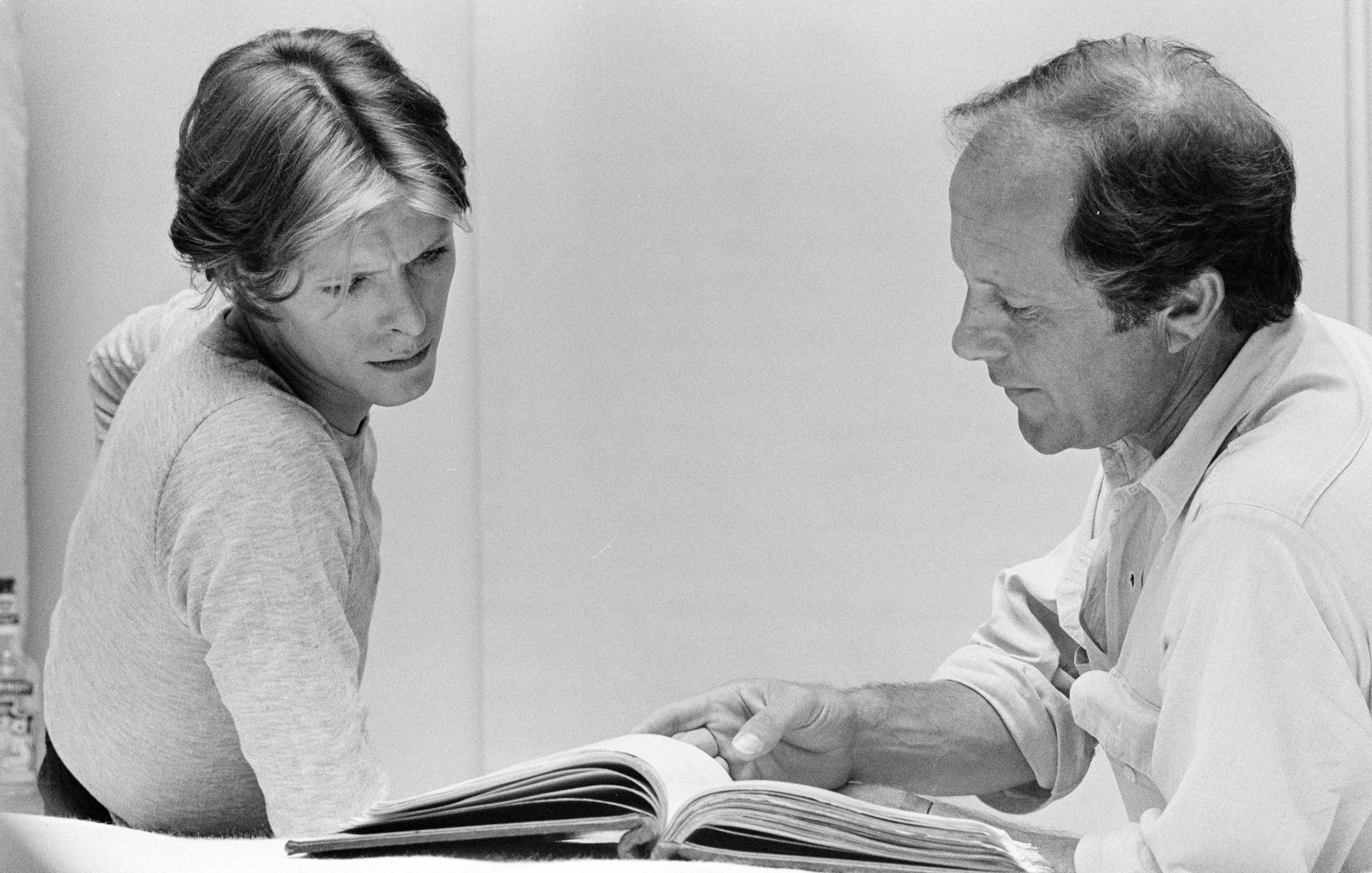
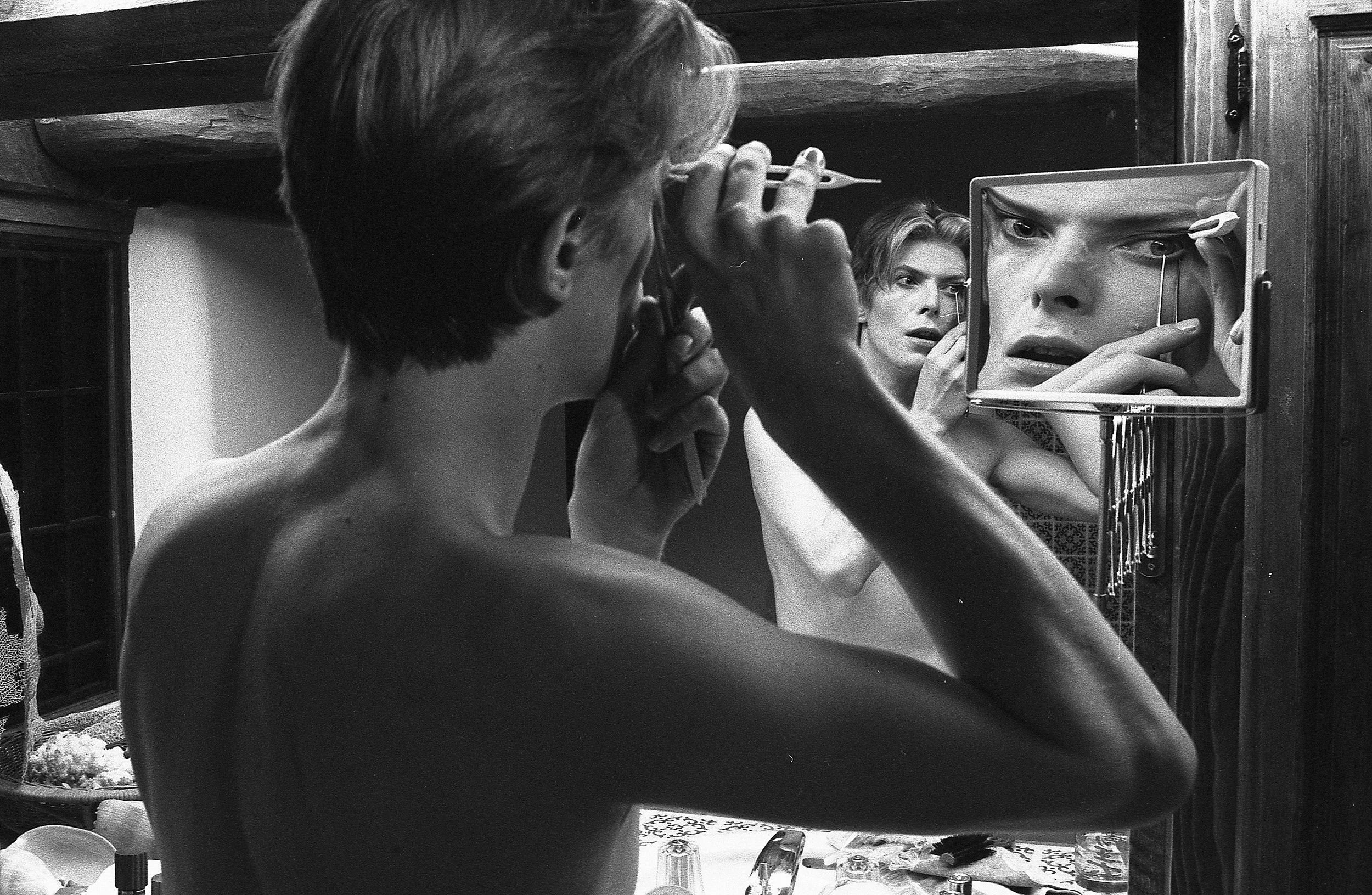

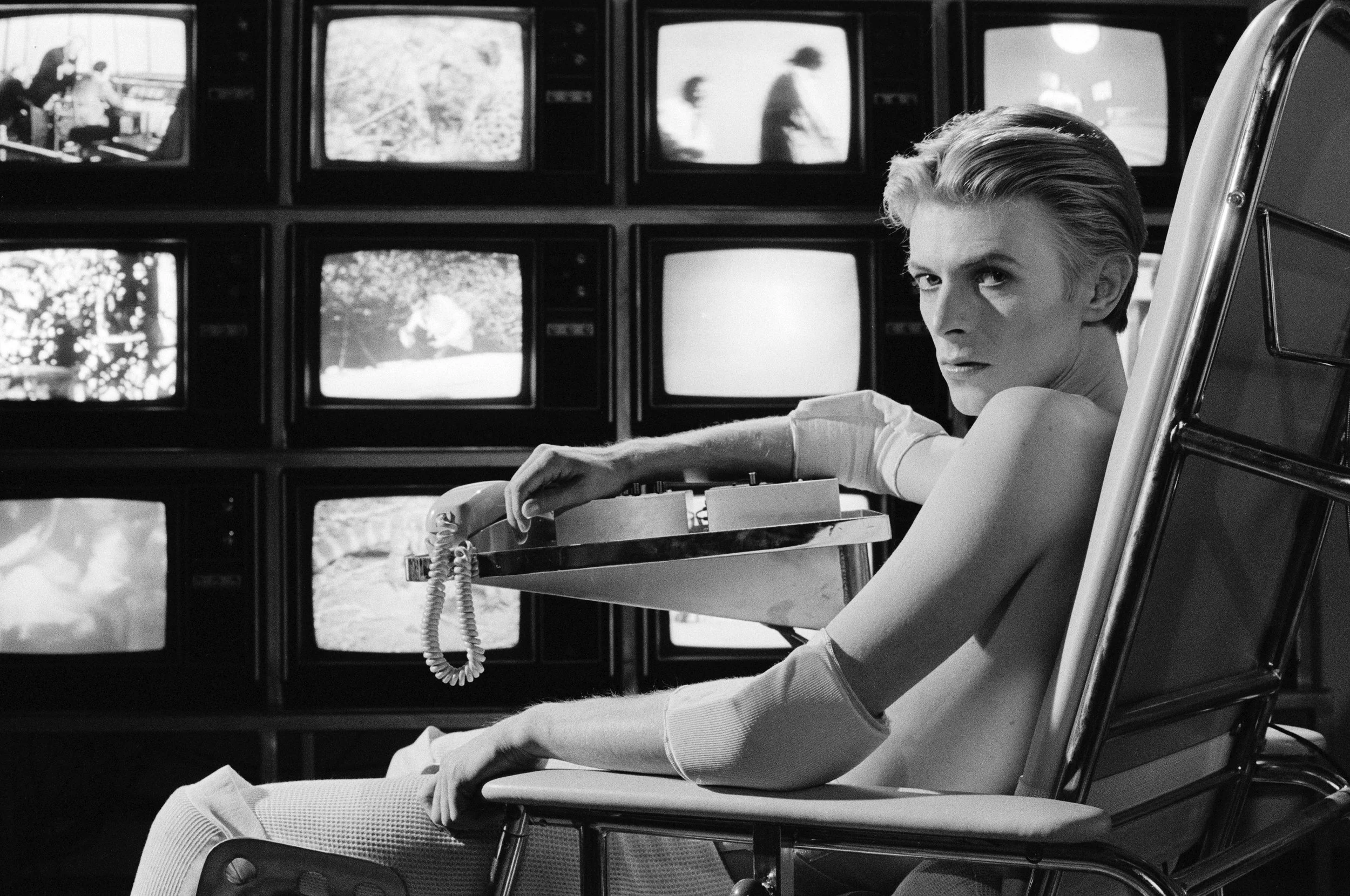
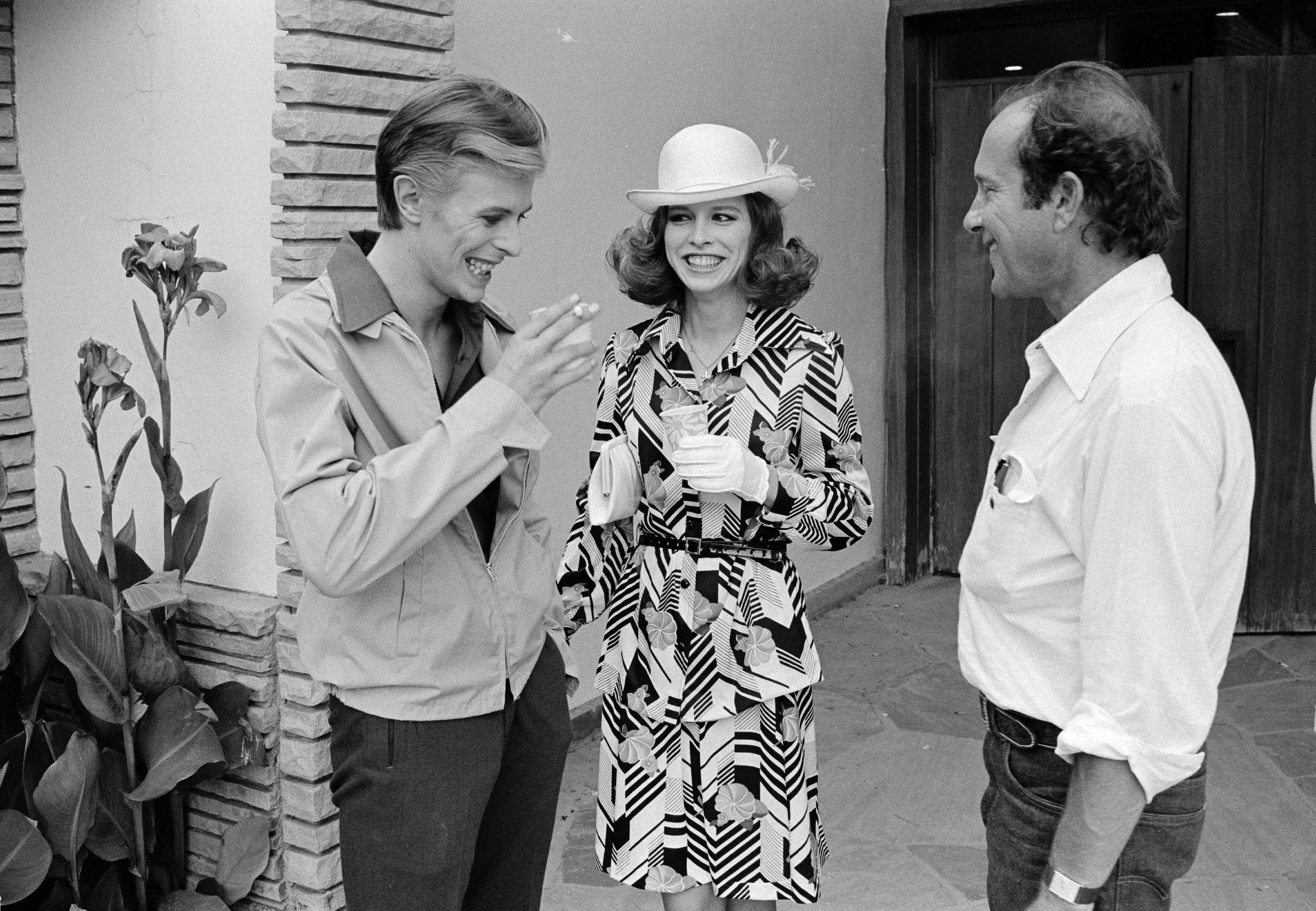
Behind the scenes and publicity stills from The Man Who Fell to Earth
Did you know?
In one particular scene, Dr. Bryce walks past a record store display for David Bowie’s "Young Americans" album.
Still shots from the movie were used as the cover art for two Bowie albums: 1976's Station to Station and 1977's Low.
Bernie Casey played the small role of the shadowy conspirator Mr. Peters. Casey has his share of genre credentials including the revered (at least by monster kids of a certain age) made-for-TV monster movie Gargoyles (1972), Dr. Black and Mr. Hyde (1976), and In the Mouth of Madness (1994).
The original novel The Man Who Fell to Earth was published in 1963. Author Walter Tevis was also a successful screenwriter whose credits include The Hustler (1961), The Color of Money (1986), and the Netflix series The Queen’s Gambit (2020).
Actress Candy Clark plays the very unfortunate waitress who picked the wrong telephone booth to hide from the titular monster in 1988’s The Blob.
Tony Mascia, a former pro boxer and David Bowie's longtime driver and security person, played Newton’s driver Arthur.
According to an IMDB trivia post, David Bowie recalled little of the production due to his excessive cocaine use during filming.
While Newton’s home planet is unnamed in the film, it is explicitly named “Anthea” in the novel.
David Bowie’s genre credentials extend beyond The Man Who Fell to Earth. He starred in the unusual art house vampire flick The Hunger (1983), in which he plays the refined and cultured vampire John Blaylock opposite the great Catherine Deneuve. He also starred as the Goblin King in Jim Henson’s fantasy film Labyrinth (1986) and played Nikola Tesla in Christopher Nolan’s period sci-fi/thriller The Prestige (2006).
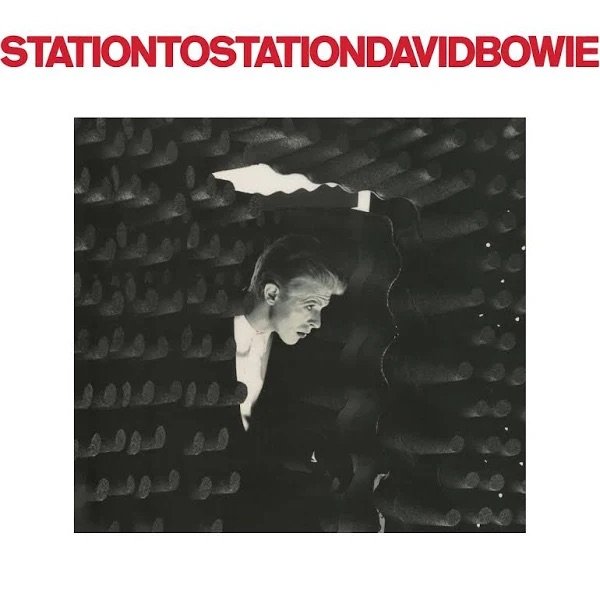
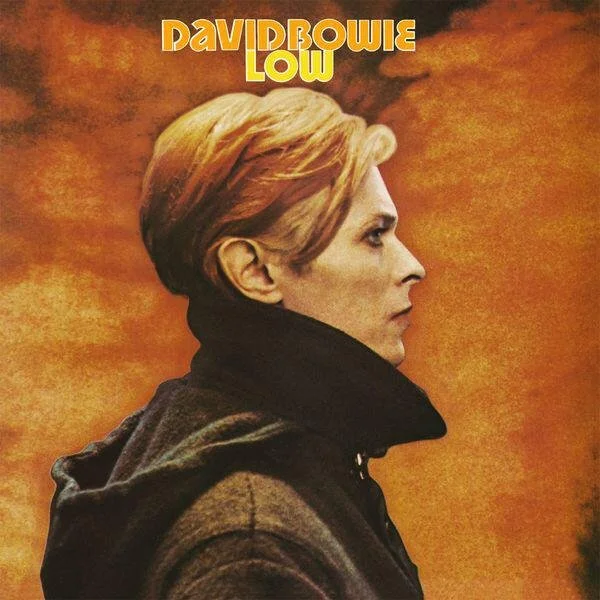
Album covers for Station to Station and Low.
Recommendations based on The Man Who Fell Earth-
The Day the Earth Stood Still (1951)
Don’t Look Now (1973)
Starman (1984)
The Brother from Another Planet (1984)
Under the Skin (2013)
Supplements-
The Man Who Fell to Earth: Humanity, Lost and Found (BFI)
The Underrated Genius of David Bowie's Acting (BFI)
Object of the week: The retro-futuristic poster for The Man Who Fell to Earth (BFI)