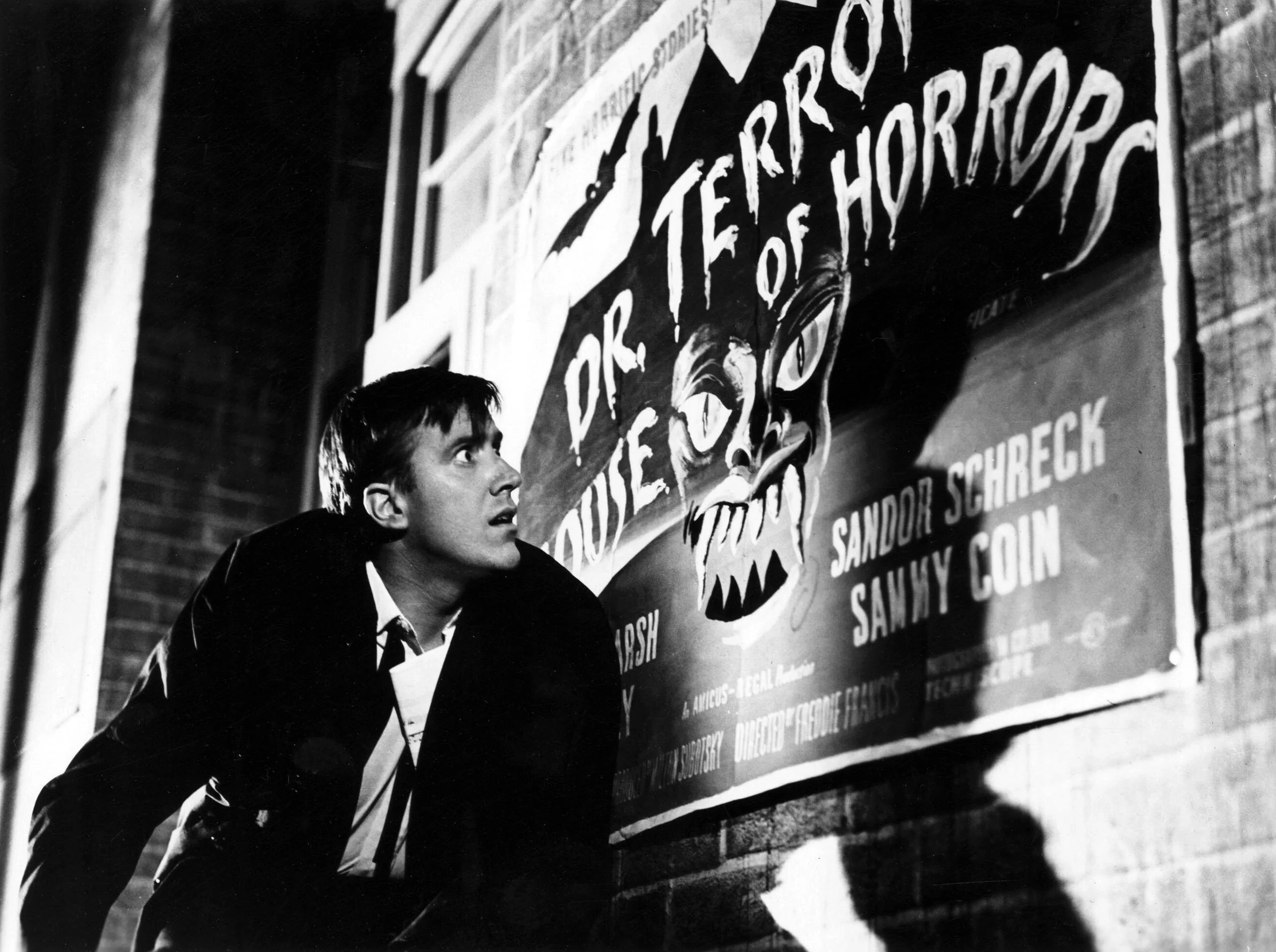
Dr. Terror’s House of Horrors: Voodoo (1965)
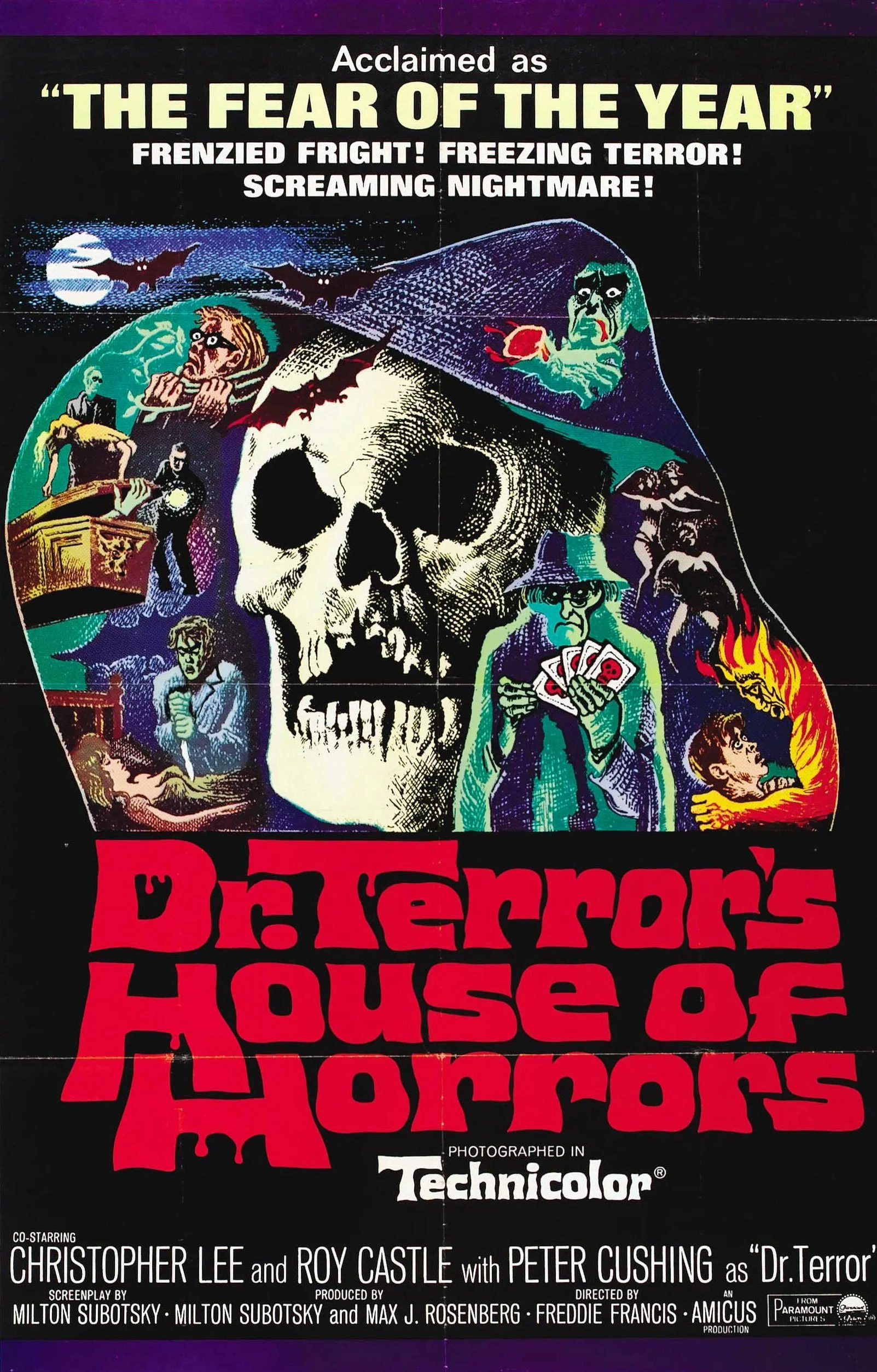
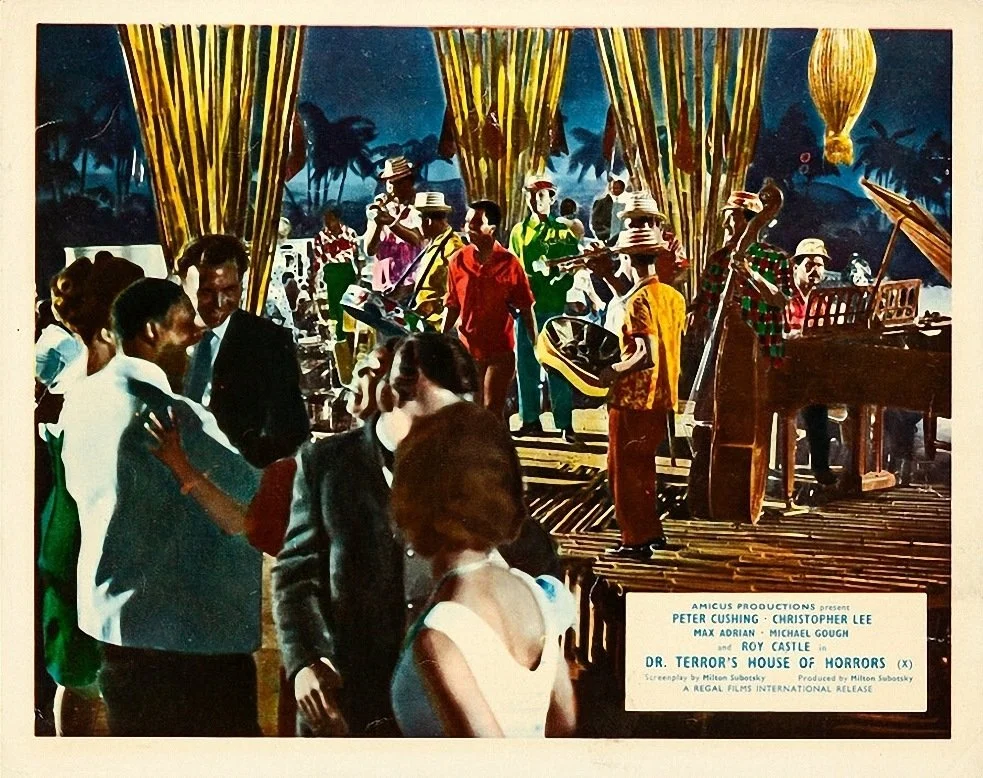
Original poster art
We’re up to the third vignette in Dr. Terror’s House of Horrors, a classic era horror anthology that we are covering one segment at a time. For those not caught up with our last two posts (check out Werewolf and Creeping Vine), the film is framed around Dr. Shreck (Peter Cushing), a cryptic tarot card reader and doctor of metaphysics who presents strange and macabre futures to five men with whom he happens to be sharing a train ride.
We left off with Dr. Shreck turning his attention to one Biff Bailey, a jazz trumpeter who appears ready to have his future read.
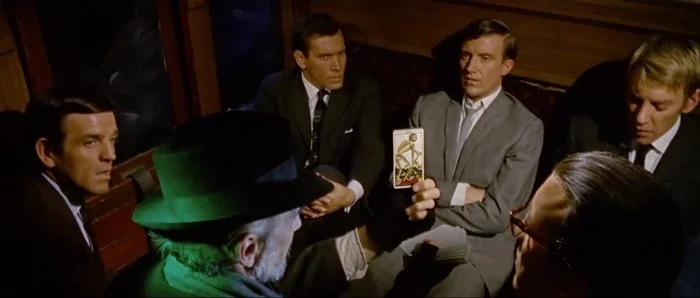
Biff Bailey (Roy Castle) center
Voodoo
Cast:
Roy Castle – Biff Bailey
Kenny Lynch – Sammy Coin
Christopher Carlos – Vrim
Harold Lang – Roy Shine
The Tubby Hayes Combo – Biff Bailey’s Band
Biff Bailey (Roy Castle) is the leader of a small U.K. jazz band, not without talent yet yearning for a creative career breakthrough. Billy’s manager Roy Shine (Harold Lang) giddily informs him that his big break has arrived in the form of a gig in the “West Indies”—yes, this is 1965.
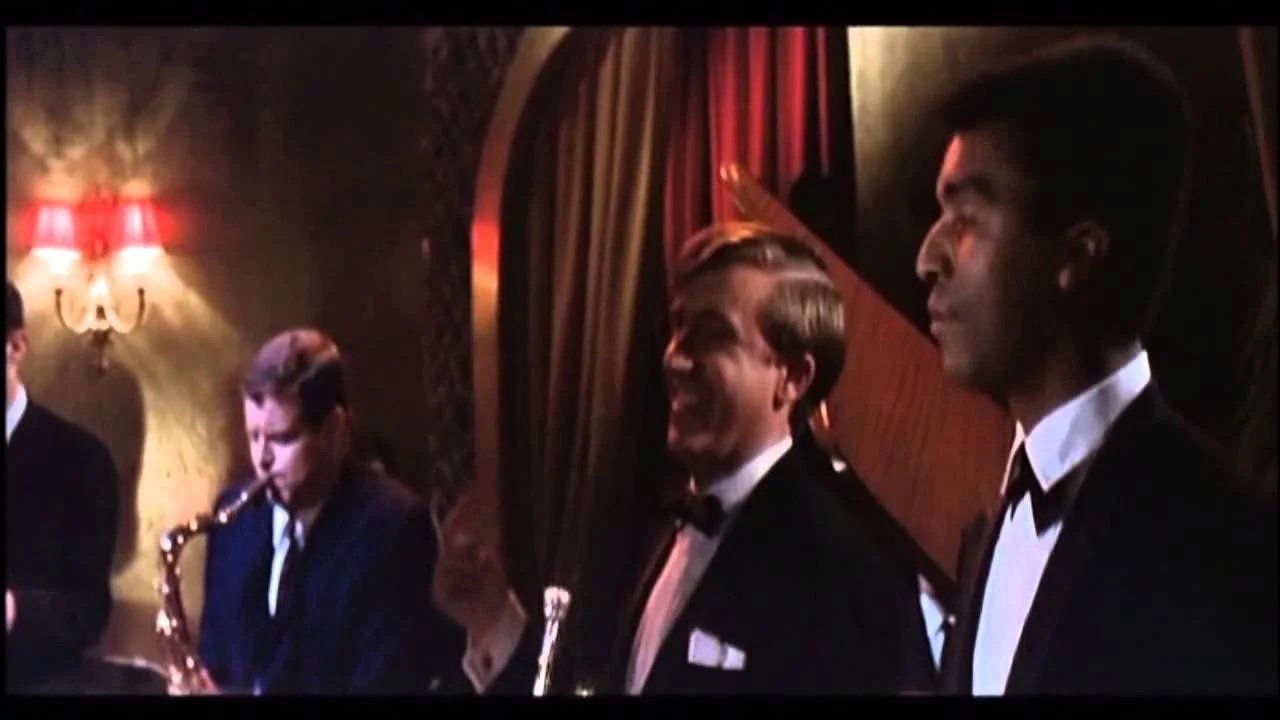
Upon arrival at the unnamed island, the band visits a popular nightclub to soak up the atmosphere. They are also there to meet British compatriot and singer Sammy Coin (Kenny Lynch), who has already been performing at the club. The group chats over drinks as Coin gives his fellow musicians the lay of the land. Billy’s curiosity is piqued as the subject of local voodoo comes up. Sensing an acute fascination and a lack of cultural sensitivity on Billy’s part, Sammy warns his colleague not to pry into the island’s traditions.
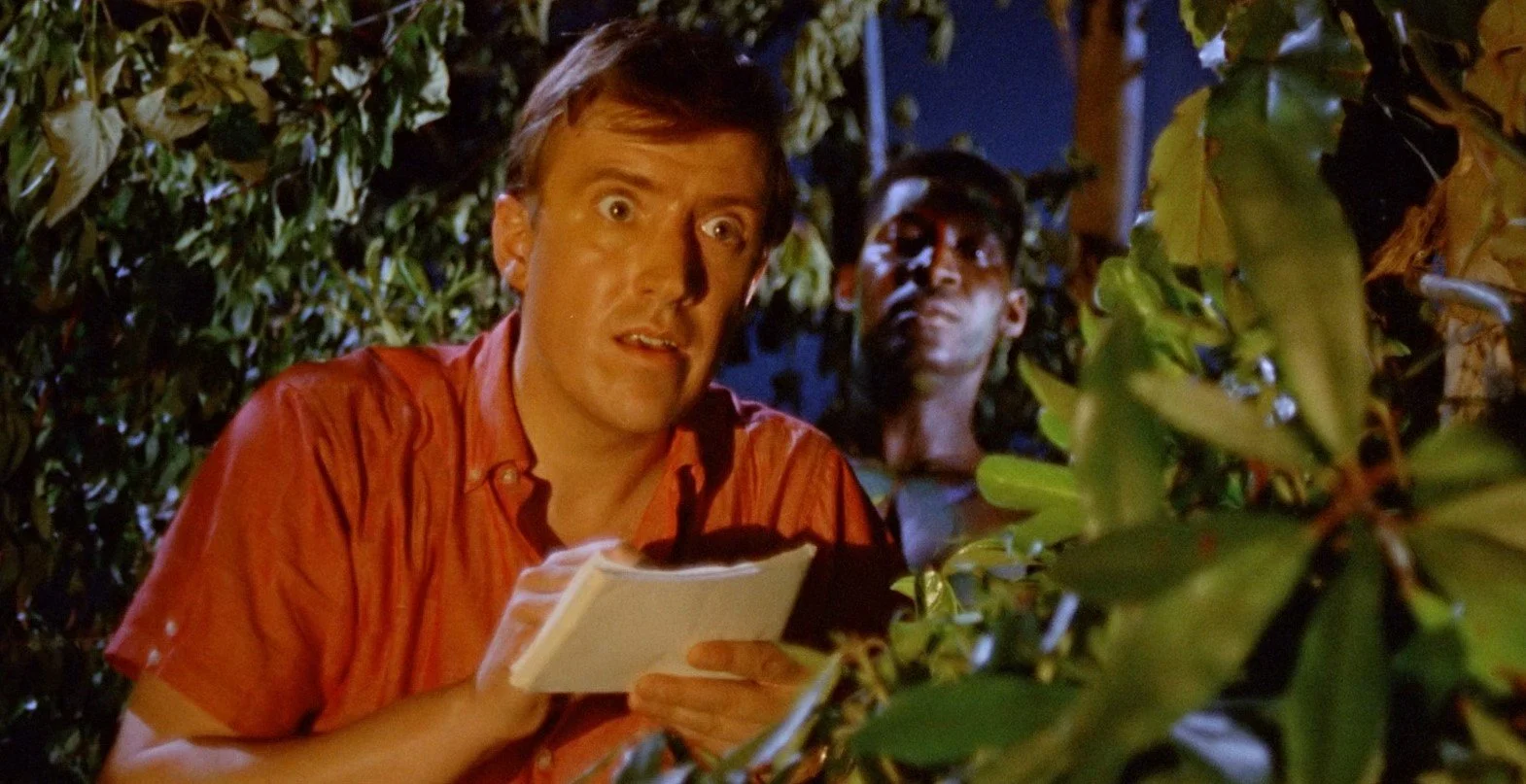
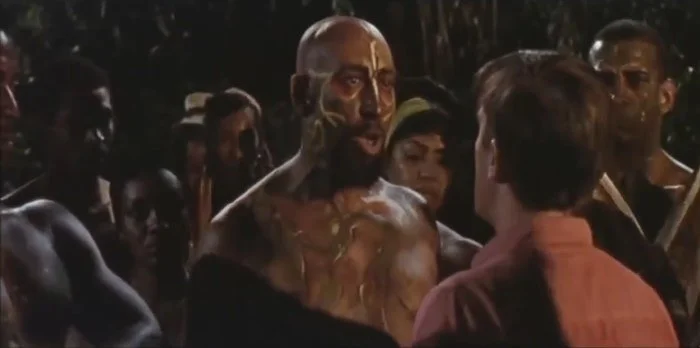
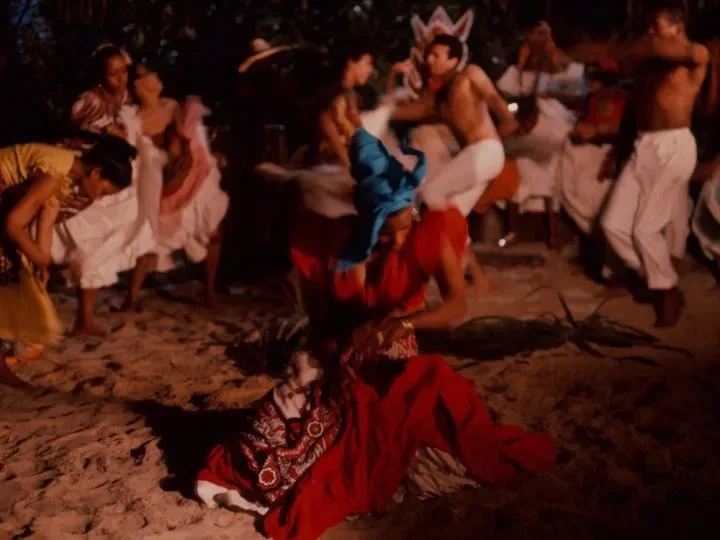
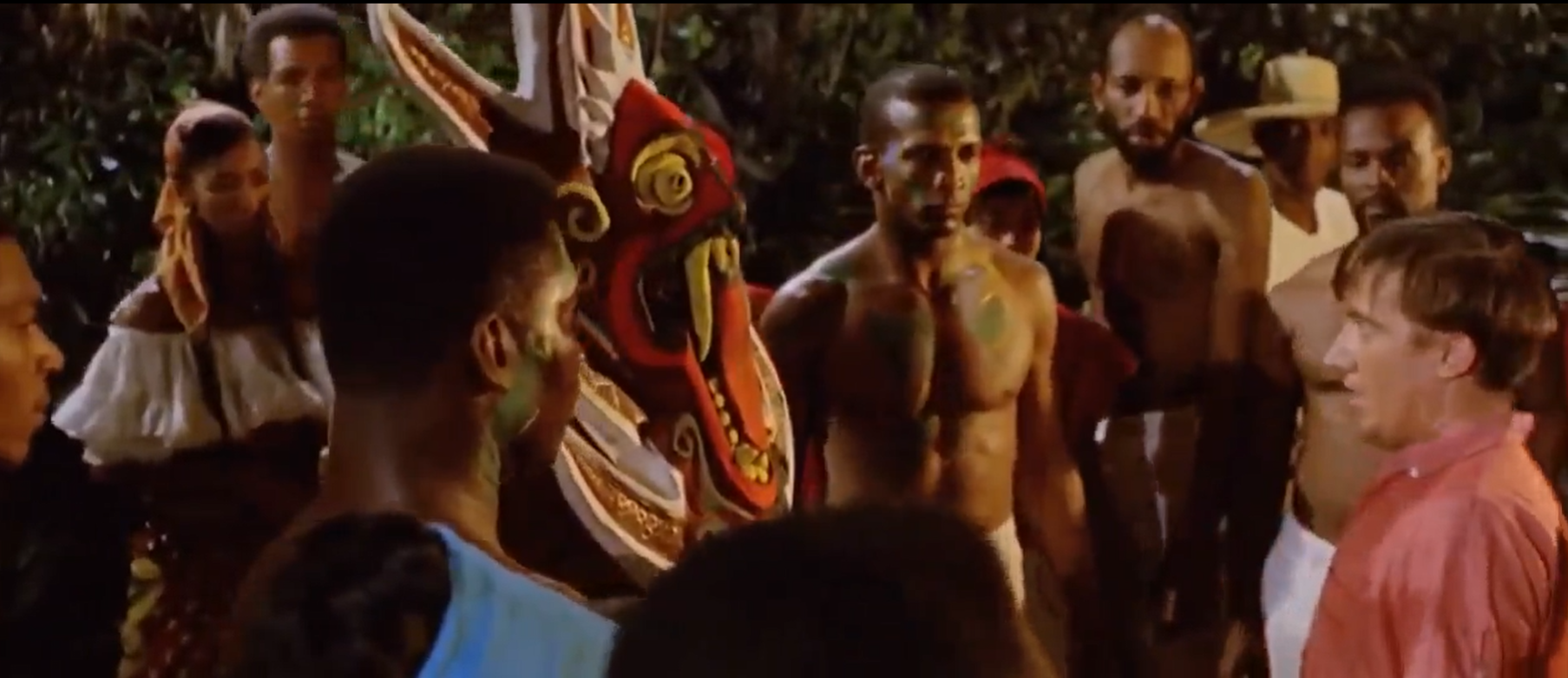
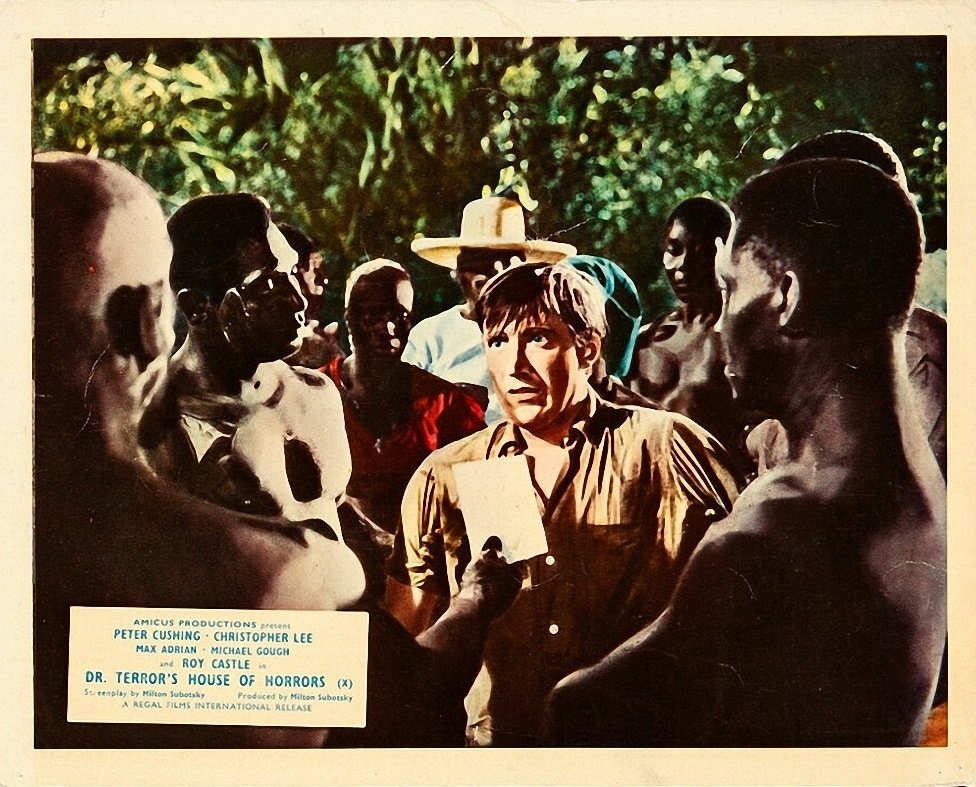
Unwilling to leave well enough alone, Billy ensconces himself in some tropical flora hoping to spy on a private beachside voodoo dance ceremony. Mesmerized by the rhythms he jots down some notes which he hopes to use in some new compositions. He is soon discovered by the locals and is scolded for encroaching on sacred customs. Billy draws particular ire for attempting to share sacred music with the outside world and is warned that any attempt to steal the music will anger the vengeful deity Dambala.
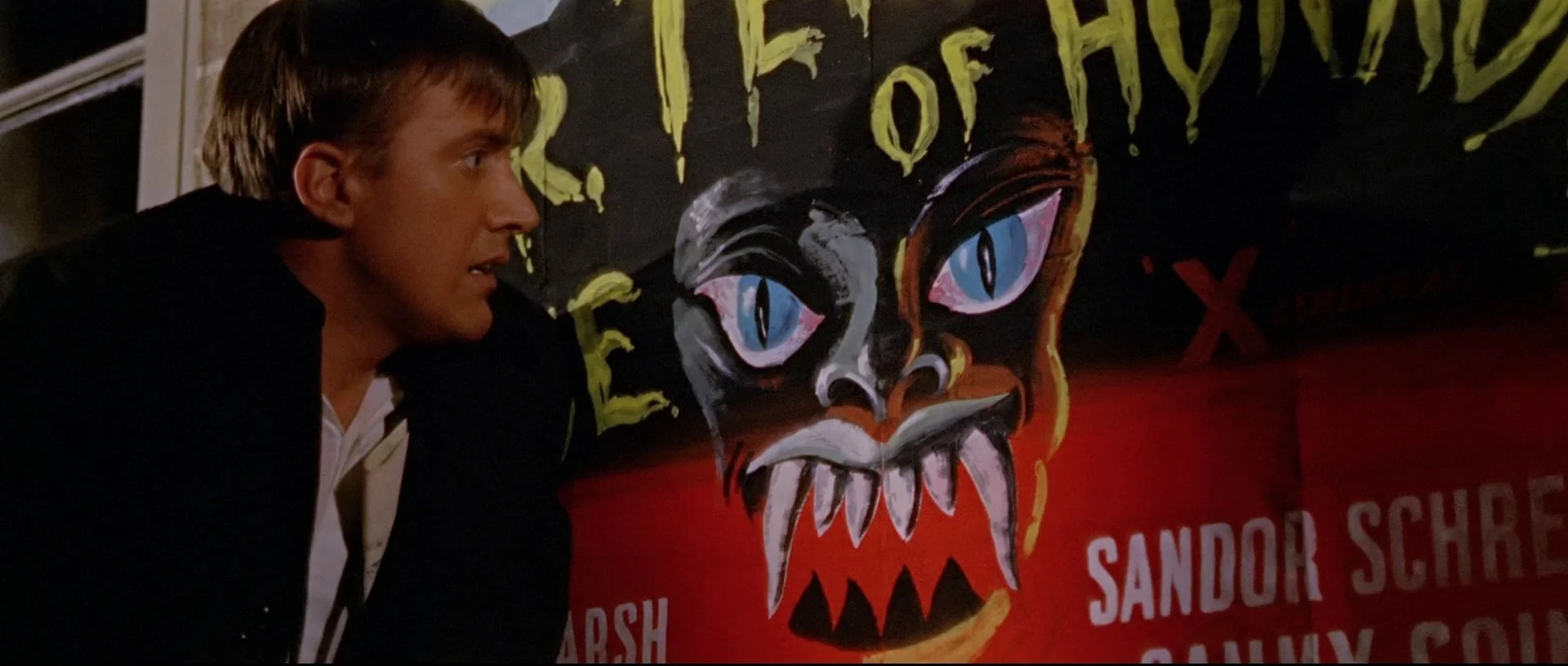
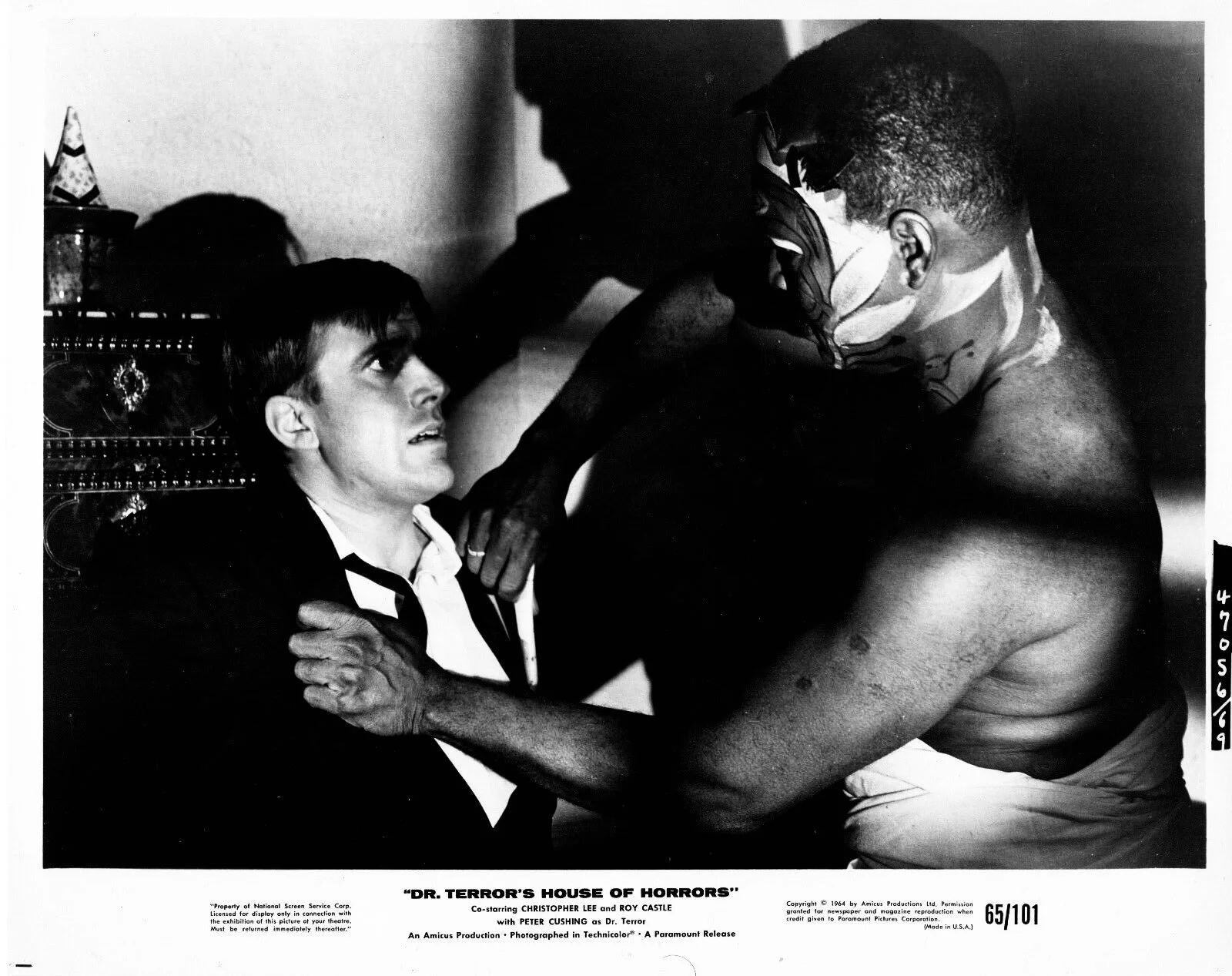
Back in the U.K. Sammy continues to warn Billy of the potentially dire consequences should he follow through on his plan to perform his new voodoo-inspired jazz arrangement. While the two make some macabre jokes about what could happen, Sammy is clearly apprehensive. Undeterred, Billy and the band play the arrangement at a local jazz club. Roy looks on pleased while Sammy simply shakes his head. All seems to be going well until an ominous blast of wind overwhelms the club and the audience scatters. Billy, sensing a looming yet unseen threat, retreats through the dark desolate streets to his apartment where he waits for the other shoe to drop.
My brief take
Of the five segments that make up Dr. Terror’s House of Horrors, “Voodoo” is probably my least favorite. It feels the flimsiest narratively and comes up lacking in the frights department.
I am not too familiar with Roy Castle outside of this film, though I understand he was quite the multifaceted entertainer. In addition to being an actual jazz trumpet player, he was also a singer, dancer, actor, and comedian. However there is something about his antsy, jokey performance that takes me out of the story. I realize that his flippancy and lack of cultural awareness is relevant to his character and necessary to the story, but I still found it distracting.
This segment has its share of problematic and cringe-worthy content related to race and religion. On the one hand, the story treats voodoo with the insensitivity that was not unusual for the time, and the practice is used here as a simple plot device. On the other hand, one could argue that the content is not as dated as we’d like to think, with our administration perpetuating some of the ugliest, sordid racial and cultural stereotypes. Of course, another way to read “Voodoo” is as a cautionary tale about cultural appropriation, albeit one with some awkward implications.
The subject of voodoo also came up when we featured the supernatural blaxploitation crime thriller Sugar Hill (1974) as part of our Cinematic Semicentennial Series. Check it out to get our take.
“Voodoo,” like most of the other segments, was filmed on sound stages at Shepperton Studios in the U.K. I did appreciate the fairly lush sets and the production’s vivid color palette, which really pops in technicolor. Of course having the legendary cinematographer Freddie Francis in the director’s chair didn’t hurt. The stills in this post are admittedly not the highest quality, so to see the film in its full glory, I recommend checking out the scanned (from a 35mm original camera negative) and restored version on ultra high definition disk from Vinegar Syndrome. The bluray looks great as well.
I learned that Roy Castle was not the only musical artist cast in the film. British actor Kenny Lynch, who plays Sammy Coin, was also a prolific singer, songwriter, and all-around entertainer whose work spanned the 1960s, 1970s, and beyond. That talent and easy charm shine through when Sammy takes the stage to sing, while his chill vibes serve as a needed counterbalance to Biff’s jittery style. Lynch passed away in 2019 at the age of 81. The British-born Tubby Hayes Combo, which performs as Biff’s band, was led by Edward Brian "Tubby" Hayes, a multifaceted musician best known for his skills on the tenor saxophone.