A Tough Break: Thief (1981)
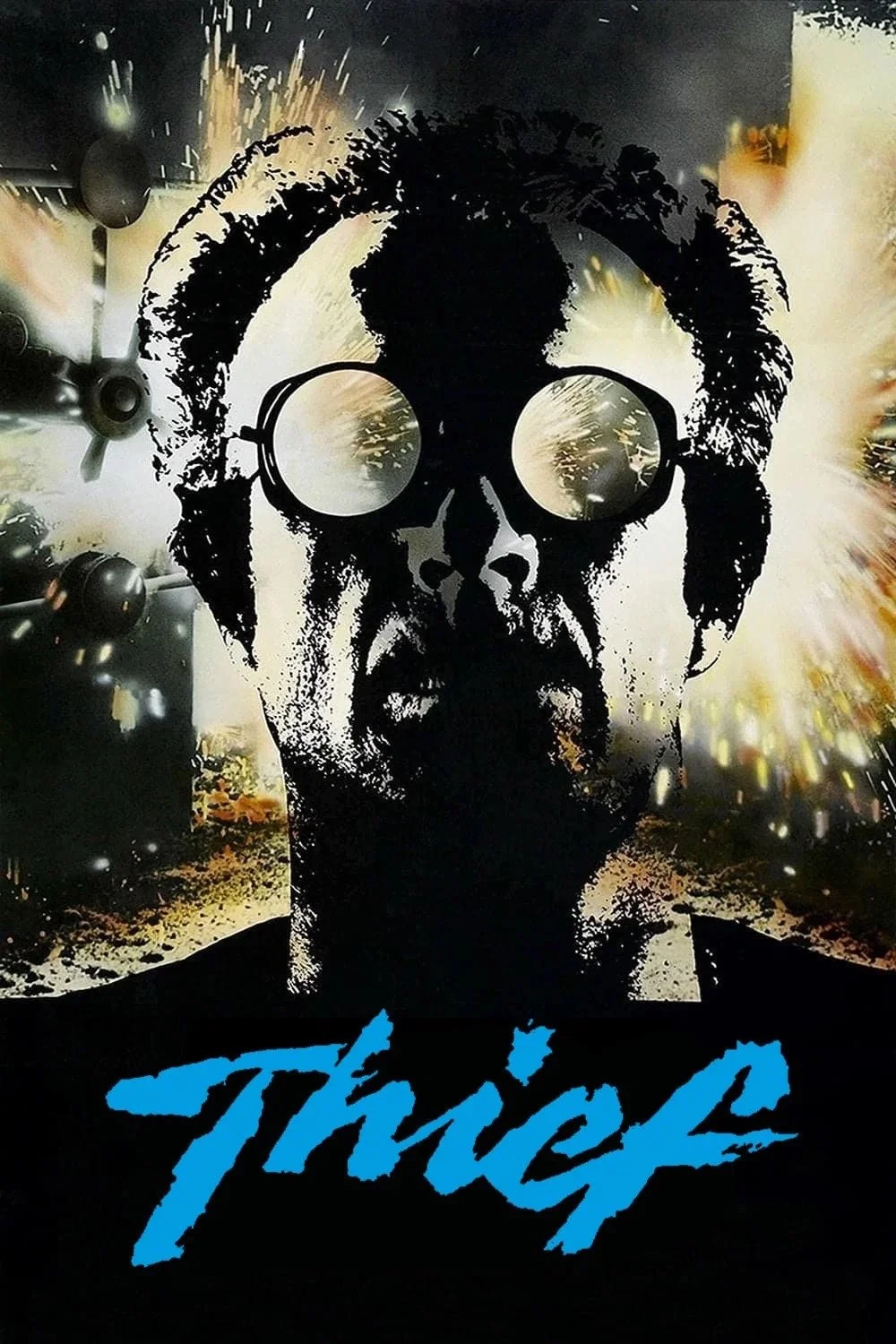
Original poster art for Thief
Our mini cinematic summer crime spree wraps up in Chicago with director Michael Mann’s first feature length film Thief (1981). Make no mistake, this is no tentative freshman effort but a bold, muscular debut for Mann, whose distinctive style shines through. So, let’s appraise this gem of a movie (and leave our bad puns behind), shall we?
Change of plans
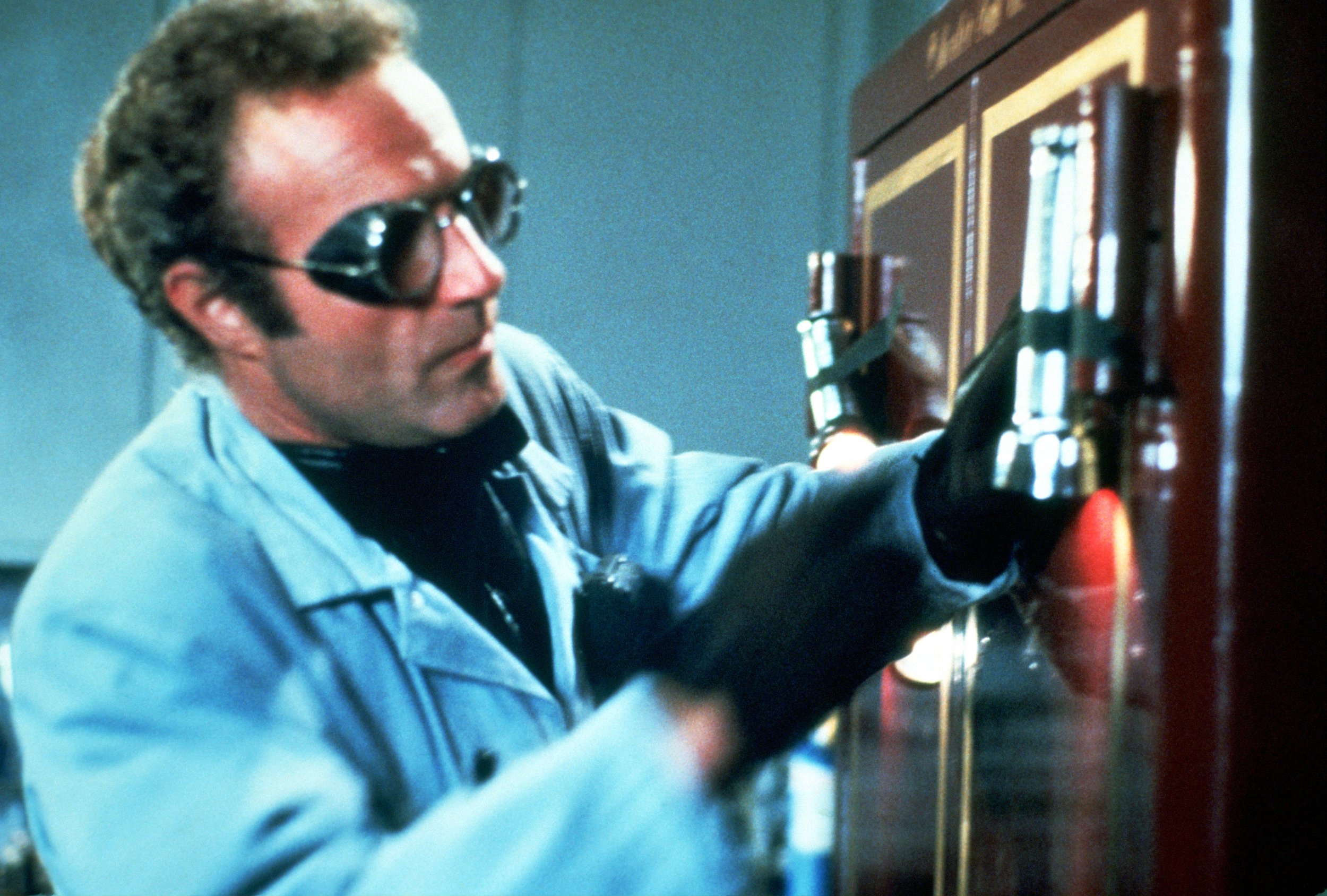
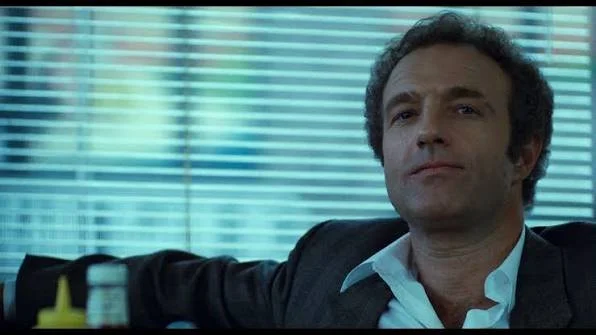
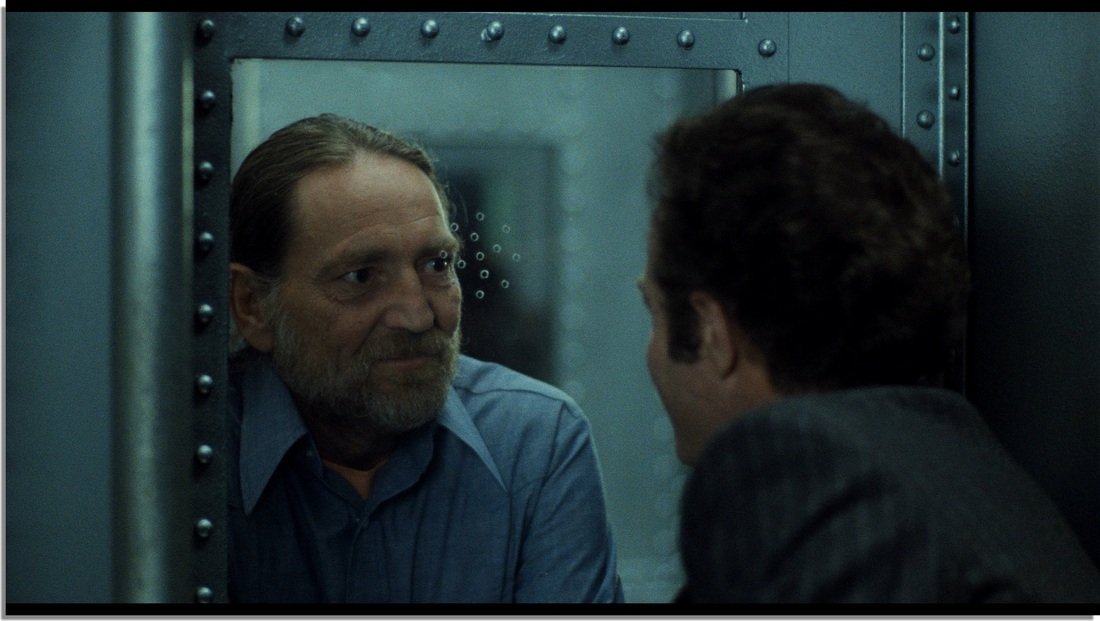
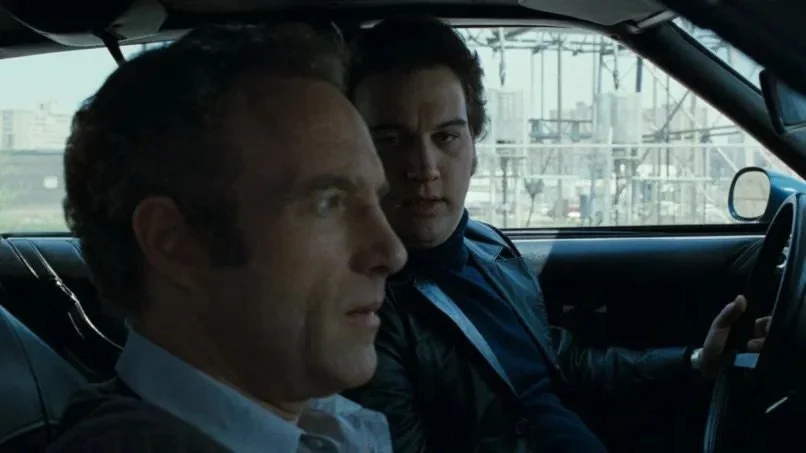
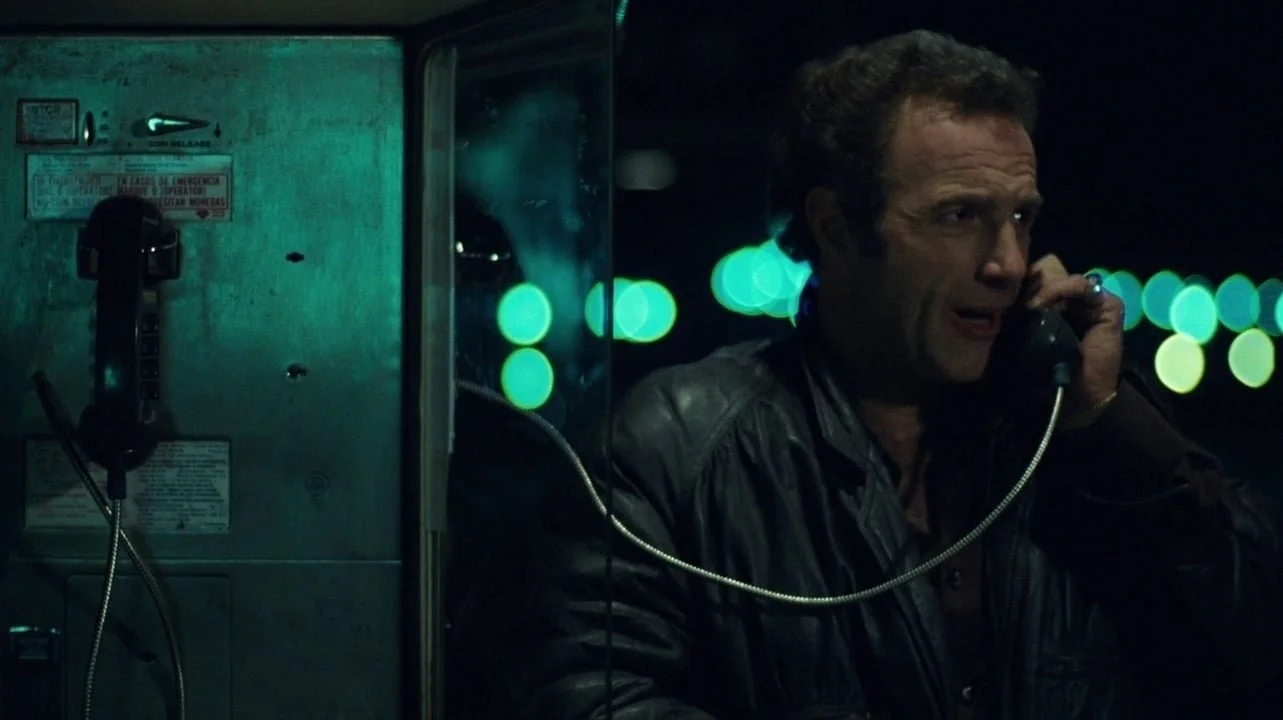
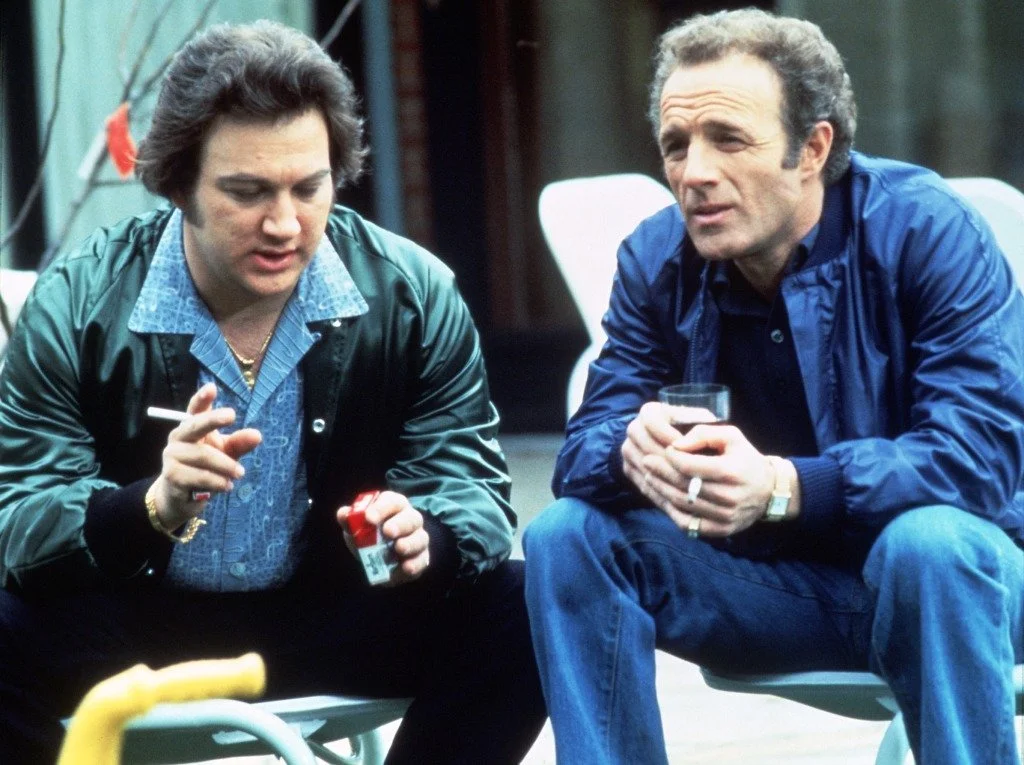
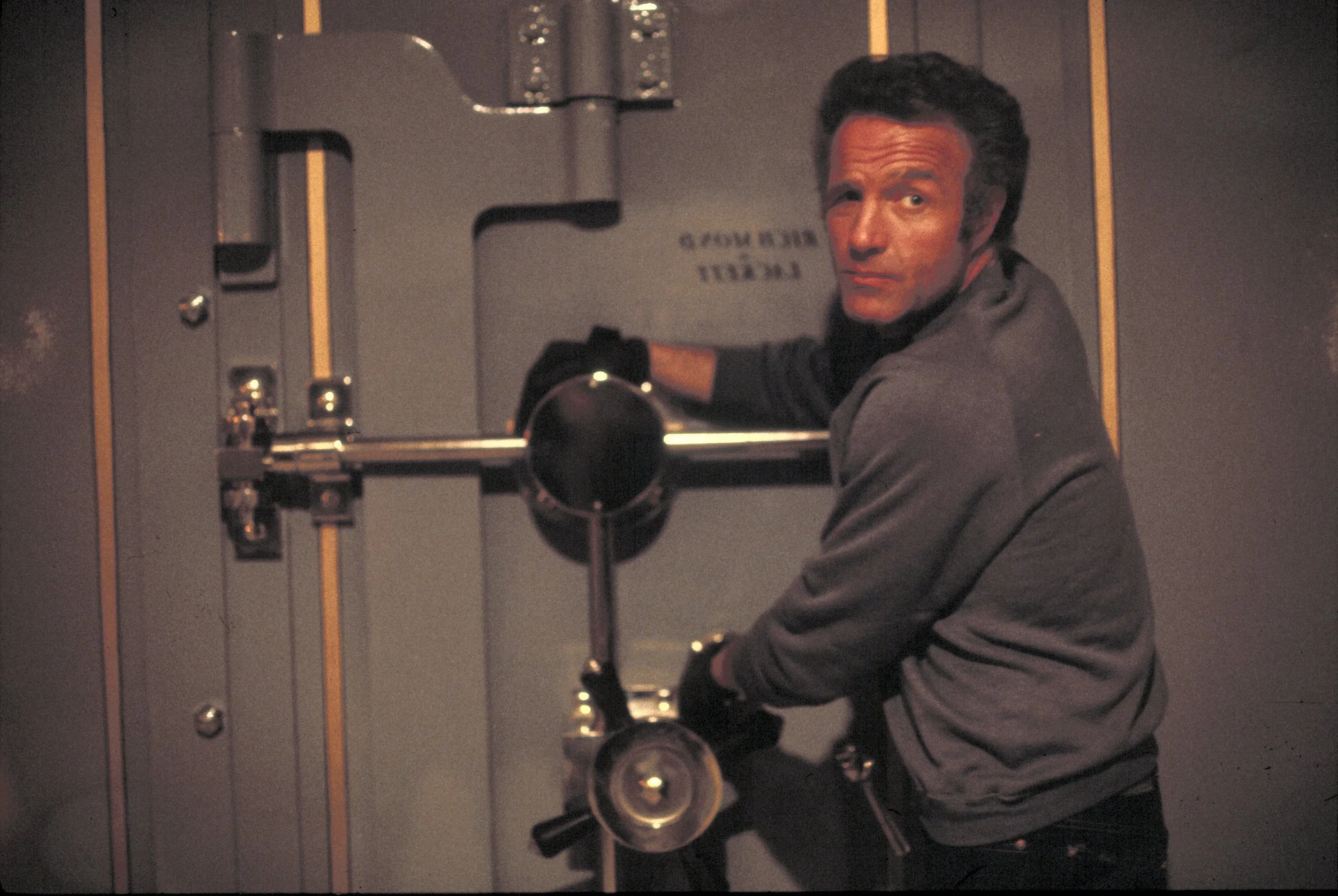
Ex-con Frank (James Caan) is a used-car dealership and dive bar owner by day and a jewel thief by night. He is an expert heist man with a talent for cracking even the most uncrackable safes and pulling down high-end scores with his trusty partner Barry (Jim Belushi). Frank is a rough-edged, laser-focused, and down-to-brass-tacks type of guy. He honed his elite skills under former prison mate, mentor, and dear friend Okla (Willie Nelson), who continues to languish in prison with a serious heart condition.
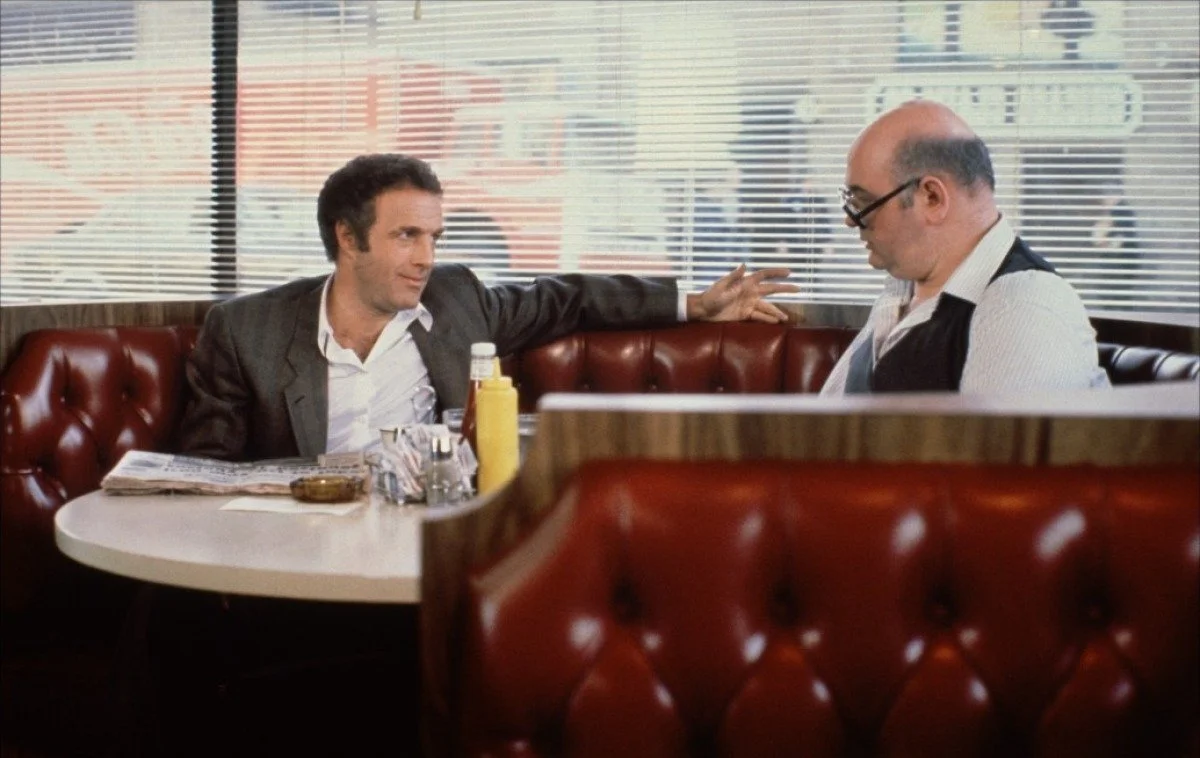
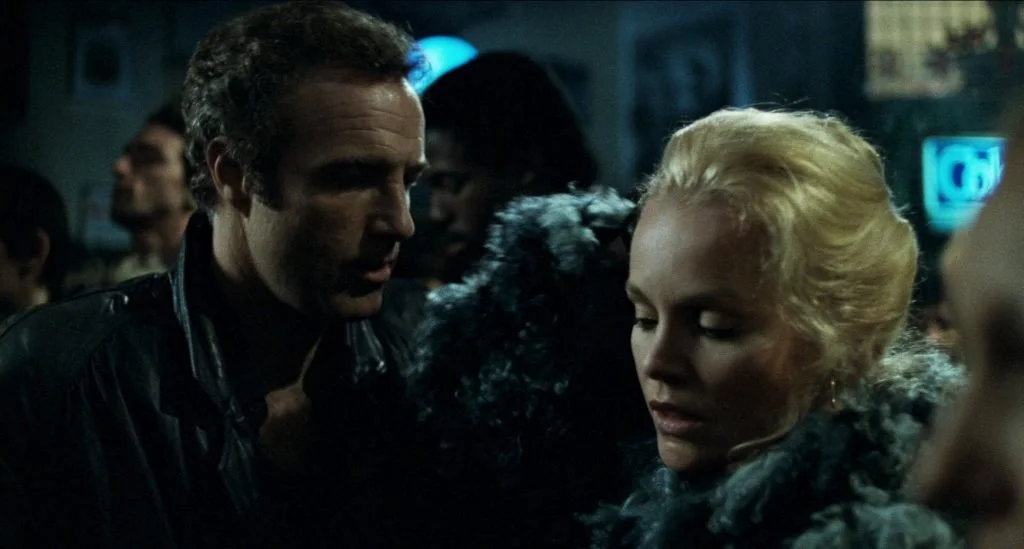
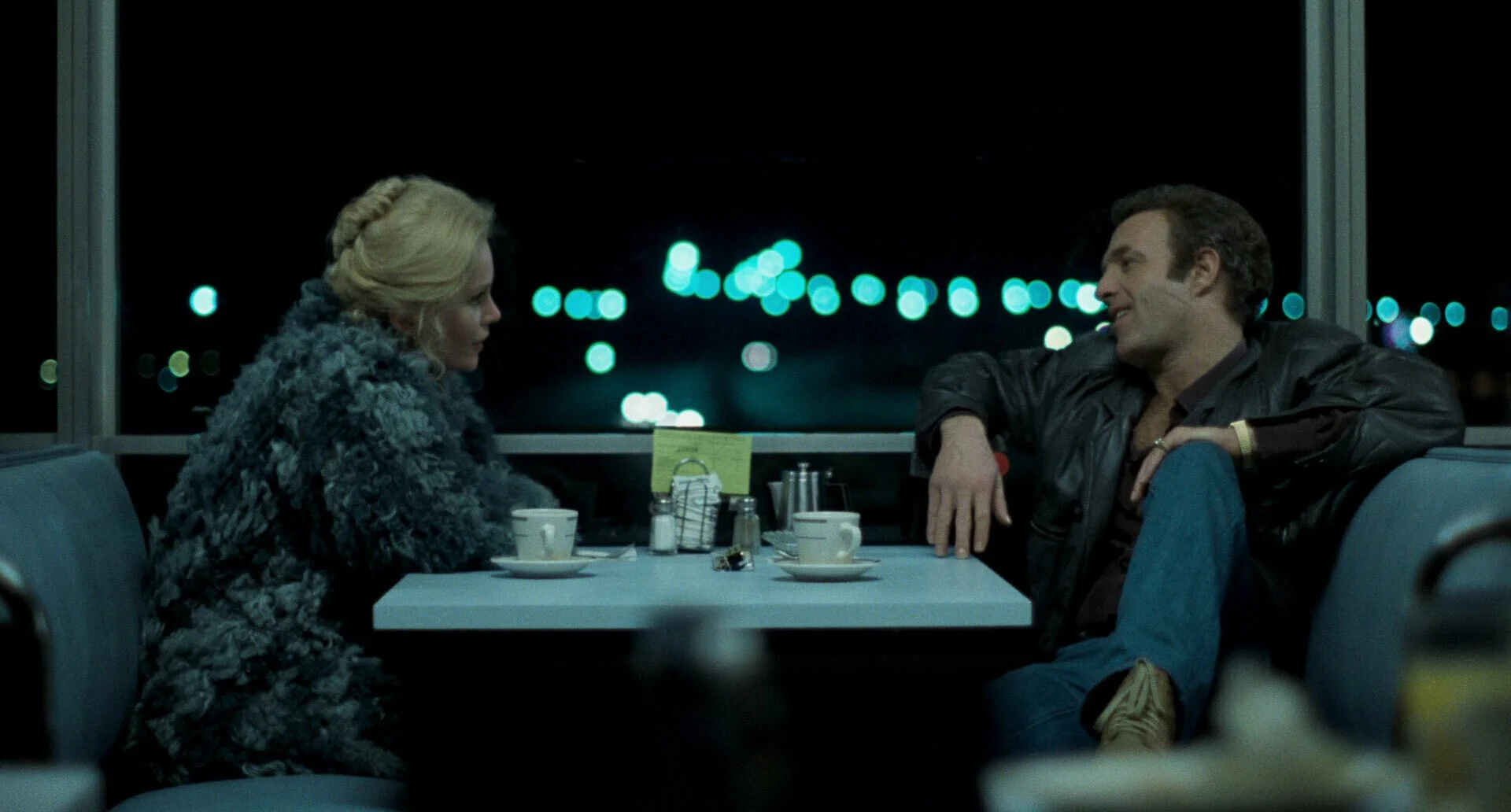
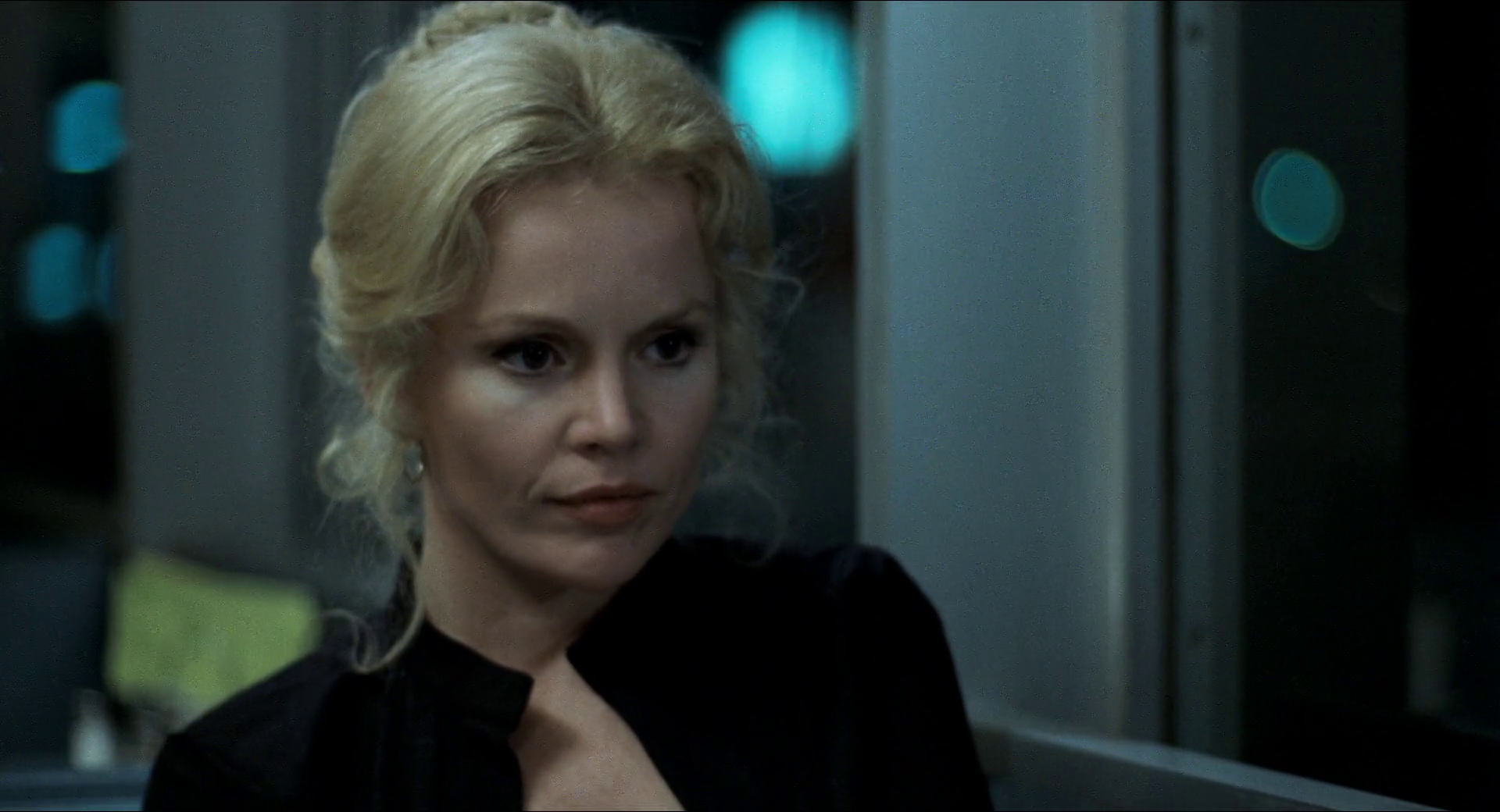
While Frank’s moonlighting gig is certainly a risky one, he avoids re-incarceration by following some simple rules, one of which is to be under no one’s thumb. In doing so, he avoids being in anyone’s debt and steers clear of unnecessary entanglements. That said, Frank is willing to risk his carefully cultivated existence for a chance at a life of domestic bliss with Jessie (Tuesday Weld), a greeter/cashier at a local diner.
Everyone wants a cut
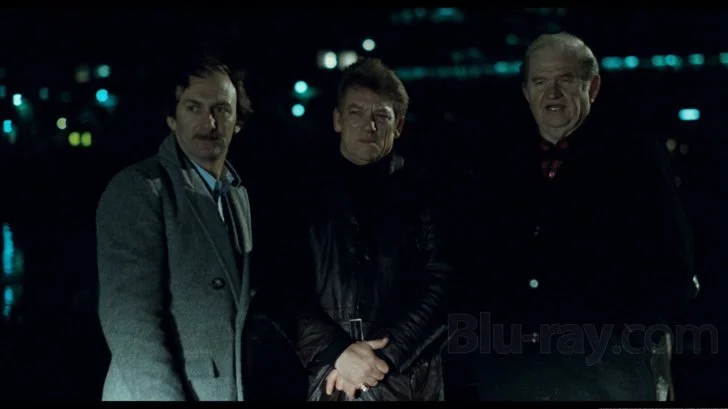
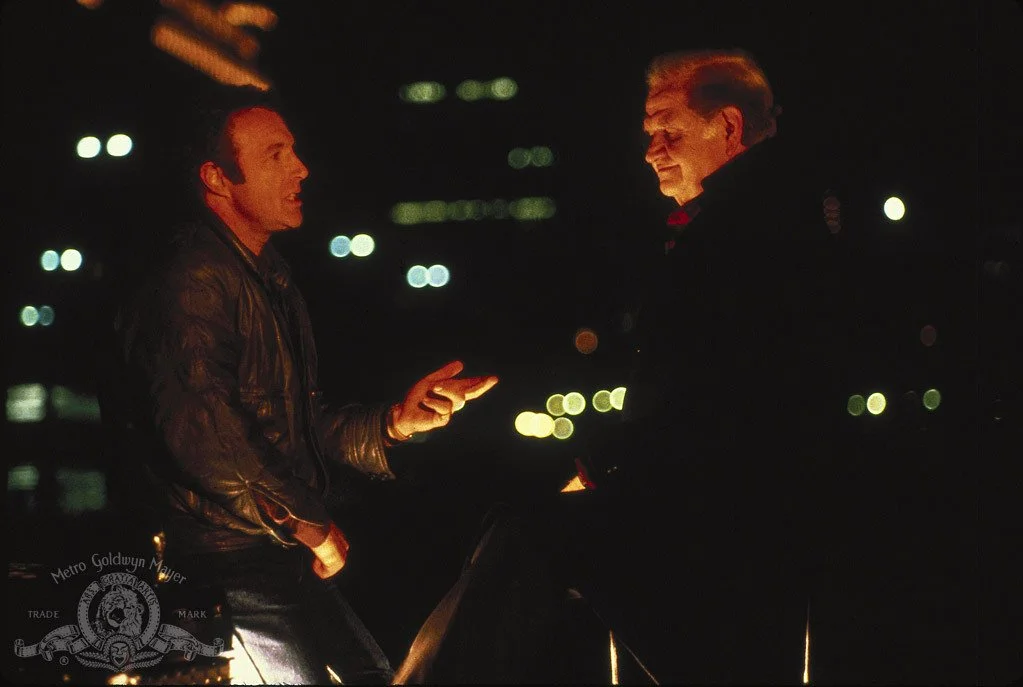
Enter Leo (Robert Prosky), a Chicago-based gangster who runs most of the high-end fencing operations in the area. As the man responsible for selling much of the stolen jewels in the region, he has come to know and admire Frank’s work. Leo asks Frank to come work for him, promising him well-paid scores and all the logistical and material support he needs to pull them off.
Frank’s response to such an offer would normally be a hard pass as it would compromise his autonomy. However, he agrees to one big heist with the hopes of walking away with enough money— $830,000 to be exact—to start anew with Jessie. In fact, the two have already laid plans for a life together, having bought a comfortable ranch home and applied for adoption. When the couple’s application is rejected due to Frank’s criminal record, Leo arranges for them to procure a baby under legally dubious means.
While Frank might not be gifted with great emotional intelligence, he is savvy enough to know that working with Leo goes against his better judgement. At first, Leo may appear to be a calm, practical, and even jolly crook. Yet underneath that veneer is a smarmy and rapacious individual. It becomes clear that this will not be a clean, one-and-done job for Frank. Nonetheless, Frank, Barry, and their close associate Mitch look towards a high-stakes jewel heist on the West Coast, which will require technical expertise, meticulous planning, and some custom-made equipment.
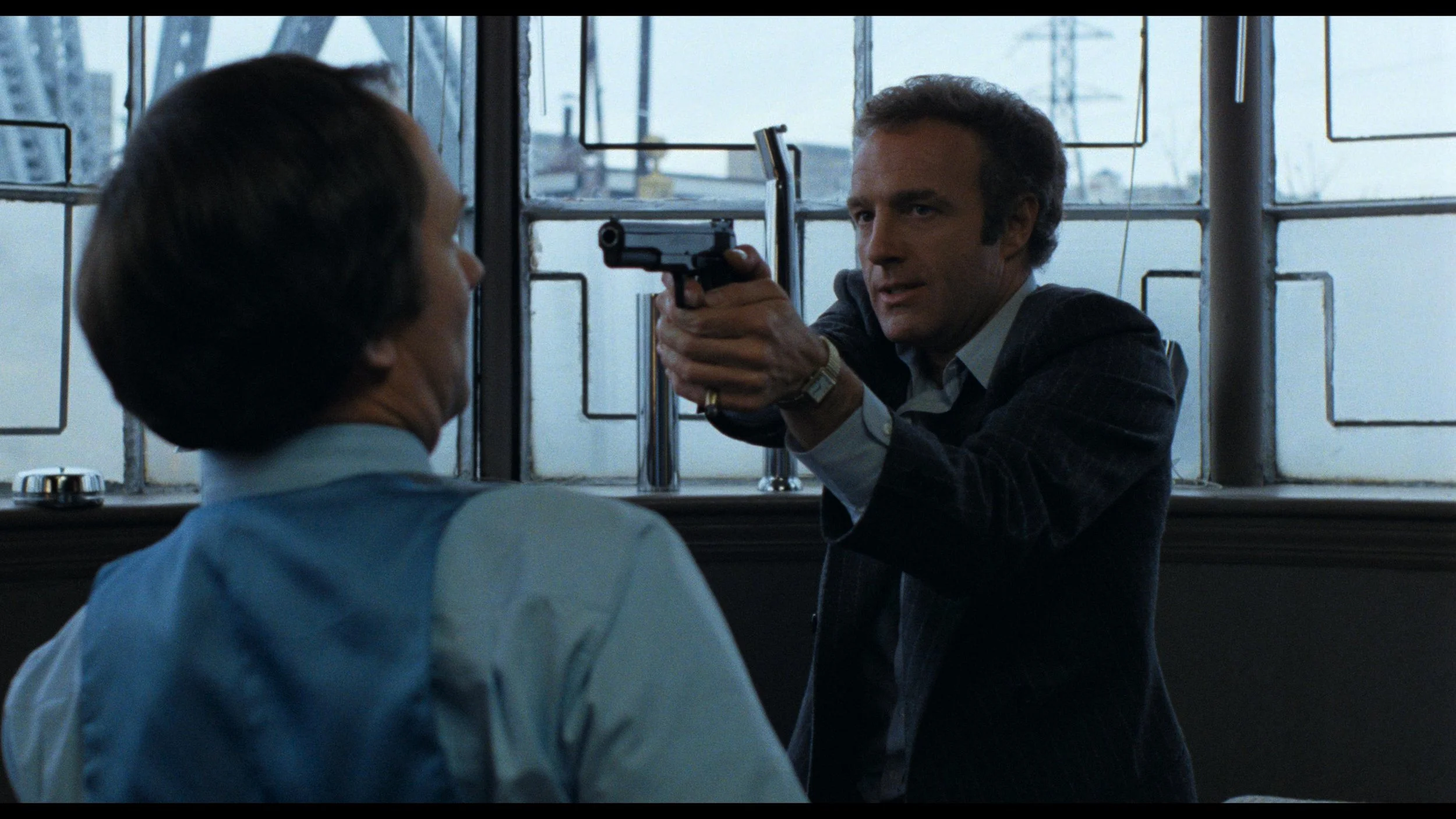
Meanwhile a contingent of sleazy, corrupt cops target Frank, trying repeatedly to shake him down for a cut from his future scores. They go so far as to rough him up, bug his house, and put a tracking device in his car.
High risk, high reward
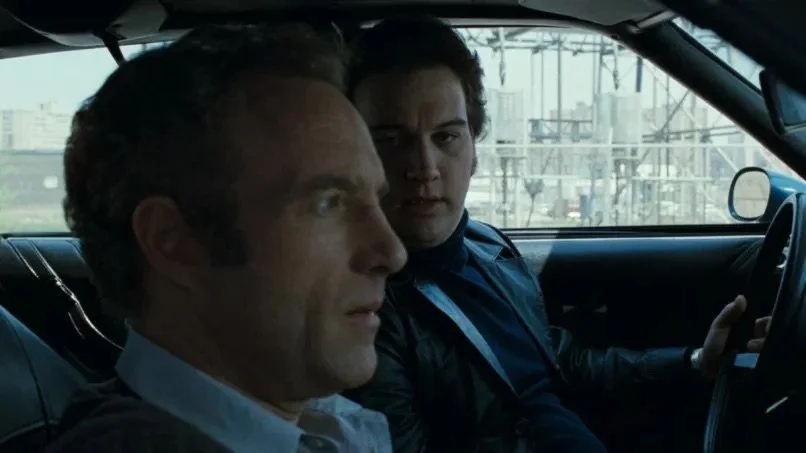
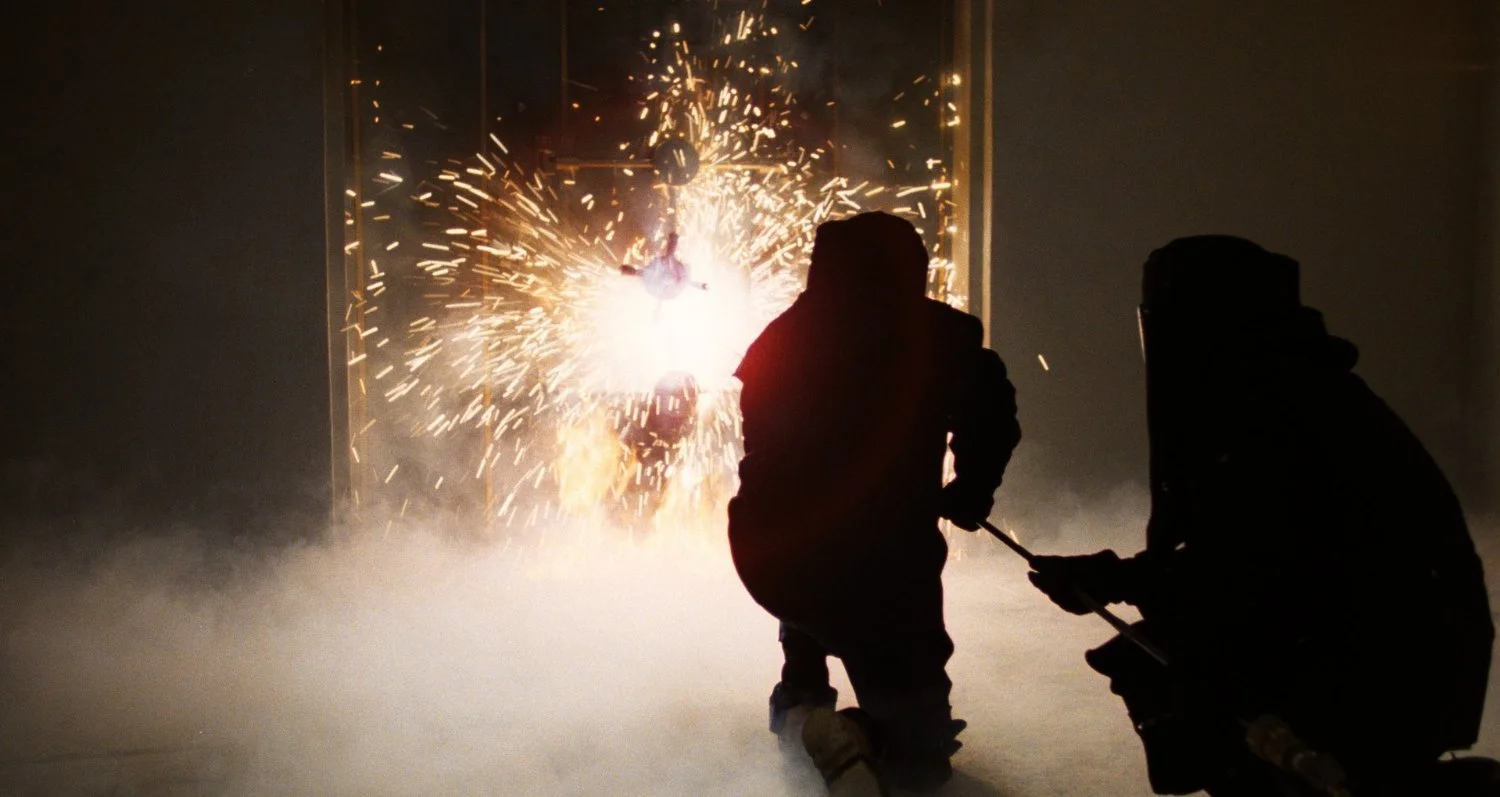
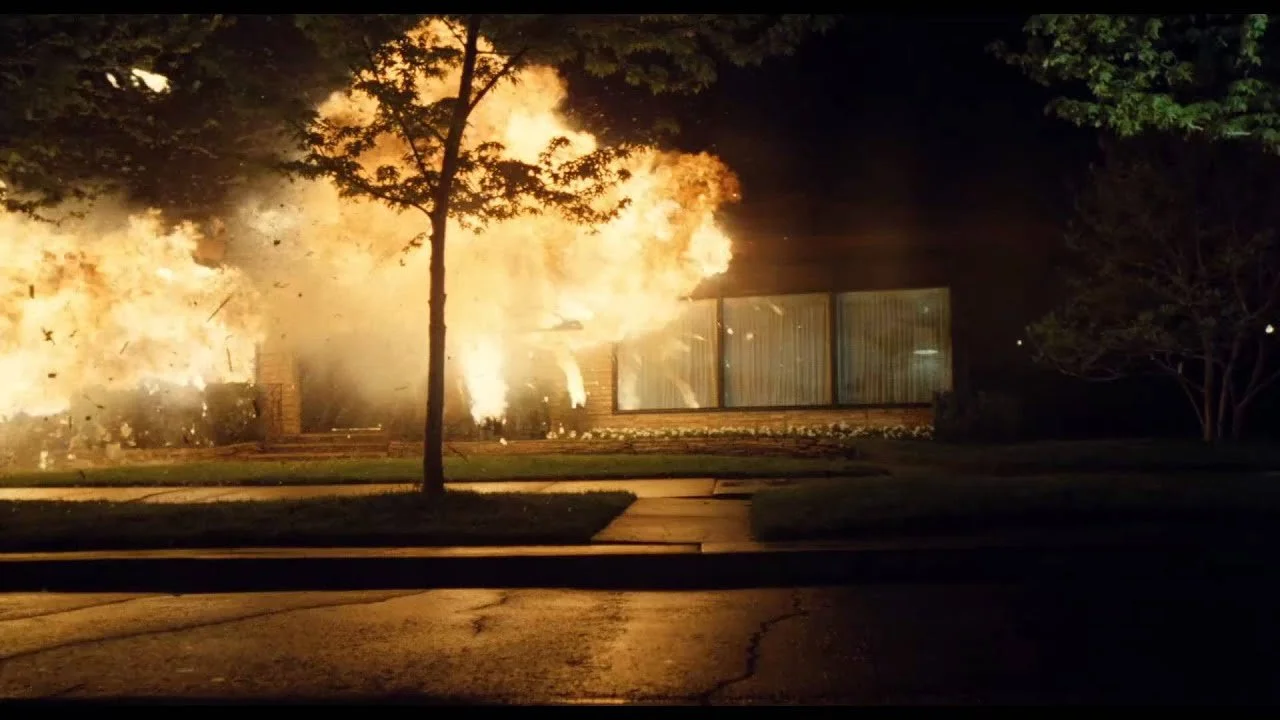
Heist day arrives as Frank and crew get to work, risking prolonged exposure as they infiltrate the corporate building from the roof down. This turns out to be a tough nut to crack as they must deactivate the multilayered alarm system and break into a seemingly impenetrable vault storing a windfall of valuable jewels. Awaiting the outcome are Leo and his crew, whose plans do not exactly align with Frank’s. A series of tense and potentially explosive scenarios play out as Frank, Jessie, and their new baby see their window to freedom closing fast.
My two cents
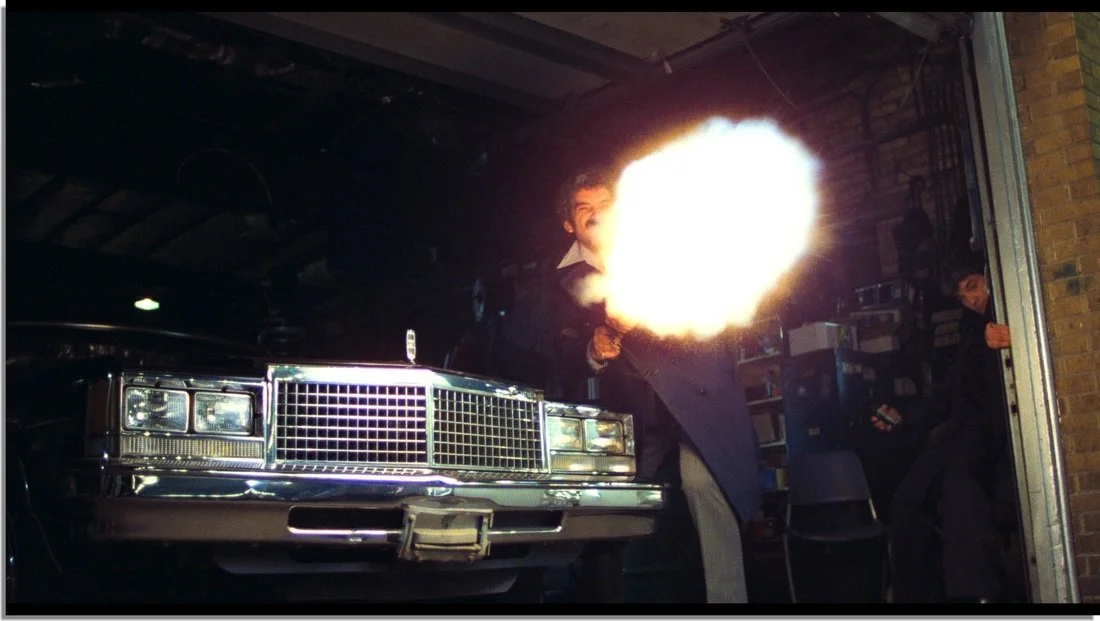
Even in this early directorial debut, Michael Mann’s distinctive and immersive brand of stylized crime thriller is emerging. Taking the measure of films like Thief, Manhunter (1986), Heat (1995), Collateral (2004), Miami Vice (2006), and Public Enemies (2009), it becomes clear that these are the works of an auteur who delivers taut, charged, and stylish crime films without skimping on grit and character. At the center of Thief are classic genre tropes including that of the lifelong criminal looking to make one last big score before going straight and getting the heck out of dodge. Fans of Mann’s work will also recognize several recurring themes in later films such a Heat, which explores the cold, iron discipline required to lead a successful life of crime.
The power of any given Mann crime film lies less in wholly original storytelling and more in its driving pace and tight brand of cinematic narrative. It should be noted that his body of work is not limited to crime movies, as evidenced by the period epic The Last of the Mohicans (1992), the excellent tobacco industry thriller The Insider (1999), the boxing biopic Ali (2001), and the biographical sports drama Ferrari (2023).
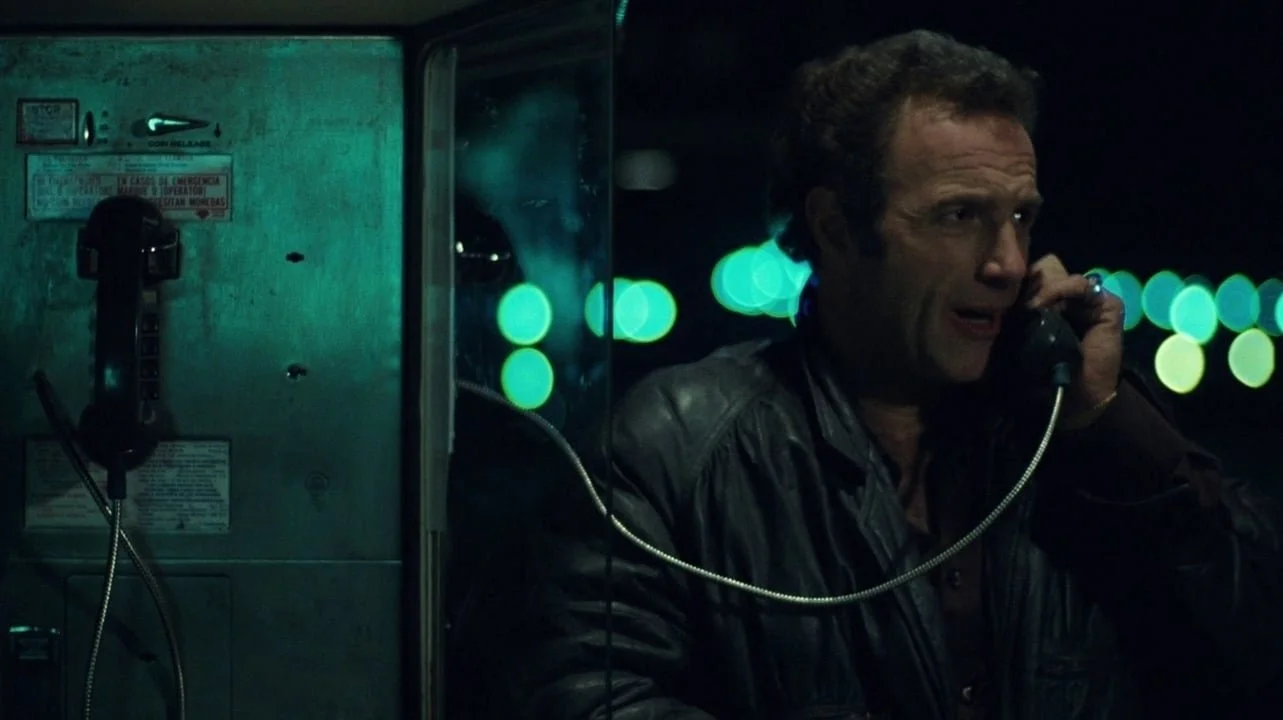
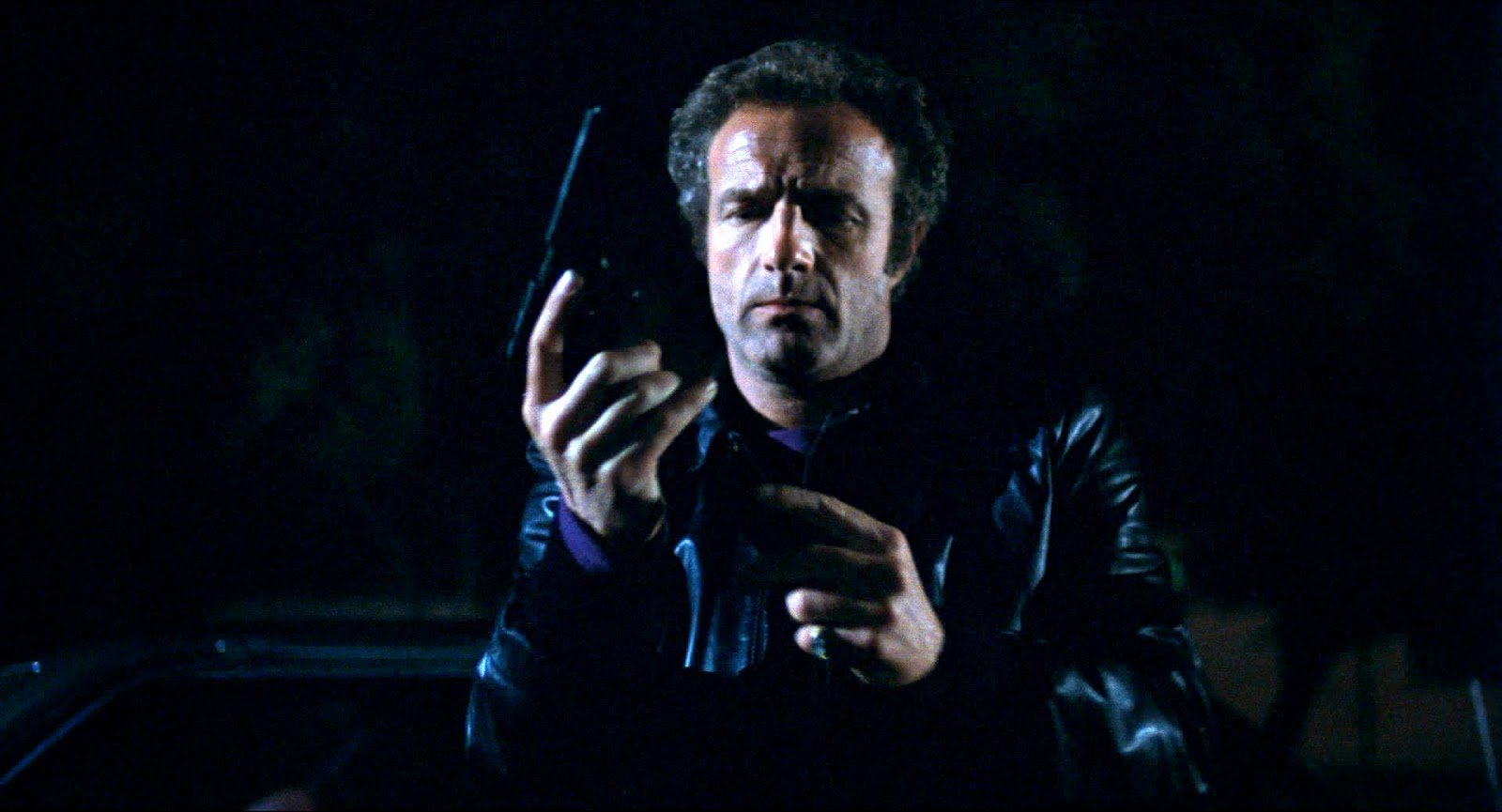
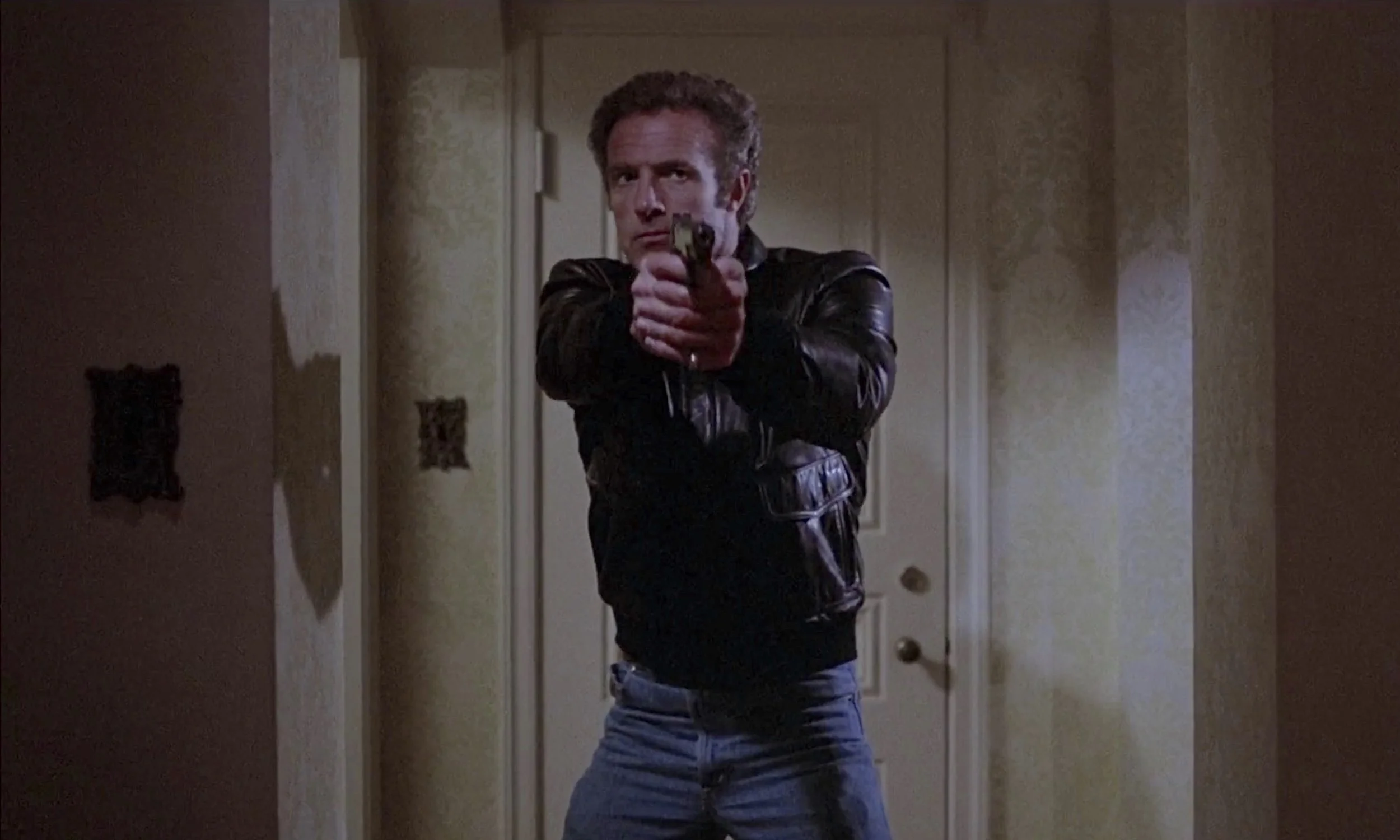
James Caan gives a truly unique performance as Frank, an emotionally and socially stunted heist man who excels at his illicit craft. His communication style, halted and economic, and his transactional way of looking at the world are clear byproducts of someone who was state raised. This is not dissimilar to Caan’s Jonathan E in the bruising dystopic sci-fi film Rollerball (1975), which we covered as part of our Cinematic Semicentennial Series.
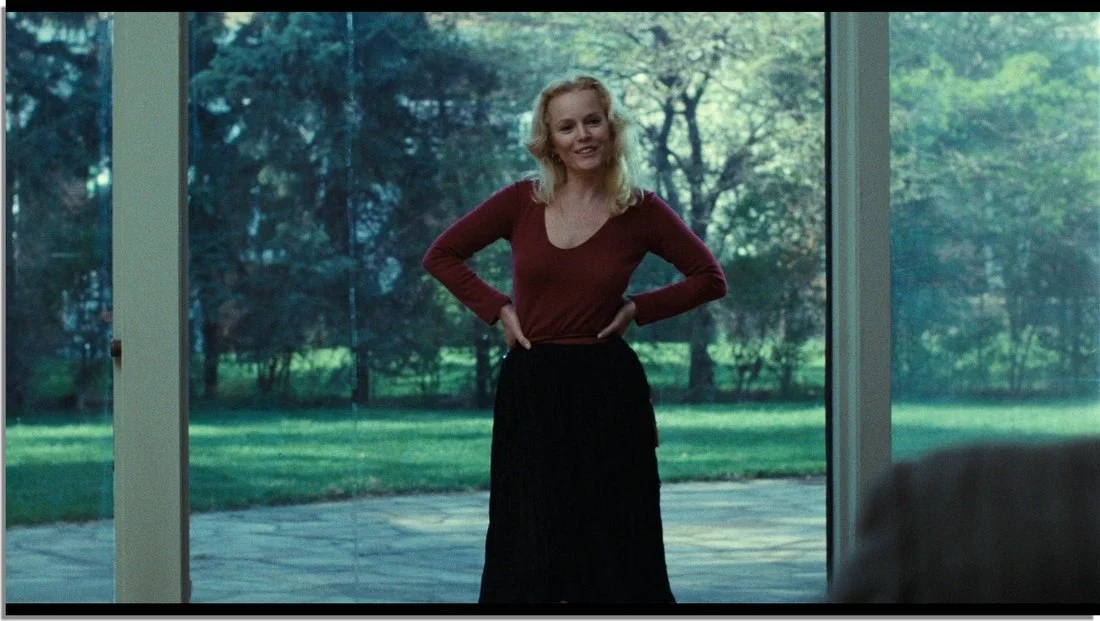
While Tuesday Weld’s Jessie is not given too much to do, I appreciated her layered performance as someone who is a bit rough around the edges (she has seen her share of dysfunction and heartache) while carrying herself with an air of grace, style, and kindness. And then we come to the ever-reliable and versatile character actor Robert Prosky, whose Leo makes for a quite formidable and frightening gangster working every angle at his disposal. Genre fans may very well recognize Prosky as the cranky tobacco-chewing garage owner Will Darnell in Christine (1983), the campy horror host Grandpa Fred in Gremlins 2: The New Batch (1990), and children’s TV station owner Jonathan Lundy in Mrs. Doubtfire (1993).
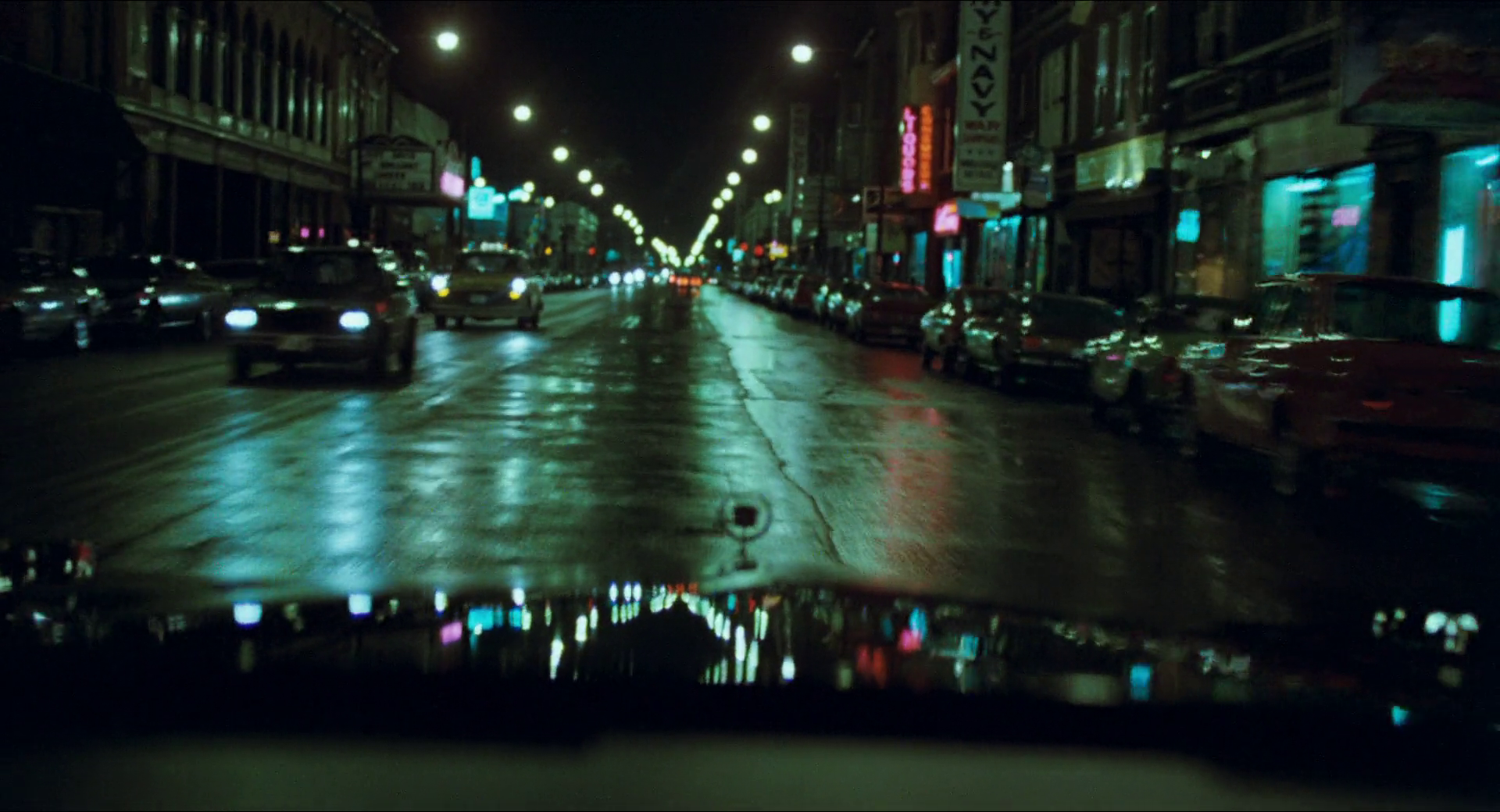
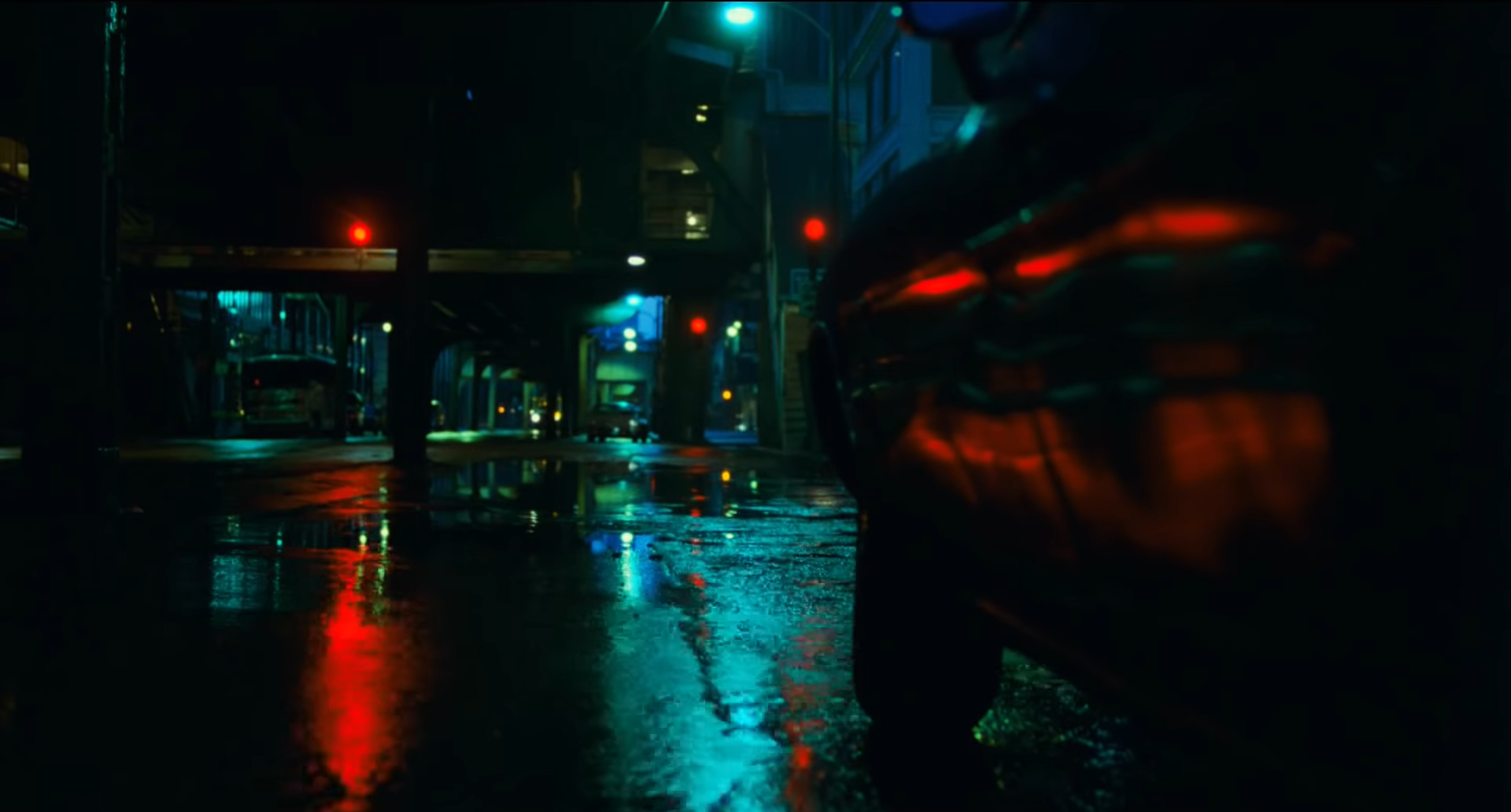
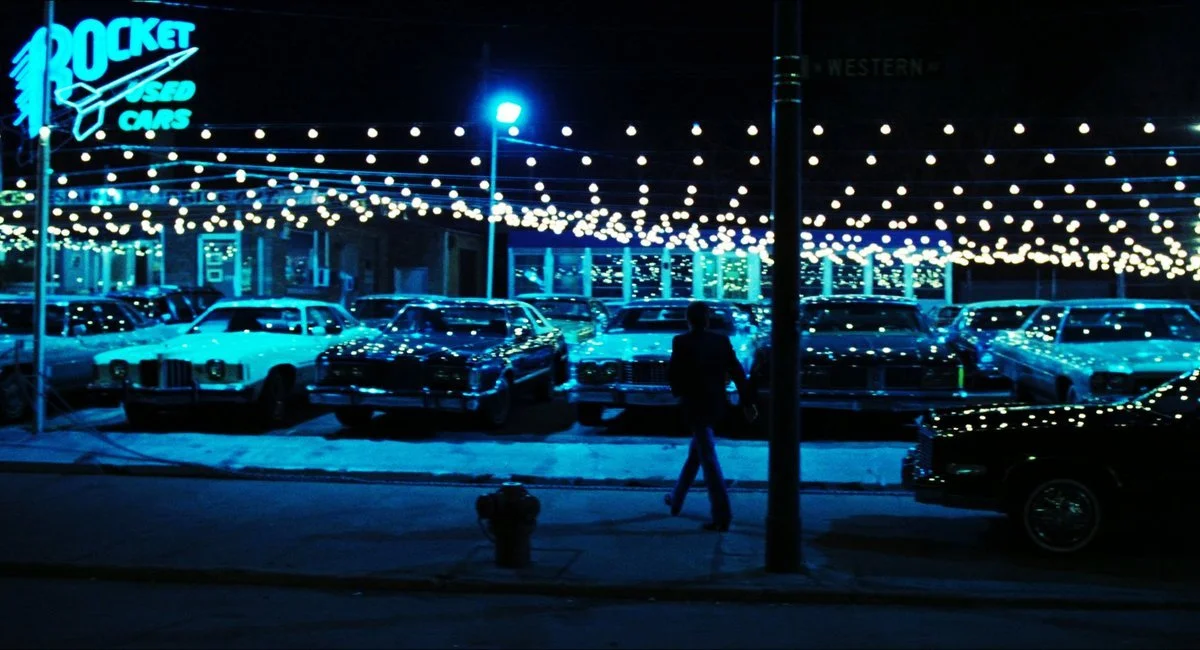
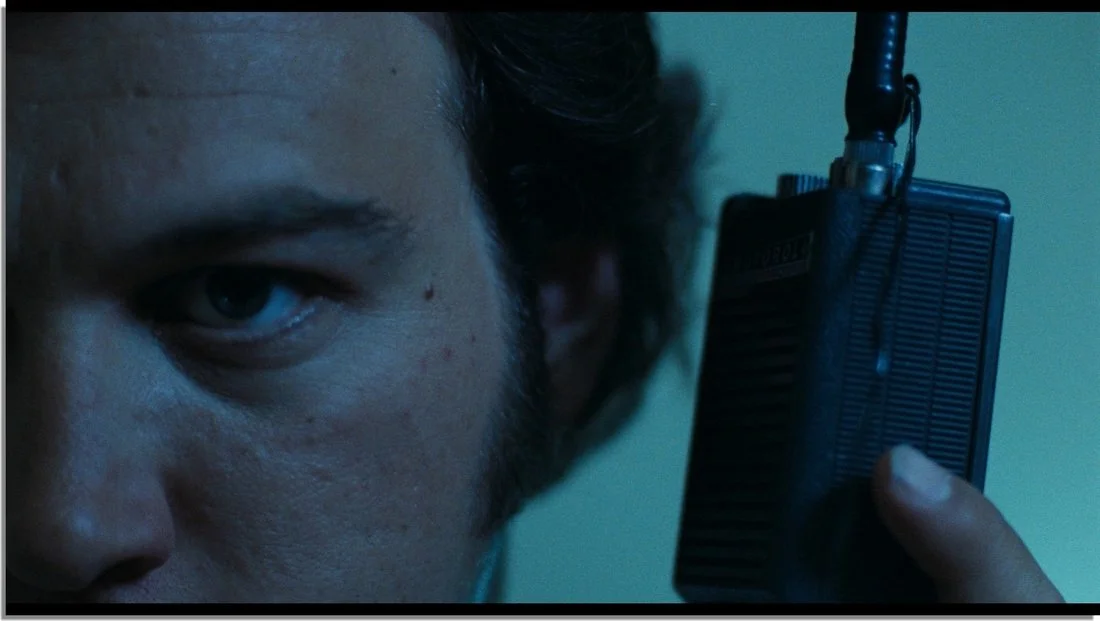
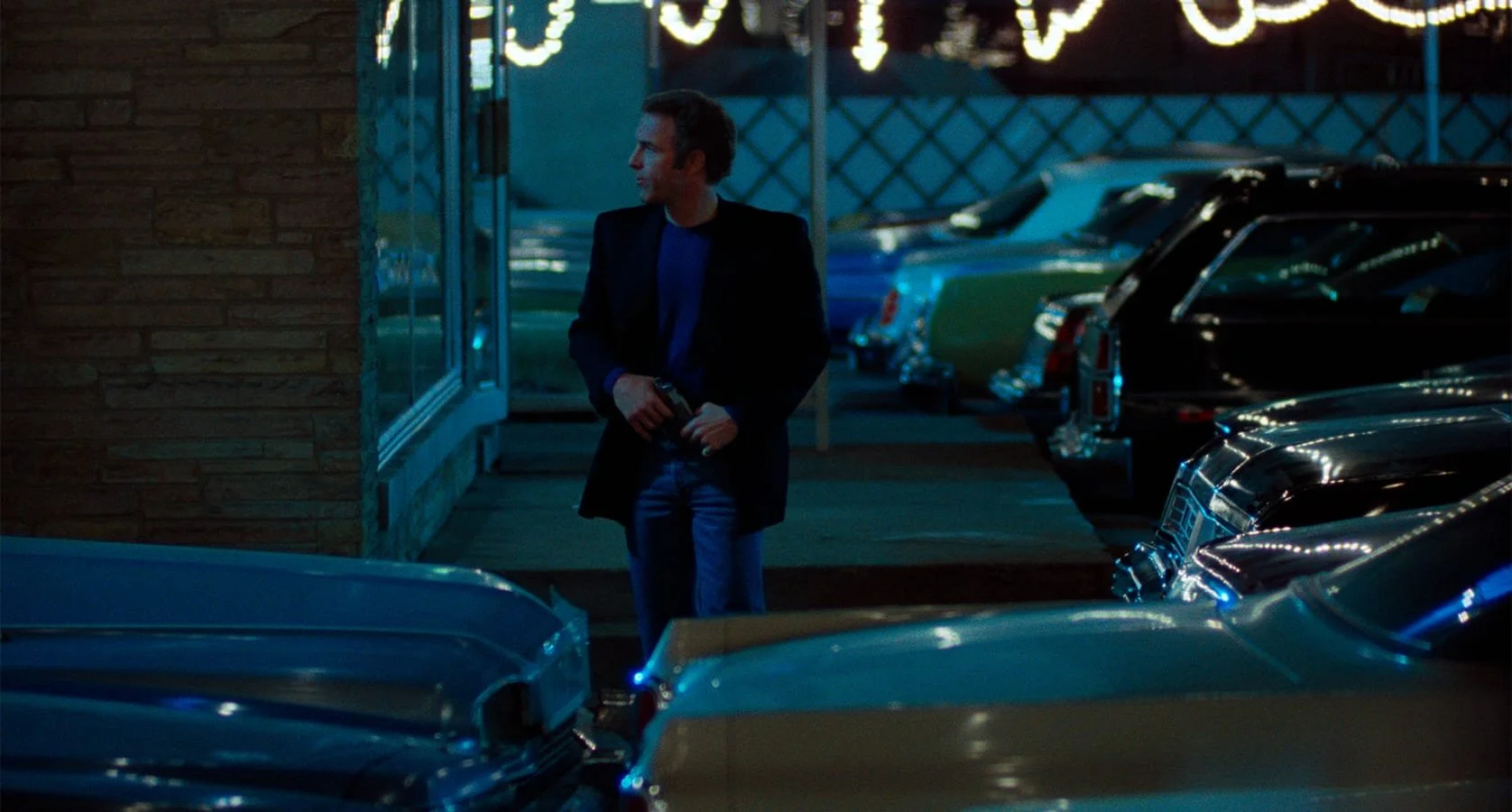
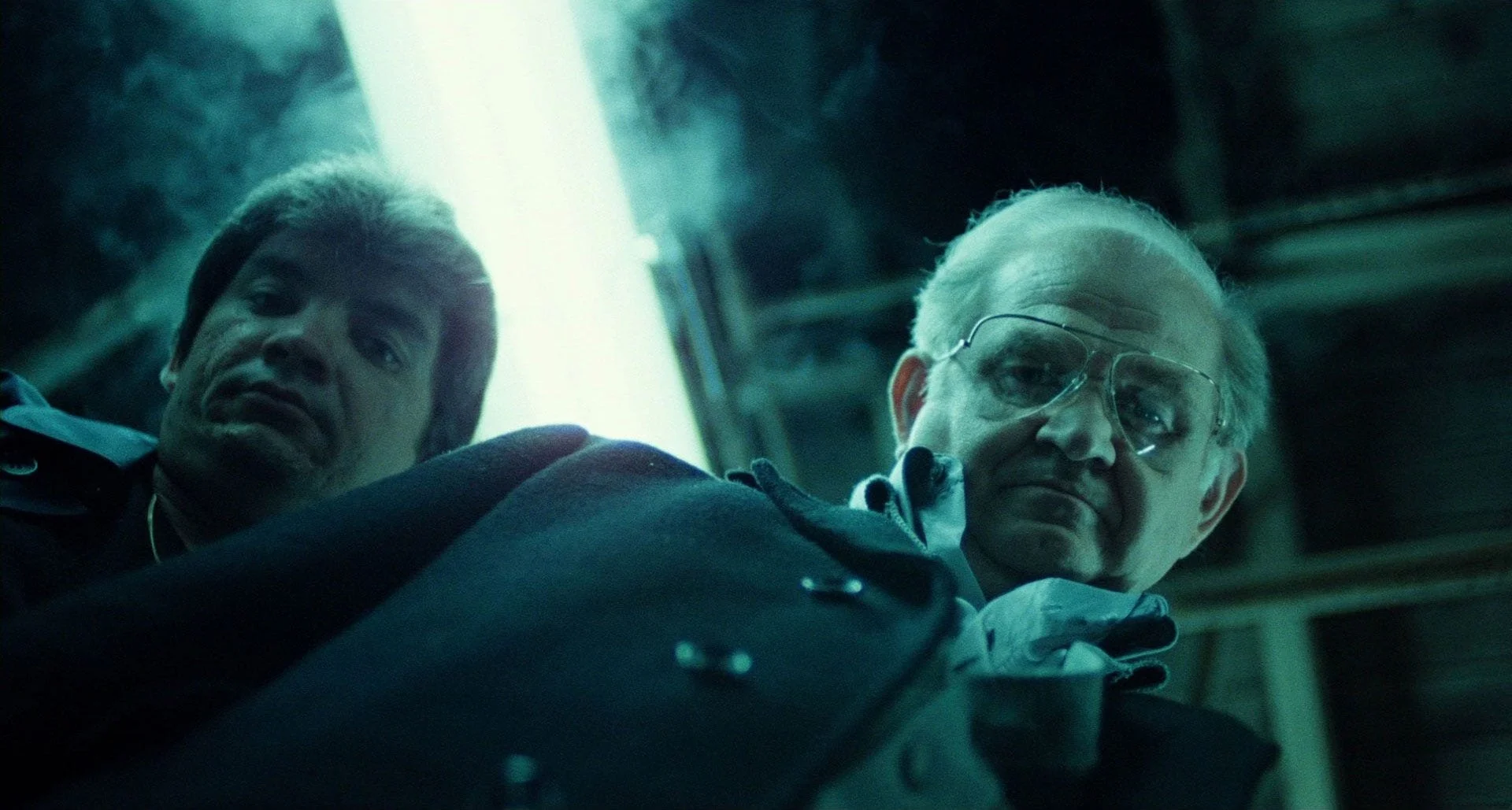
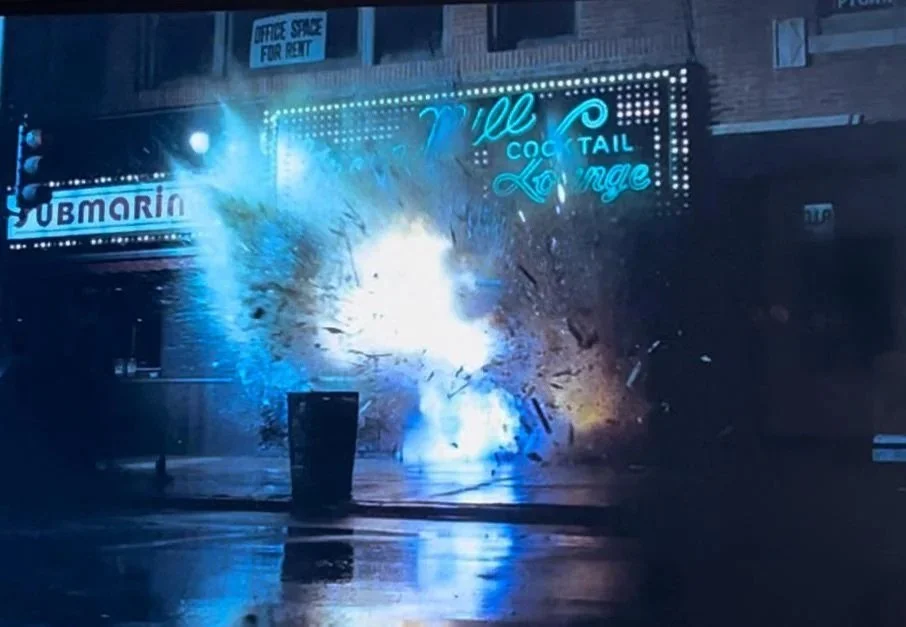
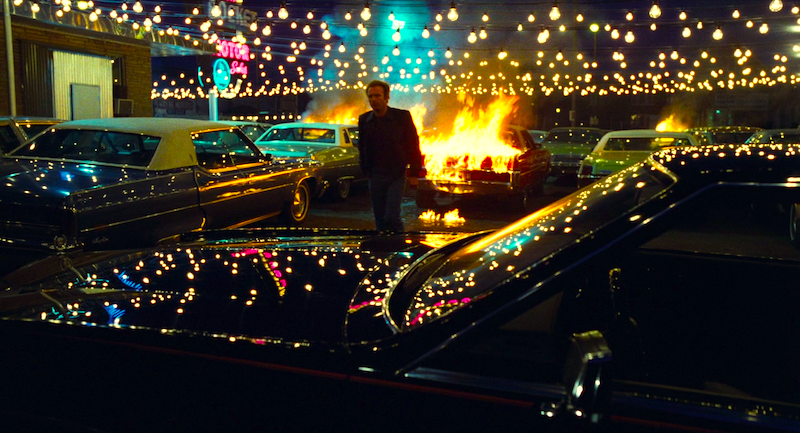
Michael Mann’s films, particularly his crime thrillers, are known for their gorgeous nighttime photography. Cinematographer Donald Thorin’s camera luxuriates in the night sequences, capturing Chicago’s rain-slick streets in various shades of black and drawing us into the dark underbelly of this world through reflections of streetlights and neon signs. While he would go on to work with different cinematographers, Mann’s affinity for all things nocturnal is always apparent. His nights can be alluring and dangerous, stark and lonely, shimmering and electric, and just plain cool.
Of course, we would be remiss of we did not talk about Tangerine Dream, the electronic-based band from Germany who created the music for Thief. Their resonant, synth-heavy stylings with overlayed guitar riffs help drive the action with an unstoppable momentum. The band created music for other genre films including Sorcerer (1977), The Keep (1983), Firestarter (1984), Legend (1985), and Near Dark (1987), the latter which we covered as part of our Women’s History Month Series—Four Films, Four Killer Directors.
Despite all it has to recommend it, Thief is criminally underseen, (see what we did there?), at least among casual movie goers. Fortunately for viewers, the film is currently available on several streaming services. If you are a physical media collector you can also nab the excellent Blu-ray/4K release available from Criterion.
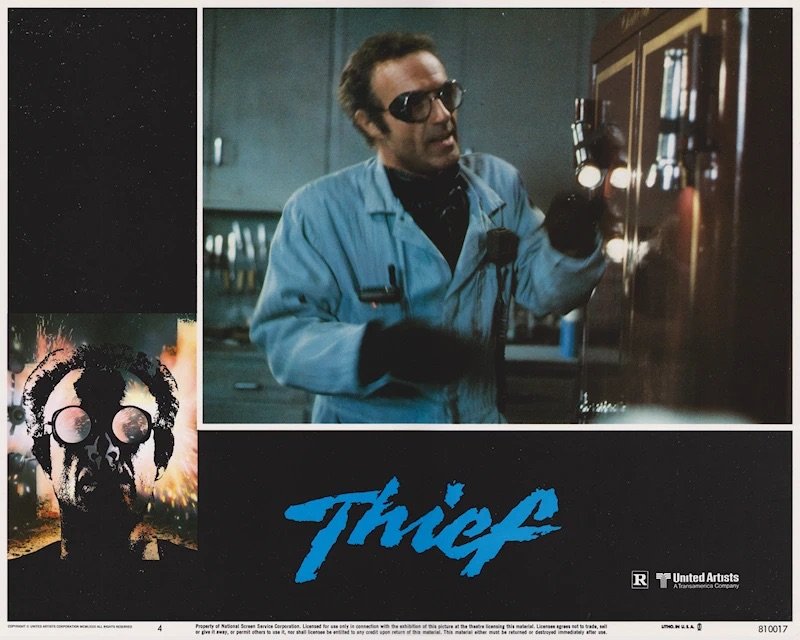
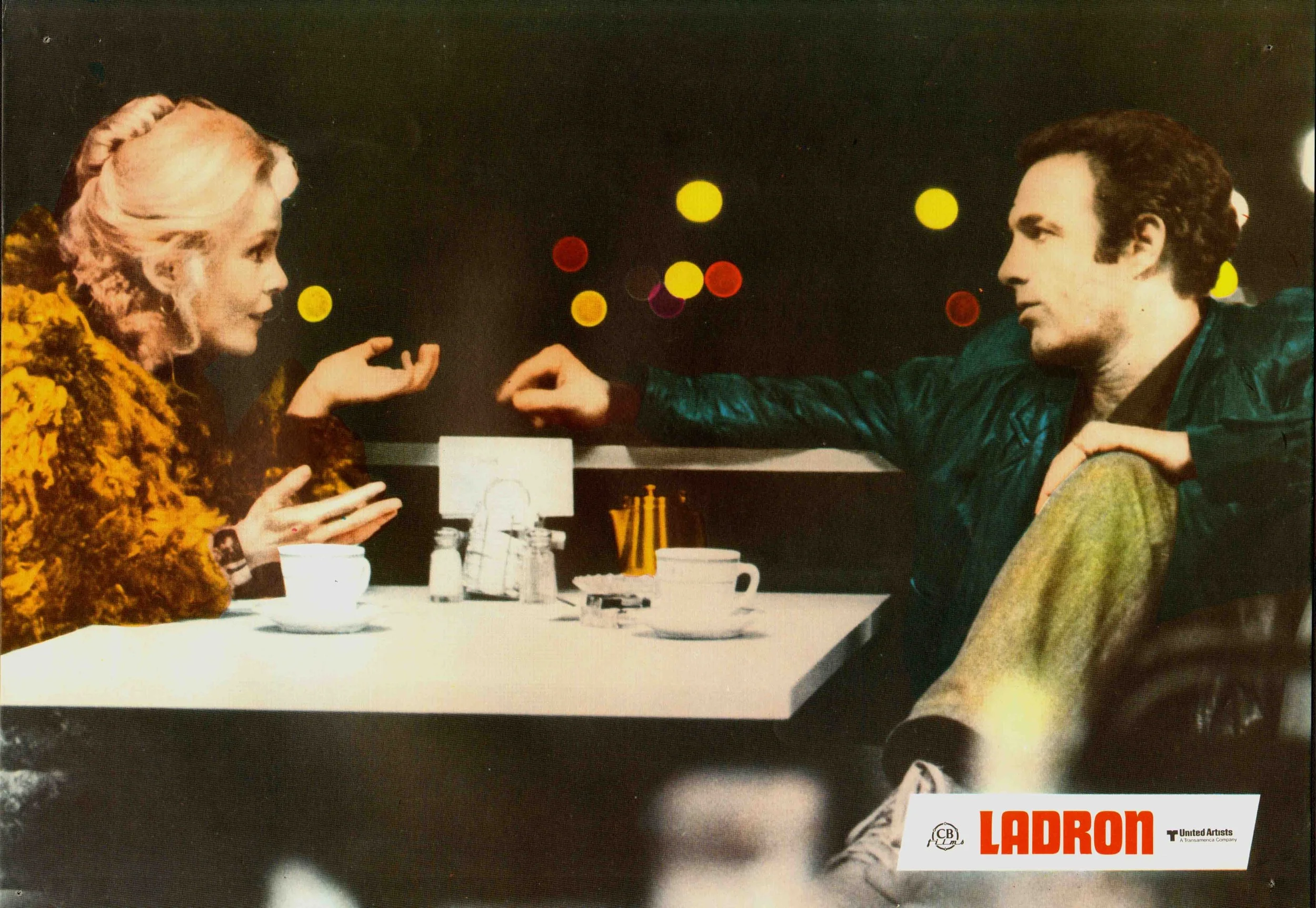
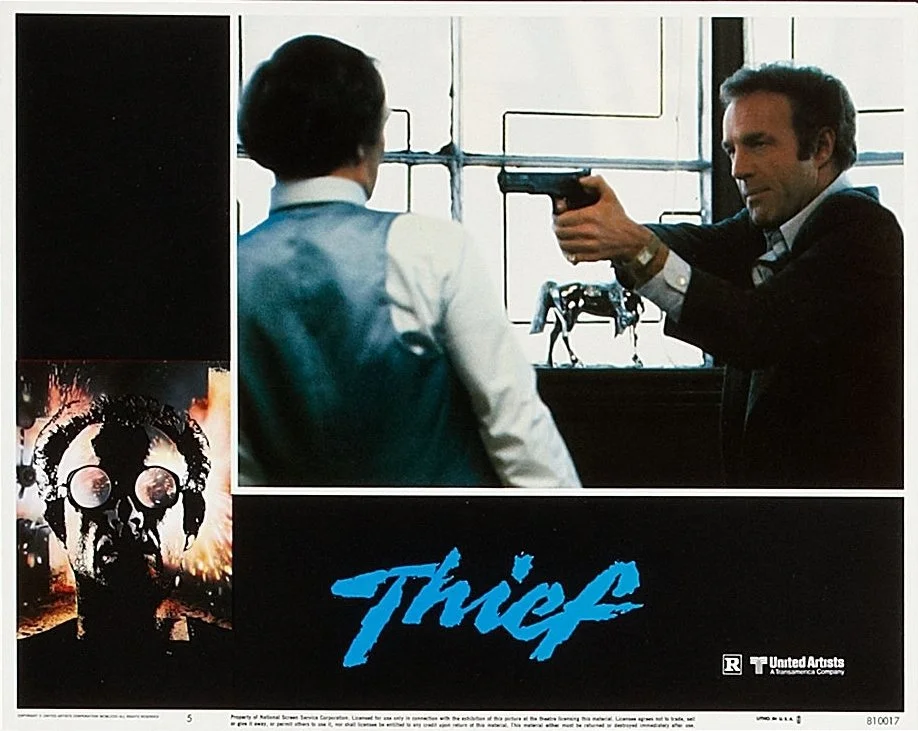
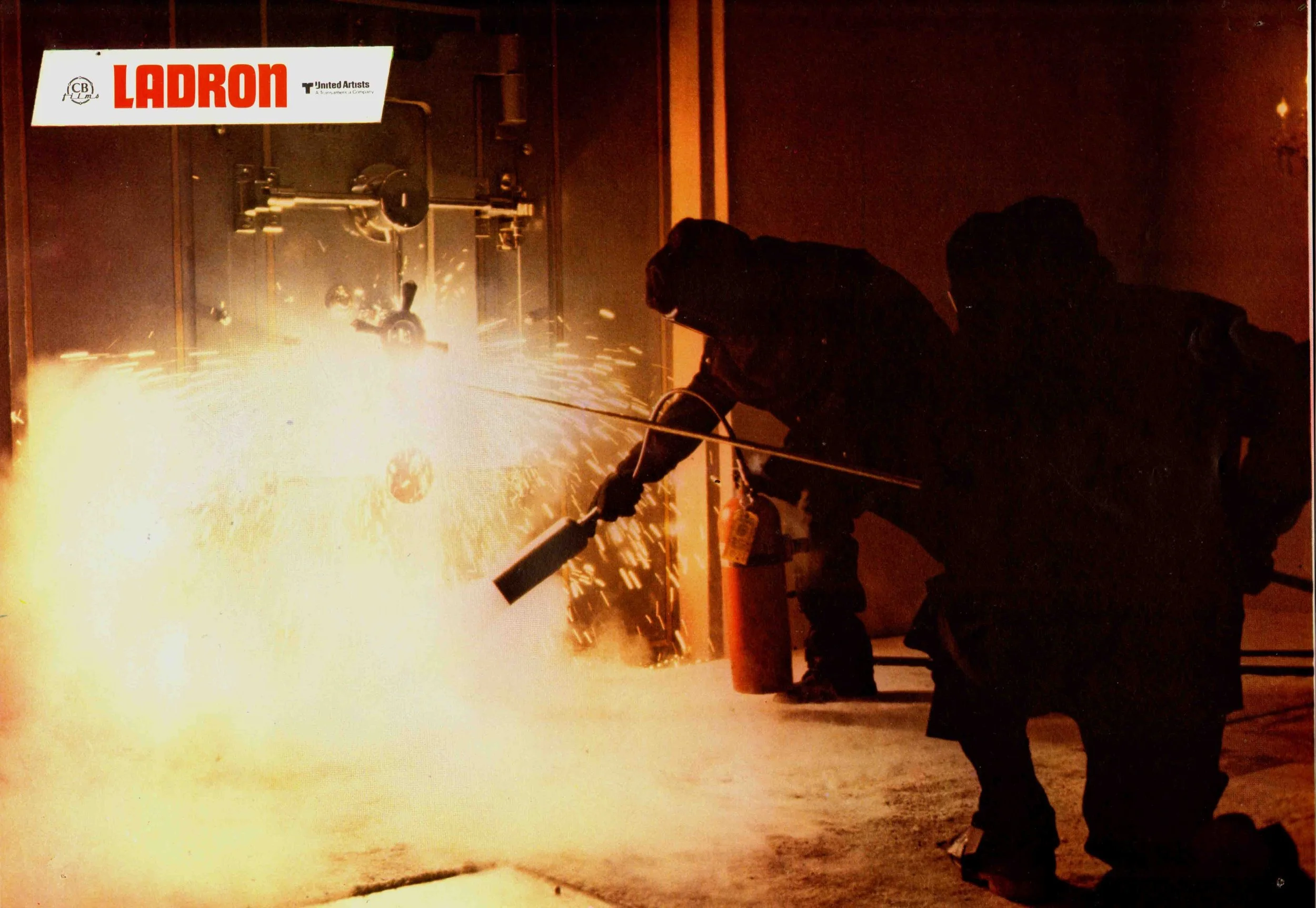
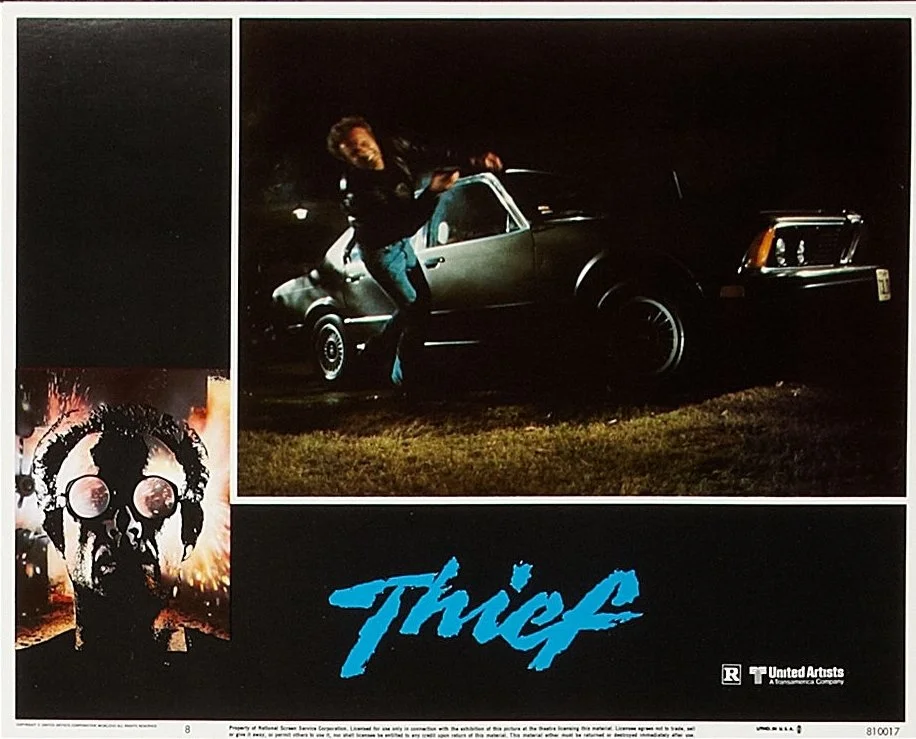
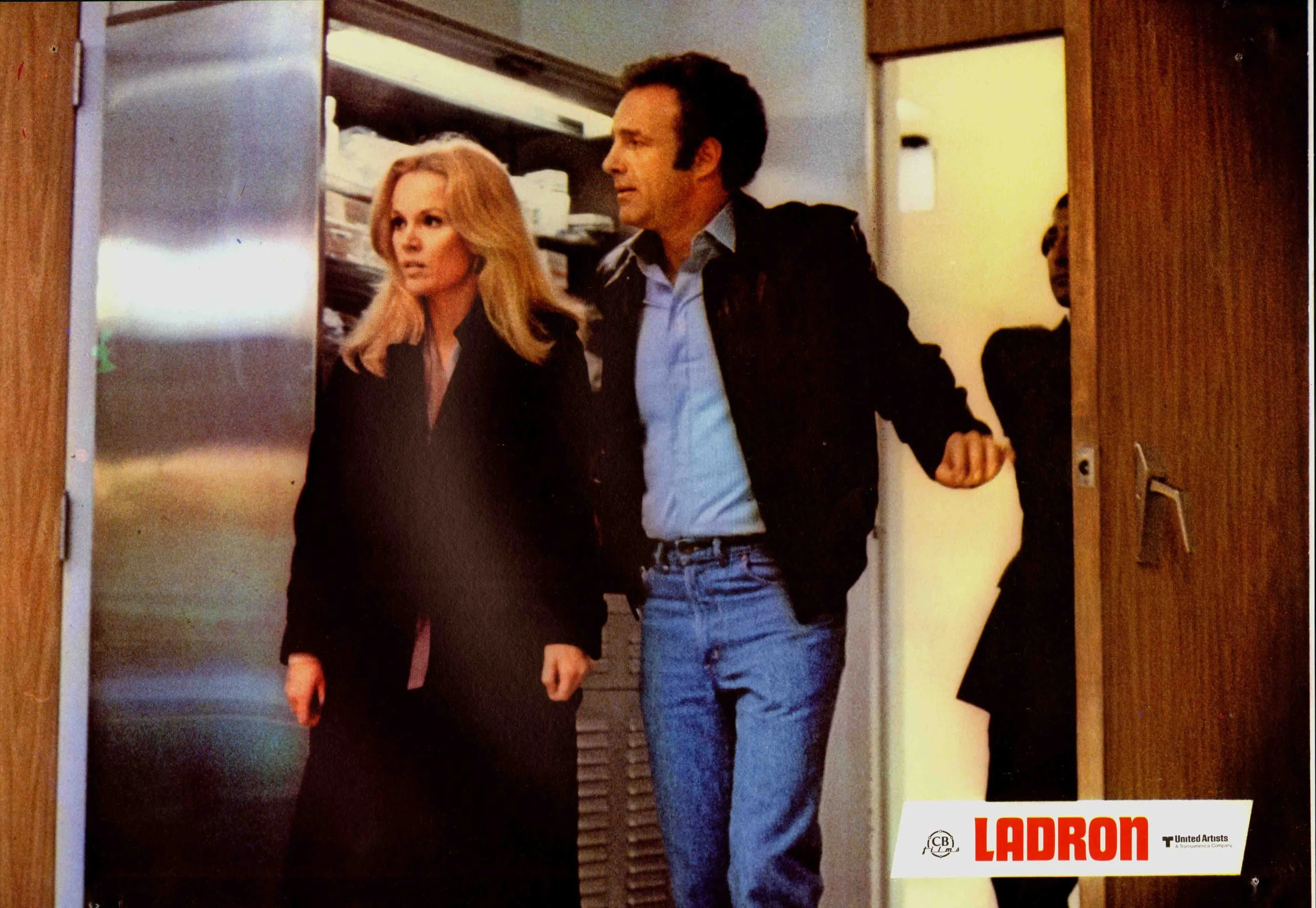
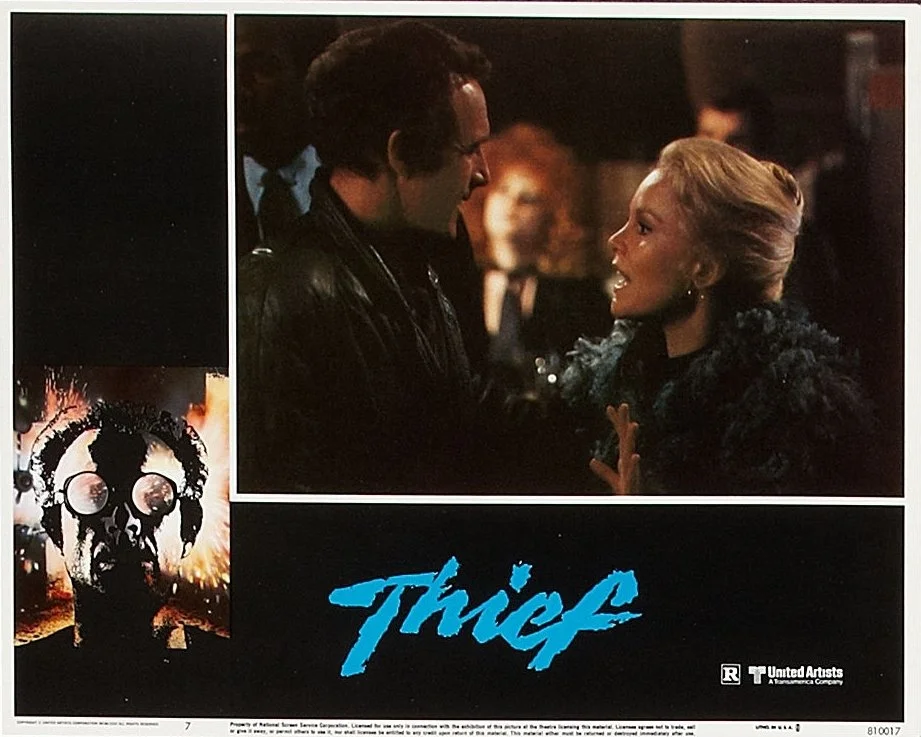
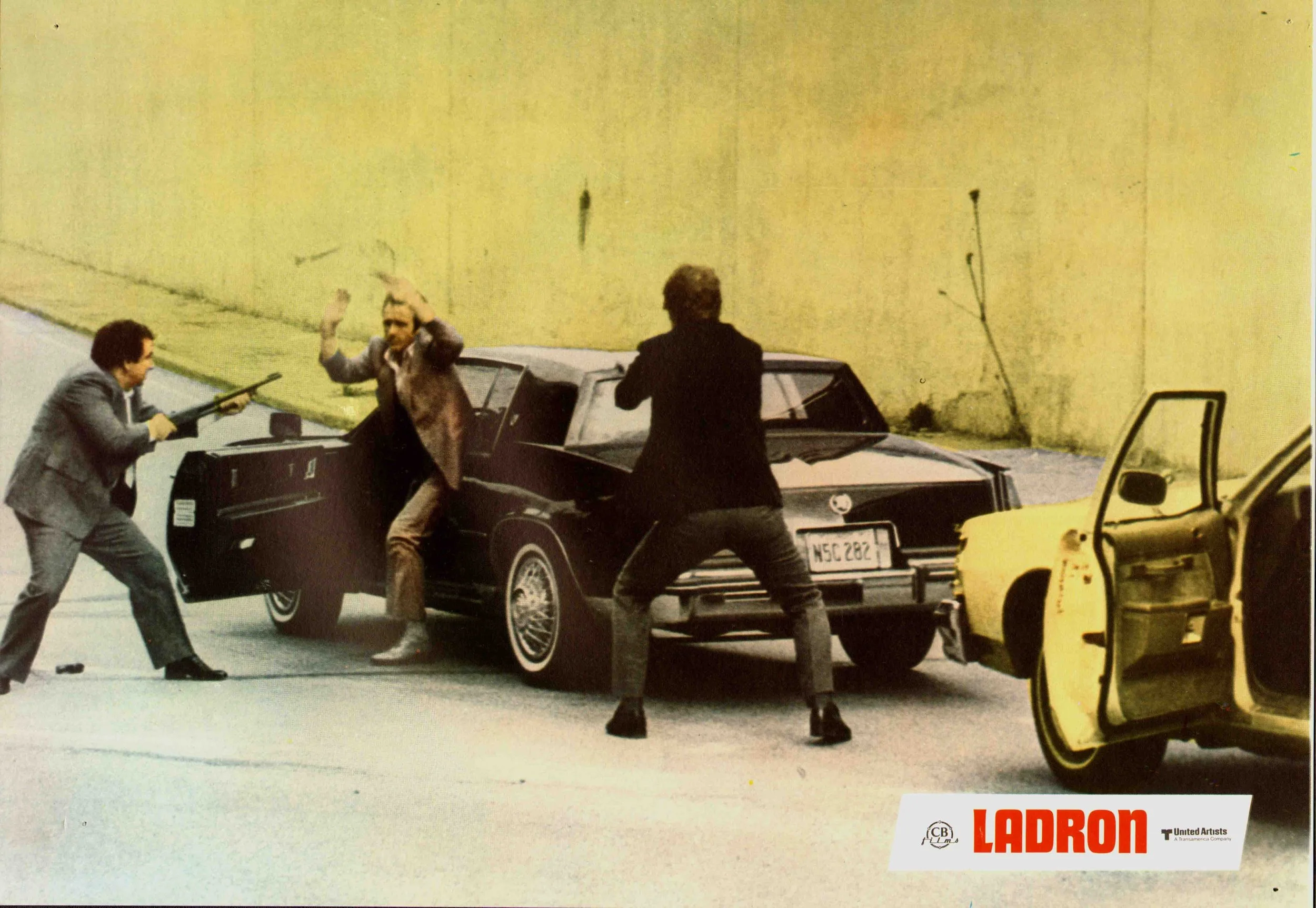
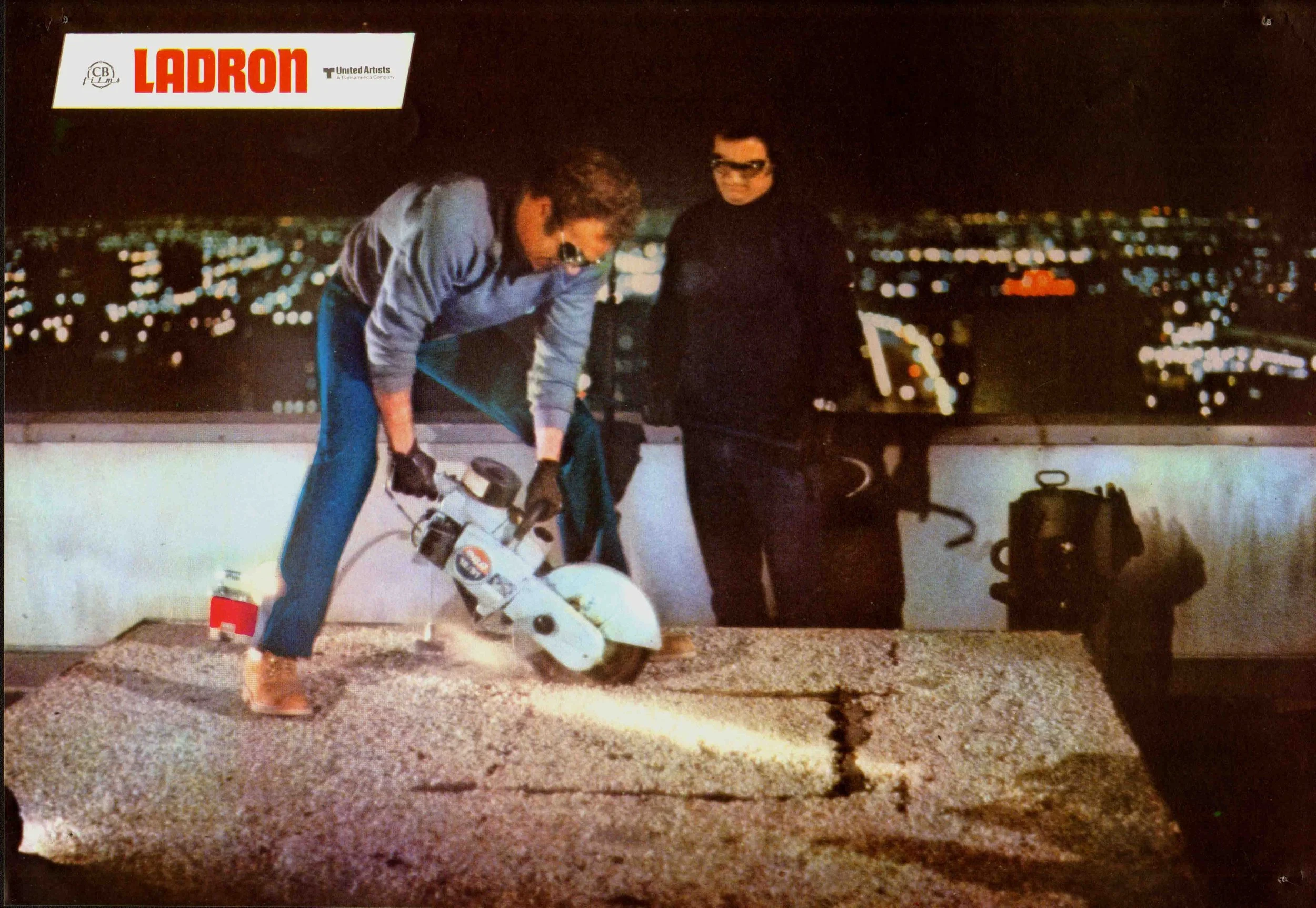
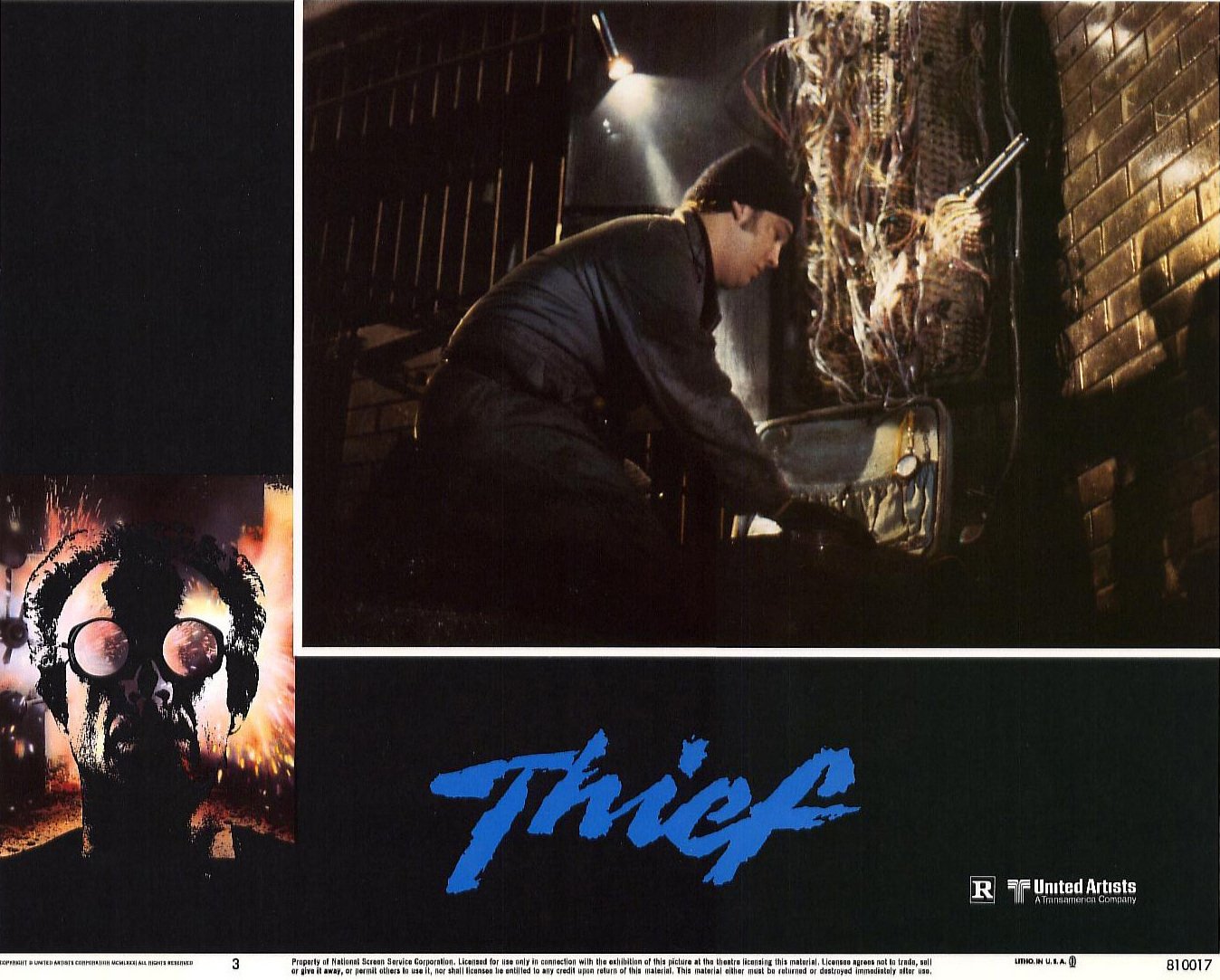
Lobby cards for Thief
Did you know
Willie Nelson (yes that Willie Nelson) plays Frank’s former prison mate Okla. Though he has scant screen time the character is very significant as he is Frank’s only true friend and mentor.
According to an IMDB trivia post, the burglary tools in Thief were not props but real implements used by actual thieves. One such example is the magnetic drill that Frank uses in the opening sequence of the film. Technical consultants, including actor and former jewel thief John Santucci, trained the cast on how to use the tools. Santucci also plays the sleazy corrupt cop Sergeant Urizzi.
Several actors made their theatrical release debuts in Thief, including Dennis Farina, William Peterson, Gavin MacFadyen, and Jim Belushi. Peterson would later star in Mann’s Manhunter as FBI profiler Will Graham.
The film is based on the 1975 novel The Home Invaders: Confessions of Cat Burglar by Frank Hohimer, which was the pen name of real-life jewel thief John Seybold.
Michael Mann also wrote for the wildly successful Miami Vice TV series (1984-1989) and directed the 2006 feature film.
Frank’s promised cut from the climactic heist was $830,000, which would be north of $3 million in 2026.
Michael Mann completists might be familiar with the director’s follow-up feature and only horror film, The Keep (1983). The supernatural story is set during the early stages of World War II. If you didn’t get enough of him, you’ll be happy to see Robert Prosky back, this time playing the character of Father Fonescu. It is a fascinating mess of a movie.
“Diamond Diary,” track from Tangerine Dream’s score for Thief.
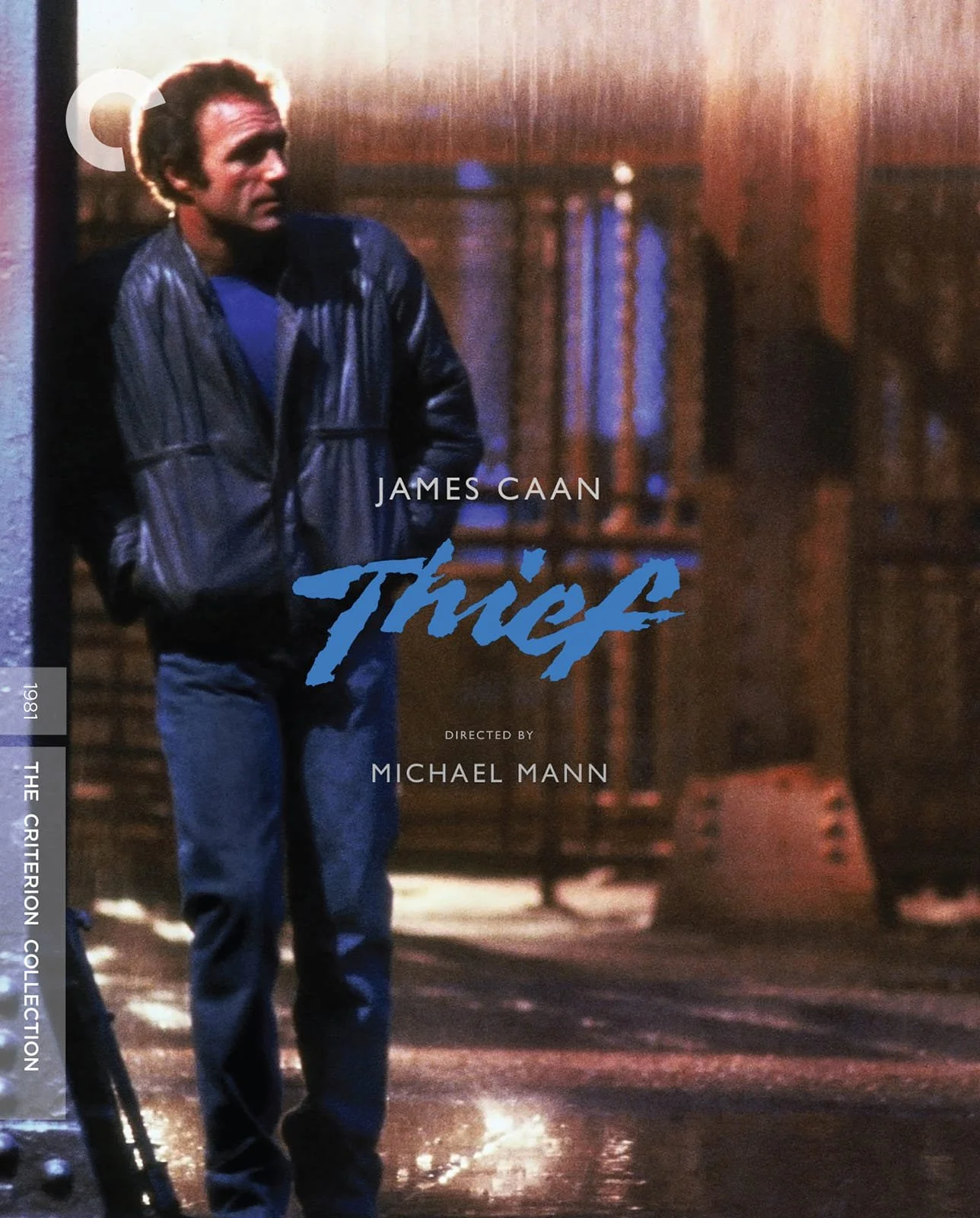
Cover art for Criterion blu ray release
How did I watch?
4K UHD Disk Criterion
Cast (abridged)
James Caan – Frank
Jim Belushi – Barry
Robert Prosky – Leo
Willie Nelson – Okla
Tuesday Weld – Jessie
Denis Farina – Carl
W.R. “Bill” Brown – Mitch
Tom Signorelli - Attaglia
Crew (abridged)
Director – Michael Mann
Cinematographer – Donald Thorin
Screenwriter – Michael Mann
Novel (of the Home Invaders) – Frank Hohimer
Editor – Dov Hoenig
Music – Tangerine Dream
Art Director – Mary Dodson
Producers - Jerry Bruckheimer and Ronnie Cahn
Running Time: 2h 2m
Recommendations Based on Thief
The Killing (1956)
Le Cercle Rouge (1970)
Carlito’s Way (1993)
Heat (1995)
Supplements
The 50 Most Iconic Heist Movies, Ranked (CrimeReads)
Why Directors Still Study Michael Mann's Directorial Debut (StudioBinder – video)
The 13 best roles of James Caan's Career (Entertainment Weekly)
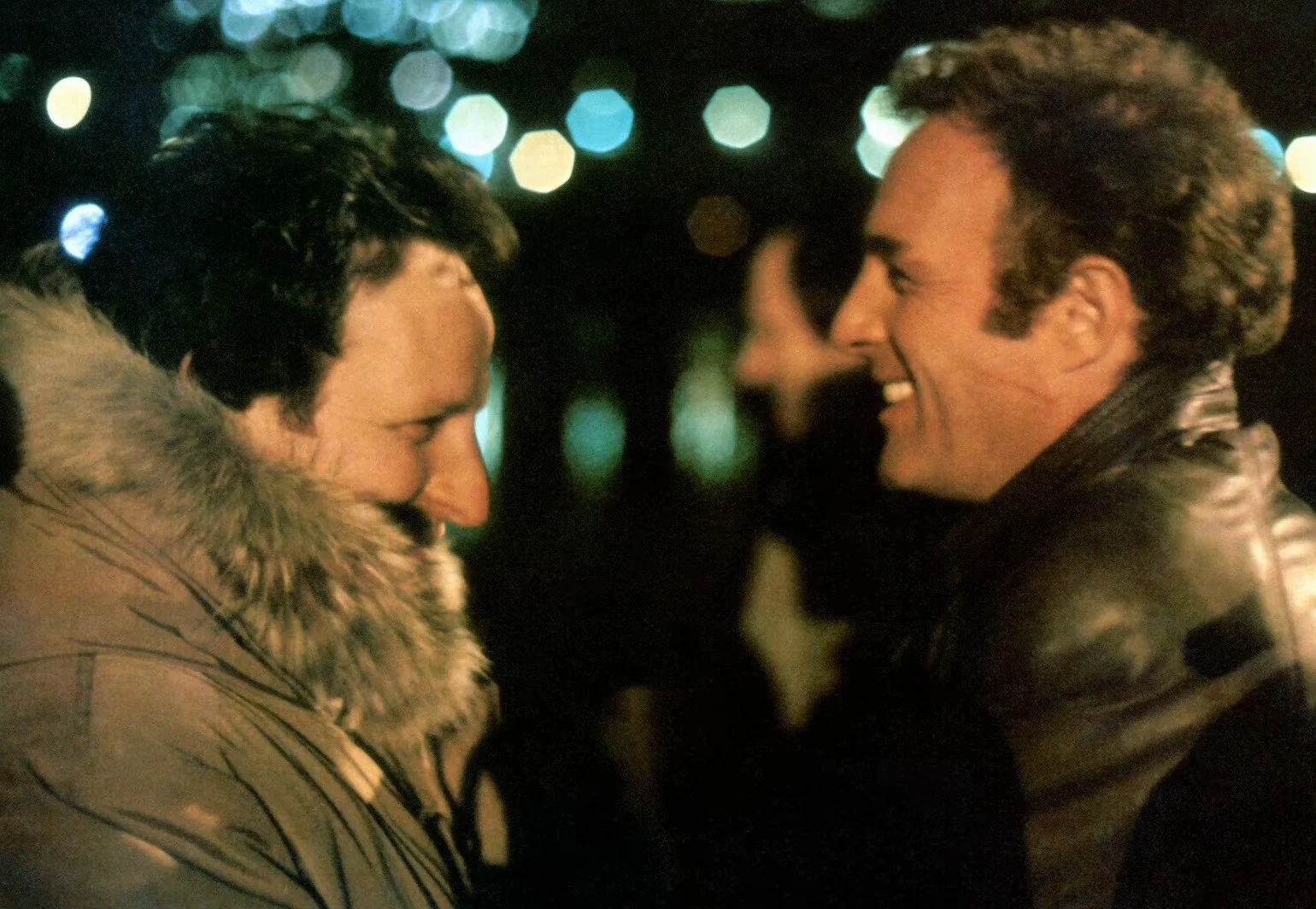
Michael Mann and James Caan on the set of Thief.